Q&A: Rebuilding a Critical Substation While Supporting New Data Center Growth
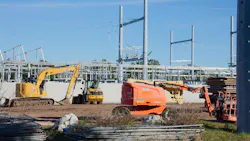
As utilities across the country work to modernize aging infrastructure while accommodating unprecedented load growth, large-scale transmission and substation projects are becoming increasingly complex. Maintaining reliability while rebuilding energized facilities and preparing for new large-load customers requires careful planning, collaboration, and flexibility.
At T&D World Live 2026, Forrest Farson, project manager with American Electric Power (AEP), will join representatives from AEP, Beta Engineering, and Lancium for the session “American Electric Power & Lancium: Rebuilding a Critical Substation While a Data Center Moves In Next Door.” The panel, to take place on Thursday, Sept. 3 at 11 a.m., will explore how the team managed the modernization of a critical 345/138-kV substation while keeping the facility energized and adapting the project to support a major hyperscale data center development.
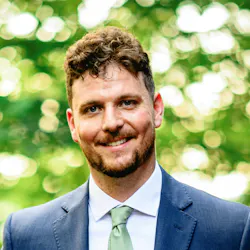
Farson serves as a transmission project manager on AEP’s EPC team, managing transmission and substation capital projects from engineering through energization. He holds a bachelor’s degree in construction management from The Ohio State University and has spent the past six years managing projects across the ERCOT and SPP footprints.
In this Q&A, Farson shares insights into his career path, the challenges of brownfield substation modernization, lessons learned from adapting to changing project requirements, and what utilities can take away from this unique project.
T&D World: Tell us about your current role and responsibilities at AEP.
Forrest Farson: I’m a Project Manager with American Electric Power (AEP), where I manage transmission and substation capital projects from engineering through energization. My responsibilities include coordinating engineering, construction, outage planning, stakeholder communication, and ensuring projects are delivered safely while maintaining system reliability.
T&D World: How did you first get involved in the electric utility or power industry?
Farson: My first job out of college was as a project manager in the residential construction space. I knew I wanted to make a career change, but I didn't know much about the power industry at the time. AEP brought me in for my project management experience and taught me the utility side of the business.
T&D World: Was there a particular project, mentor, or experience that shaped your career path?
Farson: This project helped shape my career because it demonstrated how quickly priorities can change in today's utility industry. What began as a complex brownfield rebuild ultimately evolved into a project that also needed to support one of the nation's largest data center developments. It taught me how to successfully adapt to those changing requirements while maintaining focus on reliability, schedule, and stakeholder alignment.
T&D World: What keeps you interested and motivated about working in transmission, substations, and grid infrastructure today?
Farson: The electric grid is undergoing significant transformation as utilities modernize infrastructure and respond to increasing demand. Being a part of projects that improve reliability while supporting future growth makes the work both challenging and rewarding.
T&D World: Looking back on your career, what skills or experiences have proven most valuable when managing complex utility projects?
Farson: I’ve learned that a good project manager doesn’t have to be the smartest person in the room. My job is to bring together talented subject matter experts, know enough to ask the right questions, and remove obstacles to allow them to do what they do best.
T&D World: For readers who may not be familiar with this project, can you describe the substation and why it is such a critical part of the regional grid?
Farson: Mulberry Creek is a critical transmission substation within the ERCOT system. It carries multiple 345-kV and 138-kV lines. Taking large portions of the station offline during construction was not an option, which significantly influenced project planning and execution.
T&D World: What were the biggest challenges associated with rebuilding a major substation while keeping it energized and in service?
Farson: The biggest challenge was rebuilding a critical substation while keeping it energized and continuing to serve a diverse group of customers and stakeholders. Throughout the project, maintaining reliability for interconnected utilities, local communities, generation resources, and large-load customers required extensive coordination and careful planning.
Safety was equally important. Because construction was taking place within and around an energized facility, every activity had to be planned with minimum approach distances, clearance requirements, and switching and tagging procedures in mind. In some cases, outages were needed simply to create safe working conditions for routine construction activities.
Physical implementation also presented unique challenges. The project required integrating a new 345-kV breaker-and-a-half yard with an existing station configuration while maintaining service throughout multiple construction phases. That required careful planning of structures, conductor routing, and construction sequencing to ensure each stage of the project supported both current operations and future work.
The project became even more challenging when several planned outages were canceled, forcing the team to continually adapt execution plans, reprioritize work, and identify alternative paths forward. Success ultimately came down to strong teamwork, detailed outage coordination, robust switching and tagging practices, and constant communication between engineering, operations, protection and control, and construction teams.
By staying flexible and aligned around safety and reliability, we were able to continue progressing the project while keeping the station in service.
T&D World: The project became more complicated when a large data center development emerged nearby. How did that change the project's scope, priorities, or timeline?
Farson: The data center approached us as construction for the original 345-kV station rebuild was already underway. Because the station had been planned with future growth in mind, the team was able to evolve the design from a ring-bus arrangement to a breaker-and-a-half configuration, providing additional flexibility and expansion capability while continuing to support the original modernization objectives.
T&D World: What lessons did the team learn about flexibility and coordination when project conditions changed midstream?
Farson: We learned that flexibility is essential because project conditions rarely unfold exactly as planned. Throughout the project, our outage strategy went through multiple revisions as priorities shifted and constraints emerged. We had to continually adapt our execution plans while working within the limitations of what outages could occur and when they could occur.
That required the entire team to stay focused on the end goal rather than becoming tied to a particular plan.
Another important lesson was the value of building strong relationships with the people closest to the work. Open communication and trust between AEP personnel, EPC partners, field crews, and operations teams allowed issues to be identified and resolved much more quickly. When conditions changed, those relationships made it easier to collaborate, adjust plans, and keep the project moving forward.
In a project of this size and complexity, flexibility and teamwork were just as important as the technical solution itself.
T&D World: Were there any moments during the project when the team had to rethink conventional approaches to engineering, construction, or sequencing?
Farson: Yes. One example was how we utilized the existing ring bus throughout construction. To maintain reliability, we couldn't break the ring in more than one location at a time, which meant work had to be carefully phased and completed in smaller segments than originally anticipated.
As construction progressed, outage boundaries and clearance points were constantly shifting, requiring the team to continually reevaluate work plans and safe work zones.
We also encountered a situation where the original plan called for relocating an existing 138-kV line to a temporary position to make room for a new customer interconnection. When several planned outages were canceled, the team had to rethink that approach.
By evaluating the physical clearances and overall system design, the engineering and construction teams developed an alternative solution that achieved the required clearances while maintaining reliability and keeping the project moving forward.
It wasn't the conventional approach, but it demonstrated how creative problem-solving and strong collaboration can help overcome challenges when field conditions and schedules don't unfold as expected.
T&D World: What are some of the most important lessons learned that other utilities or project teams can apply to similar brownfield rebuilds?
Farson: Successful brownfield projects depend on understanding existing site conditions early, building schedule flexibility into the plan, maintaining strong stakeholder communication, and designing with future growth in mind. Take full advantage of pre-outage activity windows, especially if outage availability is going to be an issue
T&D World: Utilities across North America are facing unprecedented load growth driven by data centers. How does this project reflect some of the broader challenges utilities are encountering today?
Farson: This project illustrates how utilities must simultaneously modernize existing infrastructure and respond to rapidly changing customer demands, often within compressed timelines.
T&D World: How did collaboration between the utility, EPC contractor, and data center developer contribute to the project's success?
Farson: One of the biggest factors to our success was the commitment of the entire team to a common goal. As project conditions evolved, the utility, engineering, construction, operations, and customer teams worked collaboratively to identify solutions, adjust priorities, and maintain focus on the critical path.
While several planned outages were ultimately canceled, which required portions of the project work to be deferred beyond the original schedule, the team effectively coordinated a phased execution strategy that allowed us to complete the infrastructure necessary to energize the customer on time.
It was a great example of how strong partnerships, flexibility, and a shared commitment to project success can overcome challenges that no single organization could solve alone.
T&D World: What advice would you give to engineers and project managers who may soon face similar challenges?
Farson: Understand your constraints early, remain adaptable, maintain strong stakeholder engagement, and invest in capturing institutional knowledge. Successful projects are rarely defined by the original plan alone but by how effectively teams respond when conditions change.
T&D World: What can attendees expect to learn from your presentation at T&D World Live 2026?
Farson: Attendees will gain practical insights into managing a complex brownfield substation modernization project, including lessons related to project execution, stakeholder coordination, phased implementation, and adapting to significant changes in customer requirements.
T&D World: Is there a particular lesson, challenge, or takeaway that you hope attendees remember long after the session ends?
Farson: The most important takeaway is that flexibility and teamwork are just as important as technical execution. Projects are more successful when infrastructure is designed for future growth and teams remain aligned around a common goal as conditions evolve.
T&D World: Who should make a point of attending this session?
Farson: The session will be valuable for utility engineers, project managers, planners, operations personnel, EPC firms, and developers involved in brownfield substation modernization or large-load customer interconnections.
T&D World: What are you most looking forward to about participating in T&D World Live 2026?
Farson: I look forward to sharing lessons learned, hearing how other organizations are addressing similar challenges, and discussing the opportunities and complexities associated with grid modernization and growing demand.
Interested in hearing how utilities are tackling these challenges in the real world? Join utility leaders, engineers, and industry experts at T&D World Live 2026, September 1–3 in Orlando, Florida: https://events.tdworld.com/2026/9758491?ref=TDWArticles
About the Author
 Nikki Chandler
Nikki Chandler
Group Editorial Director, Energy
Nikki is Market Content Director for the Endeavor Business Media Energy group, which includes T&D World, EnergyTech and Microgrid Knowledge media brands. She has 30 years of experience as an award-winning business-to-business editor, with 24 years of it covering the electric utility industry. She started out as an editorial intern with T&D World while finishing her degree, then joined Mobile Radio Technology and RF Design magazines. She returned to T&D World as an online editor in 2002, and took over as managing editor in 2017, then market content director in 2023. She has contributed to several publications over the past 30 years, including Waste Age, Wireless Review, Power Electronics Technology, and Arkansas Times. She graduated Phi Beta Kappa with a B.S. in journalism from the University of Kansas.