Strengthen Operational Integrity at the Utility Perimeter
Key Highlights
- Wide area radar detects people and vehicles before perimeter breaches occur.
- Reliable detection in fog, rain, darkness, and extreme outdoor conditions.
- Reduced nuisance alarms improve operator focus and response discipline.
- Radar with edge-AI PTZ integration enables faster visual verification of events.
- Open platform design supports compliance and existing VMS environments.
For utilities, perimeter security is directly tied to operational continuity. An unauthorized entry at a substation, power plant, water facility, solar site, or remote infrastructure location can create consequences that extend well beyond the fence line. Service reliability, worker safety, compliance posture, incident response, and public trust are all connected.
That is why physical security at critical infrastructure sites needs to deliver earlier detection, faster verification, and dependable information under difficult conditions. i-PRO Security Radar gives utility operators a more precise way to monitor wide outdoor areas, classify movement, and support faster decisions before a perimeter event becomes an operational issue.
Built around 60 GHz millimeter wave radar, i-PRO Security Radar provides 180-degree wide-area detection for people and vehicles across exposed outdoor environments. It can detect people up to 230 feet away and vehicles up to 328 feet away, giving security teams additional time to assess activity near sensitive assets. For utilities managing large sites, remote facilities, and lightly staffed infrastructure, providing that kind of coverage in all lighting and weather conditions enables a more proactive security posture.
The system is designed to identify movement and classify targets before a breach occurs. Security teams can configure detection zones around fences, access roads, transformer yards, storage areas, and other high-risk locations. When a person or vehicle enters a restricted area, the radar can generate an alert based on the target type, location, and direction of movement.
Radar is especially useful because utility sites are rarely ideal camera environments. Beyond the physical distances of larger perimeters, fog, rain, darkness, glare, dust, vegetation movement, wildlife, and extreme weather can all affect outdoor monitoring. Traditional video analytics can struggle in these conditions, and fence sensors can generate nuisance alarms that make it harder for operators to separate routine environmental activity from genuine security concerns.
i-PRO Security Radar addresses that challenge by using radar-based detection that is highly resilient in adverse weather and low-light conditions. The system is also designed to filter out environmental movement that can contribute to false alarms, reducing operator fatigue and improving confidence in the alerts that reach the control room.
Every nuisance alarm consumes time, distracts personnel, and can create alarm skepticism. When operators are responsible for multiple facilities, a cleaner alarm workflow can improve response discipline and reduce unnecessary dispatches. i-PRO Security Radar helps focus attention on activity that warrants review, which is essential for organizations trying to protect critical assets without overloading their teams.
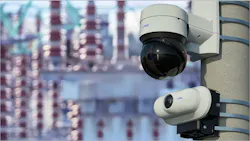
For rapid visual verification, i-PRO Security Radar can be integrated with up to four i-PRO Edge-AI PTZ cameras. The radar serves as the detection layer, while the PTZ cameras provide visual context when a target is detected. In an ideal deployment, the two technologies work together: the radar identifies and tracks the target, then sends location data to the PTZ cameras helping ensure they are pointed in the right direction.
This pairing is particularly valuable for substations, generating facilities, water treatment plants, solar farms, and remote utility assets where perimeter events need to be verified quickly. A radar alert with camera confirmation provides the location, classification, movement path, and visual evidence needed to decide whether to dispatch personnel, notify law enforcement, or monitor the event further.
Operational integrity also depends on technology that can withstand harsh environments. i-PRO Security Radar is built for outdoor use with IP66 and IK10 durability, and a coastal model is available for salt-heavy environments.
Cybersecurity and compliance are equally important. Utility security devices sit inside a broader cyber-physical risk environment, so they need to align with disciplined IT and security practices. i-PRO Security Radar is NDAA /TAA and FIPS 140-3 Level 3 compliant. For regulated and risk-sensitive organizations, these capabilities support procurement, governance, and long-term technology risk management.
Integration is another practical consideration. Utilities often operate mixed environments with existing VMS platforms, security operations workflows, and legacy infrastructure. i-PRO Security Radar is designed for open-platform deployment and integrates with leading VMS platforms, including VideoInsight, Genetec Security Center, and Milestone XProtect. It is also ONVIF S, M, G, and T compliant and compatible with Genetec’s Restricted Security Area surveillance module. Open architecture allows radar-based detection to become part of existing monitoring workflows, helping teams add capability while preserving prior technology investments.
For electric utilities, grid resilience is often discussed in terms of redundancy, storm hardening, cyber defense, and restoration planning. Physical intrusion detection should be treated as part of the same resilience planning. A stronger perimeter gives operators more time, better information, and greater control over events that could affect continuity.
i-PRO Security Radar combines wide-area detection, all-weather performance, false alarm reduction, optional PTZ visual verification, rugged construction, cybersecurity-focused design, and open VMS integration. For utilities responsible for critical infrastructure, the goal is straightforward: detect potential problems earlier, verify them faster, and respond before security incidents threaten service continuity.