Rethinking Substations for the Data Center Era
Key Highlights
- Data center growth is fundamentally reshaping utility load planning, placing substations at the center of grid modernization efforts.
- Factory-built substations offer utilities a practical way to accelerate deployment while improving safety, quality, and cost certainty.
- Modular substation strategies enable support both front-of-meter and behind-the-meter data center power needs without compromising reliability.
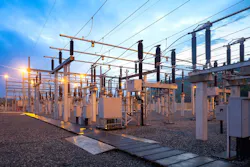
Electric load growth is no longer incremental. Utilities across North America are confronting a structural shift driven by advanced electrification and the rapid expansion of hyperscale and GenAI data centers. After nearly two decades of relatively flat demand, the grid is now under pressure to deliver large, concentrated blocks of power—often on timelines that challenge traditional planning and construction models.
At the center of this shift sits an asset class that has historically been viewed as necessary but static: the substation. Today, substations are emerging as strategic infrastructure, critical to enabling data center growth both in front of the meter and behind it, while preserving the reliability, affordability and safety standards utilities are charged with maintaining.
A New Load Reality for Utilities
From the 1950s through the early 2000s, utilities built infrastructure to meet steady population growth and predictable demand patterns. The following two decades were defined by efficiency gains and infrastructure saturation, resulting in muted load growth. That equilibrium has ended.
Since 2020, data centers have become one of the most significant drivers of new electrical demand. Looking forward, the convergence of AI workloads, cloud services, and broader societal electrification points to sustained—and accelerating—growth. This reality forces utilities to reconcile three priorities that are increasingly in tension: growth, affordability and reliability.
Substations sit directly at this intersection. They translate bulk power into usable capacity, protect system integrity and enable future flexibility. Yet many substation projects remain constrained by sequential construction practices, long critical paths, and exposure to permitting, labor, and weather risks.
In Front of the Meter: Substations as Grid Enablers
In front of the meter, utilities are being asked to support data center loads that can rival or exceed those of entire municipalities. Doing so requires not only new generation and high-voltage transmission, but substations capable of managing higher voltages, denser power flows, and faster deployment schedules.
However, utilities face constraints that are largely external: transformer backlogs, turbine availability, tariffs, and extended permitting timelines. While these factors are difficult to control, substation design and construction methods remain an area where utilities can meaningfully influence outcomes.
Traditional stick-built substations often extend project timelines due to their linear construction sequence and reliance on large onsite labor forces. In a market where time to power is increasingly synonymous with economic competitiveness, this model is being reevaluated.
Behind the Meter: Speed and Flexibility as Strategic Tools
Behind the meter, data center operators are pursuing temporary and permanent power solutions to maintain development momentum while awaiting utility service. These include onsite generation, microgrids and phased interconnection strategies that depend on robust substation infrastructure.
Behind-the-meter substations enable voltage transformation, protection and switching for these assets, while creating a pathway to integrate with utility infrastructure over time. For utilities, this approach can serve as a pressurerelief valve—allowing large loads to come online responsibly without compromising system reliability.
The implication is clear: substations must now be designed with transition in mind, capable of supporting interim configurations while aligning with longterm grid integration.
Factory-Built Substations: A Shift Within Utility Control
While utilities cannot eliminate permitting complexity or global supply chain constraints, they can rethink how substations are designed and built. Factory-built substations represent a shift from site-intensive construction to modular, preassembled subsystems delivered ready for installation.
This approach introduces several strategic advantages:
Schedule compression through parallel execution, with site preparation and fabrication occurring simultaneously
Improved safety and quality, enabled by controlled manufacturing environments and standardized processes
Reduced risk and cost variability, driven by lower labor costs, minimized rework and rigorous factory testing
For utilities serving data center markets, these benefits translate directly into faster energization, improved predictability and better capital efficiency.
A Natural Alignment with Data Center Development
Factory-built substations have already demonstrated value in storm response and distribution applications. Data centers, however, represent a particularly strong long-term fit. Their repeatable designs, scalable campuses and urgency for power align well with standardized, modular substation architectures.
Real-world deployments show meaningful reductions in project timelines and material waste, reinforcing the role factorybuilt substations can play in meeting near-term demand without sacrificing long-term system integrity.
Just as importantly, modular designs support future expansion, reconfiguration, and digital integration—positioning substations as adaptable assets rather than fixed constraints.
From Infrastructure to Enablement
As digital and energy infrastructure become increasingly intertwined, substations must evolve from passive nodes into active enablers. By rethinking how these assets are designed and delivered, utilities can unlock speed, resilience and flexibility—while maintaining the standards of reliability and safety the grid depends on.
In an era defined by rapid load growth and compressed timelines, the question is no longer whether substations must change, but how quickly the industry is willing to rethink them.
Lucas Mays, Director of Market Development – Energy at AFL
This content is sponsored by: