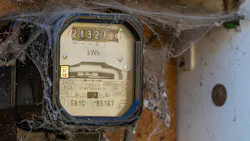
Do you remember the days when product evolution was a gradual process that happened over time? It’s hard to believe, but there was a time when technological advancement happened at a much slower pace than it does now. In some respects slow was good, but technology development matching the modern power grid’s growth is also important. As a favorite authors says, “the future is faster than you think.” In short, we live in an age where digital technologies need to be evolving faster. It helps that the cumulative effects of innovations are building upon each other. It’s called leapfrogging. Leapfrogging means skipping a step or stage. A leapfrogging technology skips over a less advanced one bringing a strategic advantage while speeding up progress and saving costs.
Look at the first generation of AMI (advanced metering infrastructure) technology or AMI 1.0. It developed in the traditional manner over a long period. It’s been part of the grid for so long that the scholars talk about the technology in terms of early-generation, mid-generation, and late-generation periods. But the demands of the behind-the-meter (BTM) segment overwhelmed AMI 1.0. It was designed for a simpler time when BTM was considered the edge of the grid with only electricity consumers inhabiting that region. By the early 2020s AMI 2.0 was introduced as the next-gen replacement for AMI 1.0, and it was really needed.
The customer was more technologically savvy than they were given credit for. They embraced digital technologies at a much faster rate than the conservative power delivery industry was ready to accept. Customer adoption of IoT (Internet of Things) technologies gave their homes and businesses connectivity, which led to renewables plus energy storage, but it didn’t stop there. They welcomed large numbers of DERs (distributed energy resources) coupled with EVs (electric vehicles) and microgrids resulting in tens of gigawatts located at-the-load. That brought about bidirectional power flows, and AMI 1.0 could not keep up with the customers. Utilities needed to know what was going on BTM!
Transitioning to Next-Gen Tech
Legacy limitations provided a narrow view of that BTM landscape. Strategists point out that AMI 2.0 would deliver the evolutionary shift necessary for transforming smart meters into grid-edge, software-defined computing platforms. As AMI 2.0 was gaining in popularity, AMI 3.0 leapfrogged and passed it with superior features. It provided the cutting-edge features both sides-of-the-meter needed, but AMI 2.0 was on track for widespread adoption. By 2024 AMI 2.0 user comfort levels increased, and large-scale deployments began and are still continuing. In 2025, the global AMI market size was valued at US$25.06 billion, and it’s expected to reach US$29.78 billion by the end of 2026 according to Fortune Business Insights. This market is being driven by initial rollouts, first-gen replacements and regulatory mandated grid modernization.
Replacing AMI 1.0 was more than simply swapping out old meters. It was reconfiguring the entire metering ecological system. Adding to the complexity, the grid was undergoing modernization too. Estimates place the number of AMI 1.0 meters installed in the U.S. around 146 million meters. Studies suggested the potential cost of upgrading to the next-gen would be in the hundreds of billions of dollars and addressing the regulatory element can’t be overlooked. Regulators expect utilities to be able to demonstrate improved performance to justify their modernization expenditures.
A report from the Utility Analytics Institute (UAI) explored the utility/regulator relationship and found that it’s vital for utilities to have data available that strengthens their rate-case filings. Regulators require detailed data supporting both compliance obligations and explaining the operational impacts of the AMI modernization. UAI’s report supplied examples of the types of high-resolution data supporting utility expenditures for their technological upgrades. They found it was especially relevant if the data was tied to enterprise tools like OMS (Outage Management Systems) and CIS (Customer Information Systems). Overall, it appears that utilities who regarded AMI as both a regulatory and operational asset have an advantage over those who don’t.
Skipping Generations
Dueling metering technologies add non-traditional complexities, and there are several vendors supplying AMI 3.0 platforms, so it is an issue. The majority of manufacturers, however, are providing a variety of AMI 2.0 systems. With the headstart AMI 2.0 has, it’s been the leading replacement technology for AMI 1.0. Realistically AMI 2.0 is a proven technology that’s more practical with its “near-real-time grid-edge capabilities.” It supports DERs, EVs, and other customer devices. In short, AMI 2.0 addresses the needs of today’s power grid, but is that enough? With current fast-track digital technologies there may not be sufficient time. Afterall, planners are always looking ahead and argue that building for the future is a better strategy.
For now, AMI 2.0 is the popular the next-gen AMI technology, and it continues improving. But what about that leapfrogging technology, AMI 3.0? It keeps popping up at the tradeshows. It’s also being included in discussions at technical conferences. The features and attributes found in AMI 3.0 technology have made it impossible for the establishment to ignore. By 2025, industry analysts were seriously discussing AMI 3.0 as “the” innovational breakthrough generational technology. They said it had the effect of adding the proverbial fork in the road to the next-wave AMI implementation track with AMI 2.0 on one course and AMI 3.0 on the other. At that point, AMI 3.0 became a competitive alternative.
Of course adding an alternative next-gen technology has the potential of messing up carefully calculated schedules, but stage-skipping technologies don’t follow any preconceived schedules. They’re following non-linear approach that tends to jump ahead based on what works, which breaks the traditional step-by-step phases. It’s an uncomfortable place to be, but so is being caught with an app that’s quickly obsolete. No one wants to spend a lot of money on the wrong technology when viable alternatives are available. Remember those 146 million meters needing to be upgraded mentioned earlier. There’s a lot riding on picking the precise fork in the AMI pathway that’s correct for each utility’s application.
Is There a Logical Replacement?
Analysts are saying AMI 3.0 is a fundamental change in today’s metering platforms. Some go so far as saying it’s a game changer or even a paradigm shift. This latest metering ecosystem utilizes next-generation technologies to correct the weaknesses of earlier metering systems. Of course AMI 2.0 includes many of those same attributes such as artificial intelligence (AI) and machine learning (ML), but AMI 3.0 builds on that and expands their functionality. It’s all about edge computing and embedded AI. One report said, “AMI 3.0 inserts AI/ML models directly into the meter for local processing.” That allows local autonomous, real-time decisions without reliance on central systems. Peer-to-peer communications makes it possible to transform the meter into an intelligent grid-edge node.
The transformation relies on sophisticated digital connections, which means taking advantage of being able to integrate hybrid connectivity into the AMI 3.0 platform. It improves latency, reduce data gaps, and better supports continuous grid monitoring with more redundancy. AMI 3.0 platforms utilize multiple-layers of higher communication technologies. Without going into too much detail, AMI 3.0 integrates applications like 5G, PLC (power line communication), LPWAN (low-power wide-area networks) and LoRaWAN (long range wide area network) for boosting its connectivity. Integrating multiples of these technologies together offer the redundancy necessary to guarantee constant grid visibility even if there are disruptions. Add GPS capabilities into the equation and the meters can precisely locate faults and automatically dispatch maintenance crews.
In addition, the AI/ML models improve probabilistic techniques making possible predictive load balancing, preempt fault isolation, restorative service, etc. with minimal human interaction. Taking that a step further, AMI 3.0 systems can access information from multi-databases and network with other systems improving intelligent decision-making capabilities. It also allows AI-driven AMI 3.0 platforms to interact with demand management systems, distributed energy resource management schemes, asset health monitoring strategies, etc. by making mounds of big-data usable for sound strategic-thinking. There is also an intangible byproduct of increasing the BTM segment’s user-friendliness for both the utilities and the end-of-grid users, which may not seem impressive, but it is to users.
It’s Complicated
User-friendliness can be a big plus because it makes the enhanced technologies powering these innovations less intimidating or threatening and more understandable. AMI 3.0 is considered more user-friendly than its competition because its integrated features. The embedded AI/ML models allows the utilities to improve service, while customers have easier ways to manage and control their energy use. This approach is more intuitive making complex tasks simpler without needing long training sessions.
Interestingly, AMI 2.0 is moving more toward AMI 3.0 in its features, as AMI 3.0 continues adding future-ready capabilities. But the power grid is also evolving and adding more challenges. Given the innovativeness of advancing digital technologies, it would not be surprising that the competition between 2.0 and 3.0 will result in some breakthroughs no one is expecting. That’s why tracking trending digital technologies is so exciting!
About the Author
Gene Wolf
Technical Editor
Gene Wolf has been designing and building substations and other high technology facilities for over 32 years. He received his BSEE from Wichita State University. He received his MSEE from New Mexico State University. He is a registered professional engineer in the states of California and New Mexico. He started his career as a substation engineer for Kansas Gas and Electric, retired as the Principal Engineer of Stations for Public Service Company of New Mexico recently, and founded Lone Wolf Engineering, LLC an engineering consulting company.
Gene is widely recognized as a technical leader in the electric power industry. Gene is a fellow of the IEEE. He is the former Chairman of the IEEE PES T&D Committee. He has held the position of the Chairman of the HVDC & FACTS Subcommittee and membership in many T&D working groups. Gene is also active in renewable energy. He sponsored the formation of the “Integration of Renewable Energy into the Transmission & Distribution Grids” subcommittee and the “Intelligent Grid Transmission and Distribution” subcommittee within the Transmission and Distribution committee.