AI Takes the Controls: Navigating the Grid’s 2026 Reliability Test
For two decades, the energy industry experienced relatively flat electricity demand. That era has ended. Today, the utilities industry confronts a perfect storm. Energy-hungry infrastructure, like the data centers powering our digital lives, drives unprecedented demand growth.
Simultaneously, the push toward green energy means the grid must integrate a massive influx of intermittent renewable sources. This intersection of high demand and variable supply creates a dynamic challenge for grid operators aiming to maintain reliability in 2026 and beyond.
The industry simply struggles to keep up. When I worked for a utility company, we saw a constant stream of applications from wind and solar farms wanting to interconnect. For every new connection, a whole series of administrative and logistical processes must unfold.
Planners must ensure the existing distribution and transmission lines possess the capacity to take on additional power. If not, they must spin off infrastructure upgrade projects. Now, with data centers needing power so quickly, utilities find themselves in an interesting state, wondering how to manage everything happening at once.
A More Complex Machine
The grid no longer functions as a one-way street with centralized power generation. It now operates like a dynamic, multi-lane highway, with distributed energy resources coming on and getting off at countless interchanges.
This complexity requires a more sophisticated approach to management. The reality of the energy transition dictates a diversified strategy. While the original thinking leaned toward a complete switch to green power, the pace of renewable interconnection cannot meet the explosive demand alone.
The inherent intermittency of renewables also necessitates other fuel types to support generation. Consequently, we see a renewed interest in nuclear power and a continued reliance on natural gas to supplement and support green energy integration. It has become a mix of resources, all requiring careful orchestration.
AI as the New Grid Operator
To manage this newly complex highway, utilities now leverage AI as a core operator. AI moves well beyond simple automation to actively manage critical grid functions.
For instance, demand forecasting represents a key area where AI delivers immense value. By analyzing historical data and projected needs, AI models can forecast demand with greater accuracy. This identifies potential bottlenecks in the grid infrastructure, allowing utilities to prioritize and execute necessary upgrades before new data centers come online and overwhelm the system.
In live grid operations, AI enables real-time load management and analytics. By constantly monitoring consumption, AI algorithms can optimize load balancing across the network. This intelligence also powers outage prevention.
The system can identify specific changes in power flow, pinpointing where an outage might occur, and proactively notify operators or perform automated switching to mitigate the issue. These applications, from future forecasting to day-to-day operational optimization, show how heavily utilities now depend on AI to keep the grid operating reliably.
Building Resilience for Extreme Events
Climate-driven disruptions add another layer of pressure to grid stability. AI-powered platforms provide the tools to anticipate, manage, and recover from major weather events like hurricanes and heatwaves more effectively.
By layering weather data on top of known energy consumption patterns, AI can predict how a projected heatwave will overload specific power lines in an urban area. Based on these predictions, operators can make informed decisions. They might turn up backup generators to handle the additional demand or engage customers in demand-response programs, compensating them for shifting energy usage to off-peak hours.
When an event occurs, AI helps manage the response. If operators must shed load to protect the wider grid, analytics can recommend the best areas to curtail, minimizing the impact on customers. It can even automate customer communications, notifying those in an affected area about the load-shedding strategy so they never feel left in the blind.
After a storm, the technology accelerates recovery. As customers report outages, pattern analysis can deduce what physical damage might have caused the power loss in a specific area, helping the utility restore service first to the most people in a more efficient manner. The possibilities for leveraging AI before, during, and after a weather disaster feel nearly endless.
Empowering the Connected Frontline
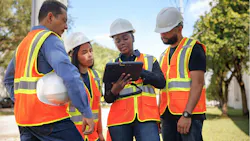
The biggest impact of AI comes from empowering workers on the frontline. The focus now shifts to enabling these workers to achieve more at the edge with data and mobile computing.
During a disaster recovery scenario, for example, inventory visibility becomes paramount. Responding quickly means knowing what replacement transformers or poles you have, where you have them, and how to stage them for efficient pickup.
Mobile technology provides this real-time asset visibility. Layering AI on top of that data optimizes the entire dispatch process. The system knows where the problems exist, where the people and assets sit, and can direct the right crews with the right equipment to the right job.
Consider the critical workflow of damage assessment. After a storm, damage assessors document downed poles and power lines. This information determines the sequence of restoration; a tree crew must clear a fallen tree before a line crew can repair a power line. This process of data capture in the field, often in a chaotic environment, gets a significant boost from on-device AI.
A technician can simply speak their observations in their natural language into a mobile device, and the AI will automatically populate the inspection form. They might say, “I see two broken poles lying down on North Shore Road. We need a tree crew out here before the line crew can come out.”
This eliminates the need to look up and down while typing in a hazardous area. Taking a picture of a damaged pole can trigger computer vision AI capabilities to automatically extract the pole number via optical character recognition (OCR) and populate the form, ensuring perfect data accuracy. This is a real-world scenario where intelligent automation streamlines fieldwork and accelerates restoration.
Bridging the Human Experience Gap
The utilities sector faces a critical human capital challenge. Over half the current workforce possesses less than ten years of experience. Unlike other industries that can hire seasonal workers, the utility world requires deep training and certification to work on critical infrastructure.
These craft workers develop their skills over many years. This experience gap presents a direct threat to grid reliability, because while AI provides powerful support, a human-in-the-loop always performs the physical operation and takes the final action.
AI can help bridge this gap by acting as a digital mentor. It can shorten the onboarding timeline for new workers through advanced training and simulations that expose them to scenarios they will encounter in the field.
With many seasoned engineers retiring, their expertise needs preservation. An AI-powered knowledge hub can aggregate this expertise, allowing newer technicians to consult a vast pool of information. Remote assistance tools, powered by AI, allow a single expert to support multiple workers in the field, scaling their impact without needing them to travel to every site.
This on-device AI capability becomes especially vital for the connected frontline worker in remote locations with spotty or nonexistent connectivity. A technician in a manhole or a rural black hole can still run small language models on their device to receive general guidance, a level of support that was previously impossible when disconnected from the cloud.
The Action Imperative: People, Process, and Progress
As utility executives prepare for this new, AI-driven operational reality, the classic triad of people, process, and technology must guide their strategy. The technology exists today, but true progress stalls if people lack buy-in or if processes remain stuck in the past.
The time for passive observation is over. The challenge now is to act. I urge every leader in the energy sector to take one concrete step this month: Identify a single, high-impact workflow hampered by outdated processes and engage your frontline workers to reimagine it with mobile, AI-powered tools. Ask them about their biggest pain points and involve them directly in designing the solution.
The path to a resilient grid is not paved with technology alone; it is built by an empowered, connected frontline. By placing these powerful tools directly into the hands of your workforce and trusting their expertise, you will enhance operational efficiency and build the resilient, reliable, and sustainable energy future your customers demand. The work begins now.
About the Author:
Tomi Fadipe serves as the Global Vertical Strategy Lead for Regulated Industries at Zebra Technologies. With over 15 years of experience in telecommunication infrastructure and engineering management, she develops and executes growth plans for critical infrastructure entities, including utilities and public safety. Tomi combines her passion for data, ingenuity, and engineering to create highly reliable and scalable technology solutions that empower frontline workers to deliver safe, efficient, and sustainable services.
About the Author
Tomi Fadipe
Tomi Fadipe serves as the Global Vertical Strategy Lead for Regulated Industries at Zebra Technologies. With over 15 years of experience in telecommunication infrastructure and engineering management, she develops and executes growth plans for critical infrastructure entities, including utilities and public safety. Tomi combines her passion for data, ingenuity, and engineering to create highly reliable and scalable technology solutions that empower frontline workers to deliver safe, efficient, and sustainable services.