A New Sense of Urgency for the Grid: Reflections from IEEE PES T&D
The IEEE PES T&D Conference and Exposition is held every other year, and having been an editor with T&D World for almost 25 years (I started as an intern in 1996 and then left for a few years to work on another brand); I could mark historical events with the timing of IEEE PES T&D shows. I remember when it was postponed from spring to fall because of Hurricane Katrina. The show was to be held in New Orleans, so not only was the venue affected, but the industry was also mobilized in response and restoration. Then of course, more recently, the event was canceled in 2020 –as many shows were—due to the COVID pandemic.
For the return of the event in 2022, we celebrated being able to be in person again, even with mention of the show organizers following the most up-to-date health guidelines in the host city. Then four years after the worldwide pandemic, everything was back to normal in 2024. Some of the main themes that came out of that year were the challenges of transmission expansion, supply chain issues, and collaboration models.
But the IEEE PES T&D Conference and Expo felt different to me this year; not because the industry suddenly discovered grid modernization or electrification or load growth (although the rate of growth has certainly changed). We’ve been talking about those things for years. What was different was the urgency.
Utility leaders weren’t speaking about the future like we tend to hear at these conferences. They were talking about projects already underway (big ones), transmission already constrained, substations already being planned and built, and capital already being committed at levels that would have sounded extraordinary a few years ago.
And that theme started right from the opening session. One of the biggest announcements from IEEE PES was its Vision 2050 initiative, a sweeping global research effort designed to better understand the forces shaping the world’s energy future and the role engineers will play in it. The project includes input from IEEE PES members, industry experts and consumers around the globe through focus groups, interviews and quantitative surveys that gathered tens of thousands of data points.
Some of the initial findings confirmed what many in the industry already know instinctively. Reliable baseload power remains central to the energy transition. Consumers want cleaner energy, but they also want the lights to stay on.
What stood out to me most, however, was one divide in consumer attitudes. According to the research, North American consumers are more likely to prioritize affordability when thinking about how to meet growing electricity demand, while consumers in Europe and Asia are more likely to prioritize “clean” energy first.
That finding is particularly relevant now as utilities balance massive infrastructure investment plans alongside rising customer expectations and political pressure.
Another finding from IEEE PES research conducted last year may have been even more interesting: Consumers overwhelmingly trust electrical engineers. Nearly all consumer respondents said they believed electrical engineers should help educate the public on energy issues, infrastructure challenges and the realities of the grid transition.
That is awesome, but being married to an electrical engineer myself, I don’t see him on Fox News or CNN educating large audiences. How exactly do engineers step into that role?
Some utilities are sharing videos from engineers on social media explaining reliability challenges or infrastructure projects. These are separate, of course, from storm restoration times, which are important in updating customers on response and rebuilding. Occasionally, utility executives or engineers are quoted in broader consumer media coverage.
But we still largely communicate within our own industry. Engineers speak at conferences. Utilities publish reports. Trade media covers the details extensively. Meanwhile, much of the broader public conversation about energy is driven by politics, social media narratives or commentary from people far removed from actually planning and operating the grid.
There’s an opportunity, and maybe even a responsibility, for the industry to break out of that cycle a bit more. Consumers clearly want trustworthy, technically grounded information. The question is whether the industry is prepared to meet people where they are instead of only speaking to itself.
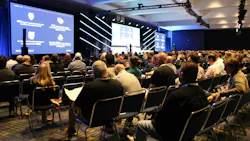
The theme of trust, communication and public engagement carried into a standing-room only technical session I attended: “Grid Investment Strategies to Meet Record Demand.”
Moderated by longtime industry voice Mike Beehler and regular contributor to T&D World, the panel included executives from Georgia Power, Xcel Energy, ComEd and Dominion Energy. The message from the panelists was consistent: The utility industry is entering the largest grid expansion cycle many of them have seen in their careers.
It was good to hear affordability continues to be a concern and priority for utility leaders. The panelists emphasized that this is not simply “growth at all costs.” Utilities are increasingly structuring contracts so hyperscale customers and other large-load users pay their fair share through minimum billing structures, collateral requirements and long-term agreements.
After nearly 25 years covering this industry, I can honestly say there has never been a more consequential or more exciting time to be telling the stories of the engineers, utilities and innovators working to build the future power grid.
Interested in hearing how utilities are tackling these challenges in the real world? Join utility leaders, engineers, and industry experts at T&D World Live 2026, September 1–3 in Orlando, Florida. Register by July 31 and save $200 with Early Bird pricing. https://events.tdworld.com/2026/9758491?ref=TDWArticles
About the Author
 Nikki Chandler
Nikki Chandler
Group Editorial Director, Energy
Nikki is Market Content Director for the Endeavor Business Media Energy group, which includes T&D World, EnergyTech and Microgrid Knowledge media brands. She has 30 years of experience as an award-winning business-to-business editor, with 24 years of it covering the electric utility industry. She started out as an editorial intern with T&D World while finishing her degree, then joined Mobile Radio Technology and RF Design magazines. She returned to T&D World as an online editor in 2002, and took over as managing editor in 2017, then market content director in 2023. She has contributed to several publications over the past 30 years, including Waste Age, Wireless Review, Power Electronics Technology, and Arkansas Times. She graduated Phi Beta Kappa with a B.S. in journalism from the University of Kansas.