Q&A: Building a Smarter Grid With Asset Intelligence, AI and Digital Twins
Utilities are under pressure to do more with an aging grid while preparing for unprecedented load growth, extreme weather and growing demands for reliability and affordability. At the same time, utilities have more data and technology at their disposal than ever before.
The challenge is turning that data into better decisions.
At T&D World Live, executives from Xcel Energy and CenterPoint Energy will join technology and industry experts for “Building Grid Resilience Through Asset Intelligence, AI, and Digital Twins,” a general session on Sept. 1 at 1:15 p.m. exploring how utilities are putting these technologies to work today.
The panel will examine how multi-source asset condition data, physics-based digital twins and AI can help utilities make more informed decisions about operations and capital investment. Among the key questions: When should a utility replace an asset, and when does it make more economic sense to extend its useful life? How can utilities demonstrate the value of those investments to regulators? And how can emerging technologies improve reliability and resilience without driving up costs?
The session will feature Ben Lanz of ESARA, Mike Adams of Osmose Utilities Services, Robert Brook of Neara, Todd Conner of Xcel Energy, Matthew Sattler of Detect and Paul Mathew of CenterPoint Energy.
Ahead of the session, T&D World spoke with Lanz, who will moderate the panel, about why the conversation is timely, what utilities can learn from early deployments and where he sees asset intelligence and AI taking the industry next.
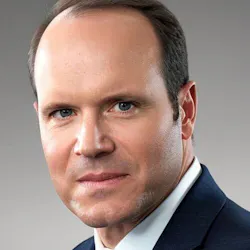
T&D World: Tell us about your career journey. What drew you to the electric utility industry, and how has your experience at ESARA shaped your perspective on the biggest challenges utilities face today?
Ben Lanz: I grew up doing electrical work with my dad, who was an electrician, and put myself through school working as an apprentice electrician. I met a professor who was a former DTE engineer and director of insulation research at the University of Connecticut whose work at the intersection of technology and the electric power industry fascinated me, and I decided to help him start a business to provide technology-based services to electric utilities.
Over my 30 years working with several for-profit and nonprofit organizations in the electric power industry, I learned the power of bringing good people together, presenting an industry or societal need, and collaborating to implement a solution.
ESARA is a nonprofit focused on the safety and reliability of power systems and is an extension of a lot of my current work associated with networking and giving back to the industry through better-practice education.
T&D World: As the moderator for this executive panel, what stood out to you about the conversation you wanted to bring together? Why do you think now is the right time to discuss asset intelligence, AI and digital twins in the same session?
Lanz: Utilities are bombarded by offers making claims about AI and digital twins, and some have been burned by hype. Simultaneously, U.S. utilities are on track to spend around 1% of asset replacement value on their aging grid over the next decade — a 100-year renewal rate with a $600 billion price tag.
We need innovation to help balance affordability with resilience and extreme load growth goals.
When I saw CenterPoint and Xcel Energy collaborating with a trusted, 90-year-old company, Osmose, and a tech startup, Neara, to take rich asset and condition assessment data from multiple sources, develop a physics- and AI-based digital twin of their grid, and use this data to help make informed capitalized life extension and resiliency decisions and communicate scope and value to regulators, I knew this was a story that needed to be told so others can learn and spur further innovation.
T&D World: Utilities have talked about digital twins and AI for years, but we're now seeing real-world deployments. What do you think has changed that is allowing these technologies to move from concept to practical tools for grid planning and operations?
Lanz: The reason utilities are looking for new efficiency and sustainability tools like AI and digital twins now can be explained by the crucible of pressures they are facing, including affordability questions, aging grids, vulnerable population locations, GDP- and health-related resilience expectations, extreme weather, large load growth, supply chain pressures and an aging workforce.
It is in this context that I saw Xcel and CenterPoint leadership recognize the need, take the opportunity to collaborate with trusted partners to take advantage of technology, and implement a step change in capitalized life extension and resiliency programs.
T&D World: This panel features leaders from Xcel Energy, CenterPoint Energy and several technology providers. What unique perspectives do you hope each brings to the discussion, and how do you expect those viewpoints to complement one another?
Lanz: This panel of executives is passionate about giving back to the industry. As my friend Rod Robinson with PG&E says, “collaboration is a gift,” and that will be on full display here.
Bellwether utilities Xcel and CenterPoint have unique challenges and technology adoption stories, and the technology providers have deep asset life-cycle and technology knowledge. The combination will be inspiring and educational.
T&D World: One of the key themes is making better asset investment decisions through richer data and analytics. What practical lessons or strategies do you think attendees will be able to take back to their own organizations after this session?
Lanz: Clean and accurate data is the foundation of any digital twin and AI implementation.
I think utilities will be surprised to hear that achieving better affordability and resiliency outcomes on a large scale is closer than they think. Many have the clean data they need — or can get it through small changes in current programs — to get started on an effective life extension program and implement their own physics- and AI-based digital twin.
T&D World: Looking ahead, where do you see the greatest opportunity for AI, asset intelligence and digital twins to transform utility operations over the next five to 10 years, and what are you most excited to discuss with attendees at T&D World Live?
Lanz: We are just getting started with AI and asset intelligence.
With digital twins, we are using the first three levels — descriptive, informative and predictive — but not with all major assets and without much of the system event data. Most digital twin work focuses on overhead distribution and transmission structures and lines, where most of our outage risk originates.
Currently, we get our descriptive and informative data through satellite, drone, LiDAR, GIS and periodic condition assessment data, through multiple independent and manual efforts. This data is ingested into a physics-based digital twin, which can then generate predictive information.
Some of the current predictive benefits are:
- Optimized replace-versus-capitalized-life-extension decisions to achieve predicted improvements in reliability, resilience and overall asset lifespan.
- Simulated line sag, wind speed, vegetation and operational and resiliency impacts.
- Asset visibility to show before-and-after views and performance outcomes after capital projects to improve government and regulatory engagement and compliance.
In order to achieve digital twin levels 4 and 5 — comprehensive and autonomous — so we can ask “what if” questions and eventually learn and act on behalf of operators, there is much more work to do.
First, all assets will be included in digital twins, including transformers, underground cable, switchgear and other substation equipment. We will have automated/staged drones and many more asset-attached sensors that can give us status updates. Power system sensors will track and report extreme voltage and current and operational/mechanical impact events so we can track stressors and predict electrical performance.
Our field teams will have wearable devices that guide them through procedures and document and interact with what they see from a safety and reliability standpoint.
We live in an exciting time for the power industry, and those like the executives on this panel that have the foresight to collaborate are going to do amazing things for humanity in terms of grid safety, affordability, resiliency and reliability!
What Attendees Can Expect
The session will explore how utilities are moving beyond the promise of AI and digital twins to apply these technologies to real-world grid challenges. Attendees will hear how Xcel Energy and CenterPoint Energy are using condition assessment data and digital models to inform capital decisions, extend asset life and strengthen resilience.
The discussion also will examine how better asset visibility can support regulatory and government engagement, while AI can amplify existing technologies and create new efficiencies across planning, operations and maintenance.
Most importantly, the panel will look at what comes next — and how utilities can begin building the data, technology and organizational capabilities needed for a more intelligent, resilient and affordable grid.
Interested in hearing how utilities are tackling these challenges in the real world? Join utility leaders, engineers, and industry experts at T&D World Live 2026, September 1–3 in Orlando, Florida. Register here: https://events.tdworld.com/2026/registration.
About the Author
 Nikki Chandler
Nikki Chandler
Group Editorial Director, Energy
Nikki is Market Content Director for the Endeavor Business Media Energy group, which includes T&D World, EnergyTech and Microgrid Knowledge media brands. She has 30 years of experience as an award-winning business-to-business editor, with 24 years of it covering the electric utility industry. She started out as an editorial intern with T&D World while finishing her degree, then joined Mobile Radio Technology and RF Design magazines. She returned to T&D World as an online editor in 2002, and took over as managing editor in 2017, then market content director in 2023. She has contributed to several publications over the past 30 years, including Waste Age, Wireless Review, Power Electronics Technology, and Arkansas Times. She graduated Phi Beta Kappa with a B.S. in journalism from the University of Kansas.