PG&E Sets the Blueprint for Grid Modernization
Key Highlights
- PG&E implemented an integrated grid planning initiative supported by IFS Copperleaf to unify asset and investment management across its operations.
- The new approach improved capital efficiency, achieving a 20% unit cost reduction and enabling reinvestment into critical infrastructure.
- Moving from disconnected tools to a single source of truth, PG&E enhanced decision-making, risk assessment, and portfolio optimization for future resilience.
- The transformation allows PG&E to evaluate diverse investments on a common economic scale, aligning projects with strategic and regulatory goals.
- This strategic overhaul positions PG&E to better serve its 16 million customers amid increasing demand, climate risks, and the push for renewable energy.
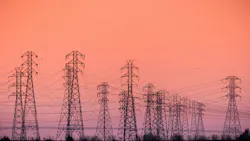
As the utility industry enters a period of major transformation, it needs an electrical grid today that can keep up with tomorrow’s challenges. Rapid growth in energy-intensive data centers, accelerating electrification through EVs and emerging transportation technologies and the growing urgency of climate resilience are pushing North American utilities into a new era of operational complexity — one that legacy planning approaches were never designed to manage.
For decades, utility planning has been organized in isolation, with generation, transmission and distribution operating as largely independent domains. In an environment increasingly defined by extreme weather events, wildfire risk and fast-rising demand, that fragmented approach is no longer just inefficient — it actively undermines reliability and resilience.
In Northern California, Pacific Gas and Electric Company (PG&E), recognized that the time to change this was now. Serving natural gas and electricity to more than 16 million people with new and changing energy transitions demanded a strategic overhaul to how grid investment is evaluated, prioritized and executed. Here’s how PG&E transformed grid planning and laid the operational framework for grid modernization.
Building a Framework
According to a recent Deloitte research report, “2026 Power and Utilities Industry Outlook,” utilities are under pressure to meet the energy demands of the AI economy while maintaining affordability.
“Driven by AI training workloads, alongside electrification in transportation and industry, peak demand is projected to grow by about 26% by 2035, testing today’s grid limits,” the report stated. “At the same time, new supply is not coming on fast enough and reliability pressures are mounting.”
Across the nation and even across the globe, the utility industry is being forced to evolve quickly as electrification, EV growth, a pressing need to focus on renewable energy and the impacts of climate change are all impacting how utilities operate. Because today’s customer needs are multidimensional, PG&E’s team met to decide how to address these changing needs efficiently.
In response, PG&E, supported by IFS Copperleaf, began an integrated grid planning (IGP) initiative in 2024. For the first time, the utility applied a comprehensive, enterprise-wide framework to capital and asset strategy. This approach allowed its business leaders and decision makers to prioritize the right work at the right time, optimize limited capital and dynamically adapt to change.
IGP provided a strategic decision-making layer that enables PG&E to answer critical questions, such as “What work should we do? When should we do it? And how can we execute it most efficiently?”
The company trialed work bundling across its grid portfolio. With IGP, PG&E grouped projects and coordinated execution across multiple programs. PG&E now leverages IFS Copperleaf integrated planning to manage its complex portfolio of assets, enabling better resource allocation with significant cost benefits and a more reliable, consistent service to its 16 million customers.
As a result of its business-critical partnership with ISF Copperleaf, PG&E is creating a framework and able to stay agile. For example, after the utility piloted integrated planning across a $100 million portfolio, it experienced a 20% unit cost efficiency. This allowed PG&E to reinvest millions back into the business and IFS Copperleaf customers to better address their needs.
In the Wake of the Winter Storms: Severe Weather Pushes Limits of Traditional Grid Planning
Electric utilities can not only leverage integrated grid planning during blue-sky events, but also in advance of severe weather. On the other side of the country in the Northeast, the recent winter storms inflicted significant outages for utility customers due to the ice-covered lines and heavy snow.
“The recent winter storms are another stark reminder that for tens of millions of Americans, keeping the lights on is no longer something they can take for granted,” said Marc Lamoureux, principal product manager at IFS Copperleaf. “The new weather reality requires a new approach to grid investment and planning that takes in and understands the bigger picture. At a time when electricity bills are already climbing, and affordability is becoming one of the defining challenges of modern utility leadership, the pressure on utilities and today’s grid to ensure maximum uptime is only exacerbated by events such as this weekend’s storm. Heavy snow, ice, and extreme cold pushed parts of the grid to their limits, driving outages, emergency repairs and difficult trade-offs in real time.
Escalating weather extremes are exposing the limits of traditional capital planning, and utilities must build a more resilient, affordable grid, he said.
“Over half a million U.S. citizens are without power, with reports stating Massachusetts to be the worst affected state throughout the country where over 250,000 residents have been plunged into cold and no light,” he said. “For customers, it showed up as dark homes and rising frustration. For utilities, it showed up as cost, complexity, and scrutiny.”
Events like this only sharpen the tension, he continued.
“Utilities are expected to harden aging infrastructure, expand capacity for electrified transportation and energy hungry data centers, and prepare for more frequent weather disruptions, all while regulators and customers push back hard on rate increases,” he said. “That tension is not theoretical. It plays out during storms, during restoration, and during the months that follow when capital plans are questioned line by line.”
Demand patterns are shifting fast in the electric utility industry, he said. For example, industrial reshoring, EV load pockets and AI -driven computing are stressing parts of the grid that were never designed for this level of use. At the same time, inflation, higher interest rates, and material constraints are driving up the cost and risk of every capital project, and after a major storm, those pressures only intensify. Emergency work competes with long term investments, and yesterday’s assumptions no longer hold.
“The issue is that most capital planning processes were not built for this reality,” he said. “Many utilities are still relying on fragmented data, spreadsheets and siloed decision making. Investment choices are often shaped by precedent or short-term pressure rather than value, risk and customer impact. Affordability is too often addressed after plans are largely set, not when trade-offs can still be made.”
Through a combination of asset investment planning and industrial AI, utilities can prepare for severe weather and build a more resilient and reliable grid.
“Integrated planning allows for earlier interventions, smarter timing of investments and more informed use of funding and alternatives,” he said. “Most importantly, it helps ensure that when the next storm hits, the grid is stronger and every capital dollar is working as hard as possible for the customers who depend on it.”
Changing the Approach to Grid Planning
Prior to integrated grid planning, PG&E relied on a patchwork of spreadsheets, Power BI reports and homegrown tools for investment planning. While functional for individual lines of business, these disconnected systems made it difficult to see the full picture. PG&E isn’t alone — still, many utilities continue to struggle with fragmented planning processes, siloed data and disconnected teams across finance, operations and asset management.
Before its deployment of integrated planning, PG&E had a diverse set of tools that it used for asset planning — but it lacked an enterprise tool that helped the utility to efficiently manage system planning. The disconnect in its systems meant that PG&E regularly faced challenges with capital efficiency and ensuring every dollar was directed to the highest-value work, reliability and customer outages and strategic alignment when it came to execution with long-term goals.
Today, PG&E is focusing on a more holistic, data-driven approach. Through integrated grid planning, the utility can align resources across multiple programs and lines of business. With wildfire risk, capacity growth and aging assets as pressing concerns, PG&E decided to partner with IFS Copperleaf and Palantir Foundry to transition from siloed planning to a unified, data-driven approach.
Putting the Model into Action
By moving to a unified platform, utilities can aggregate all investments in a single system of record and value them consistently. For example, the IFS Copperleaf Value Framework enables companies to evaluate diverse investments — from wildfire mitigation to capacity upgrades — on a common economic scale, ensuring that every decision aligns with corporate strategies and regulatory commitments.
With IFS Copperleaf, PG&E can aggregate all its investments in one place, value them consistently and plan for the next decade, which it couldn't do before. The utility can now avoid redundant field work, reduce outages and deliver measurable financial and operational benefits.
By consolidating more than 80 data sets across 20 systems into a single source of truth, and creating more than 17,000 bundled investment decisions, PG&E has now established a transparent, scalable model for investment planning.
From this point forward, scenario modeling and continuous re-optimization enable PG&E to assess asset risk, generate investment plans and optimize portfolios in alignment with strategic objectives, regulatory requirements and resource constraints.
As a result of the successful pilot, PG&E identified millions of customer outage minutes avoided, measurable cost savings, improved customer reliability and a clear pathway to long-term system resilience. PG&E’s integrated grid planning transformation demonstrates what’s possible when utility planning evolves — switching from disconnected, reactive processes into a coordinated, strategy-led approach.
PG&E is strengthening its ability to provide a dependable, resilient and sustainable energy system for customers across California. As electrification accelerates and climate uncertainty intensifies, traditional planning models are falling behind. PG&E’s blueprint offers a practical and successful framework for how other utilities can navigate what comes next.Top of Form
About the Author
Wen Tu
Wen Tu is senior director of Integrated Planning at Gas & Electric (PG&E). He drives innovation in long-term capital investment decision-making, bridging complex operational challenges with data-driven solutions that improve reliability, efficiency and customer outcomes. Wen has extensive experience leading integrated grid planning and enterprise-level initiatives in the energy and utilities sector.
Marc Lamoureux
Marc Lamoureux is Principal Product Manager at IFS Copperleaf.