Standardizing Safety From the Ground Up
Key Highlights
- SRP established a cross-functional team to develop a company-wide crane safety program, emphasizing standardized practices across all equipment types.
- The utility conducts annual fleet evaluations to improve equipment specifications, safety features, and operational efficiency based on field input and safety data.
- Supporting materials like engineered outrigger pads and cribbing are selected during planning to address ground conditions, load requirements, and usability, reducing property damage and safety risks.
- Formalized procedures and cross-departmental collaboration ensure consistent crane operation, inspection, and training, minimizing human error and enhancing safety.
- SRP’s partnerships with industry experts and standards organizations help integrate engineering data and best practices into daily operations, promoting continuous safety improvements.
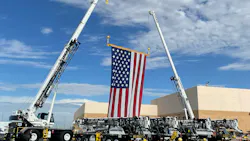
Utilities operate a wide variety of cranes and lifting equipment, all requiring the same commitment to safe operation. At Salt River Project (SRP), that commitment has led to an ongoing effort to standardize equipment specification, operator training, supporting material selection, and operational guidance across its fleet.
As part of that effort, SRP established a cross-functional team to develop a company-wide crane safety program. During that process, an incident involving a 12,000-lb capacity service truck crane reinforced an important lesson: every crane—regardless of size or department—deserves the same level of scrutiny.
That realization sharpened the team's focus and expanded standardized practices across the organization.
One of the largest public power and water utilities in the United States, the utility operates a diverse fleet supporting transmission, distribution, substation, hydro generation, and infrastructure operations throughout Arizona.
SRP’s Transportation team supports new capital purchases for the utility’s rolling assets, including bucket trucks, digger derricks, cranes, service trucks and support vehicles, while also providing lifecycle support, modifications, and fitment considerations.
Moving Beyond 'Like-for-Like' Equipment Replacement
Rather than simply replacing equipment “like for like,” SRP conducts annual fleet evaluations to identify opportunities for improvement. Equipment specifications are developed using input from field crews and operational leaders.
Everything from lighting packages and storage solutions to crane accessories, supporting materials, and ergonomic enhancements are considered. Then, specifications are developed internally. This strategy improves consistency, enhances safety, and reduces operational risk through planning and informed decision-making.
Integrating Supporting Materials into Fleet Planning
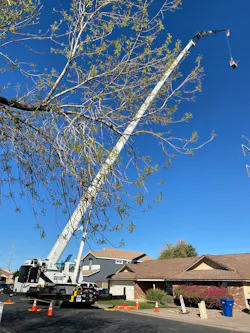
An area that received increased attention in recent years is the selection and implementation of outrigger pads, cribbing, and ground protection systems. Historically, supporting materials were often treated as secondary considerations, with crews relying on whatever was supplied with the equipment or utilizing materials available in the field. As equipment usage increased and field conditions varied, limitations in that approach became apparent.
Wood-based pads frequently require replacement due to wear, environmental exposure, and deteriorating handles. Crews also experienced instances of property damage, including cracked concrete, damaged landscaping, and compromised irrigation systems resulting from inadequate load distribution. These challenges highlighted the need for more application-specific supporting materials and a more deliberate selection process.
Today, supporting materials are evaluated during the initial planning and specification stages of new equipment purchases, particularly for cranes, aerial devices, and service truck cranes. SRP currently uses a combination of engineered outrigger pads, ProStack cribbing systems, and LevelRight adjustable pads to address varying operating conditions.
During the specification process, SRP evaluates equipment loading, storage requirements, accessibility, ergonomics, anticipated ground conditions, and deployment efficiency to determine the most appropriate supporting materials for each application.
This approach aligns with DICA’s methodology of evaluating equipment loads, soil conditions, site constraints, and operational requirements before selecting supporting materials. Engineering data and collaboration among utility personnel, equipment manufacturers, safety professionals, and field supervisors help ensure the right combination of pads, cribbing, and supporting materials are selected.
Designing for Real-World Use
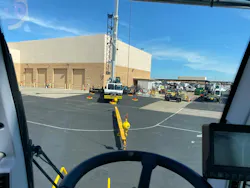
For SRP, usability is a critical part of the discussion. Equipment that is difficult to access, cumbersome to handle, or impractical for operators to use consistently often creates additional risk in the field. Supporting materials are now evaluated not only for load capacity and durability, but also for visibility, portability, and ease of deployment. Considerations include handle design, overall weight, deployment methods, visibility, and slip resistance.
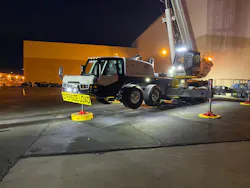
SRP has incorporated storage systems directly into vehicle specifications. On some service trucks, supporting materials are mounted underneath the service body for easier access and transport. When crews have the necessary materials readily available they are more likely to use them correctly.
The increased focus on supporting materials parallels a broader effort inside SRP to formalize crane operational practices. While many procedures previously existed through institutional knowledge and were documented by a formal crane committee, the utility recognized the need to establish better expectations, improve consistency, and clarify responsibilities across departments.
Formalizing Crane Operations
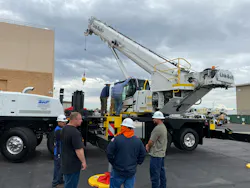
That effort accelerated following an internal review of crane operations and an outside crane audit, which identified the lack of a formalized, organization-wide crane safety program. The utility subsequently established an ad-hoc team composed of safety personnel, trainers, operational leaders, maintenance personnel, and crane operators from multiple departments to develop a company-wide program for mobile cranes.
Because of a previous service truck crane incident, one of the initial areas of concern for the committee was to ensure this type of equipment received the same level of oversight as larger cranes. Service truck cranes have many of the same operational and safety challenges as larger mobile cranes, particularly when it comes to setup, ground conditions, and supporting material selection.
The committee used that experience to broaden its focus, ensuring consistent expectations for operation, inspection, training, critical lift planning, and communication across operational groups and equipment types.
Engineering Out Risk Through Application Expertise
Another focus area for SRP has been to reduce opportunities for human error during equipment setup and operation. By creating repeatable processes, the utility aims to improve operational consistency and reduce reliance on individual judgment in the field.
That philosophy extends to supporting material selection. Evaluations consider how equipment will actually be used in the field, including anticipated ground conditions and ergonomic considerations. Early collaboration with manufacturers allows supporting materials to be integrated into equipment design before units enter service.
That’s where SRP’s application-focused discussions with DICA come in. As lifting environments become more complex and safety expectations increase, utilities are increasingly seeking application expertise related to load distribution, equipment setup, and ground stability as part of broader risk-management efforts.
Supporting material selection requires understanding equipment loads, outrigger reaction forces, allowable ground bearing pressure, and operating conditions to match supporting materials to the application. Higher loads and pressures require stronger and stiffer supporting materials to spread loads to levels the ground can withstand safely.
Burnett’s involvement with ASME committees, including B30.5, B30.7, and P30, has influenced the direction of SRP’s operational planning. Likewise, DICA’s participation on ASME P30 and other industry technical committees has helped the company contribute field experience and engineered best practices related to ground conditions, outrigger support, and load handling. The company also works with customers to help interpret how industry standards can be practically applied within day-to-day utility operations.
SRP’s relationship with DICA reflects a growing emphasis on process standardization. For utilities, that distinction is important. The objective is not necessarily to mandate a single manufacturer or product type, but instead to establish repeatable processes for evaluating equipment, selecting supporting materials, conducting inspections, and implementing best practices consistently across departments.
Safety and Productivity Go Hand in Hand
Standardization has also improved productivity by streamlining setup and increasing equipment consistency. Crews spend less time improvising and more time focusing on the work itself. Consistency reduces decision-making time and minimizes rework or preventable delays.
SRP’s efforts illustrate how utilities can improve crane operations by focusing on intentional planning, cross-functional collaboration, and operational consistency.
Rather than changing direction, the service truck incident reinforced the value of the work already underway and expanded SRP's commitment to applying consistent operational expectations across its entire fleet.
A Broader Industry Opportunity
For utilities evaluating their own crane operations, one of the most important lessons may be that smaller equipment deserves the same level of attention as larger cranes. Setup practices, supporting materials, inspection procedures, and operator guidance all contribute to reducing risk regardless of crane size.
SRP’s experience also highlights the value of establishing repeatable processes. Consistent procedures create a foundation for training, accountability, and continuous improvement. When operators are trained to clear expectations and provided the tools to follow them, organizations are better positioned to reduce complacency and improve both safety and productivity.
Another lesson is the importance of understanding how and why equipment is used in the field. Fleet and procurement decisions are more effective when based on a clear understanding of operational requirements and practical realities occurring in the field. Vendor partnerships can play an important role in helping organizations make more informed decisions.
Simply selecting the largest or most conservative solution is not always the best answer. Supporting materials must be matched to the application. Oversized or unnecessarily heavy products can introduce additional transportation costs, equipment constraints, and productivity challenges without providing meaningful operational benefits. The goal is to provide the right support for the conditions and the work being performed.
Ultimately, SRP’s approach demonstrates that improving crane operations is less about any single product and more about creating intentional systems, processes, and partnerships that support safer, more consistent decision-making in the field.
About the Author
Seth Burnett
Seth Burnett is a Fleet Design Specialist for Salt River Project, Transportation Services Engineering Department. He serves on several ASME standards committees, including B30.5, B30.7, B30.32, B30.22 and P30.
Kris Koberg
Kris Koberg is the President and CEO of DICA, a manufacturer of supporting materials, ground protection mats, and associated products. He is a member of ASME P30 committee, North American Matting Association technical committee, and he chaired a task force to create "A Guide to Outrigger Pad Materials, Selection and Usage" for SC&RA.