Con Edison Invests $3.9 Billion in Grid Upgrades Ahead of Summer Peak Demand
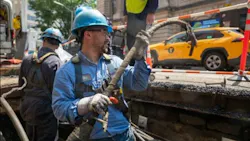
Con Edison is investing a record $3.9 billion in its electric delivery system across New York City and Westchester County as it prepares for another summer of rising electricity demand and more frequent extreme heat events.
The utility said the investments are intended to maintain reliability during peak summer conditions while positioning the grid for long-term changes in weather patterns and customer load growth.
Con Edison projects summer peak demand could exceed 2025 levels as higher temperatures and humidity increase air-conditioning use across residential and commercial sectors.
Research conducted by Con Edison and Columbia University projects New York could experience 17 days annually above 95°F by 2030 and 27 days by 2040, compared with a historical average of four days.
“Our ongoing investments help deliver safe, reliable service, even as summers grow hotter and the demand for power increases,” said Matthew Ketschke, president of Con Edison. “We build advanced technology into our grid to increase efficiency and capacity. We use data to identify the upgrades that will have the greatest benefit for our customers.”
System Investments Target Capacity and Reliability
Con Edison’s summer readiness investments include:
- Installation of 88 new underground transformers
- Addition of 142 overhead transformers
- Construction of 123 spans of underground and aerial cable
- Installation of 381 spans of open cable
- Deployment of 180 new utility poles
The company said projects were selected based on asset age, performance history and system demand. Investments also support resilience against storms, flooding and other weather-related disruptions across Con Edison’s 604-square-mile service territory.
Regional Upgrade Highlights
Manhattan: Cable upgrades, outage restoration technologies and load transfers to support reliability and accommodate growth in Harlem, Roosevelt Island, the East Village and Kips Bay.
Brooklyn: Four new cables serving Williamsburg, Greenpoint, Fort Greene, Clinton Hill and Bedford-Stuyvesant, along with a transmission cable connecting the Greenwood and Gowanus substations.
Queens: A new transmission line connecting the Vernon and Newtown substations in Long Island City with 200 MW of transfer capability for a growing load area.
The Bronx: Installation of more than 100 sections of primary cable, 95 spans of open wire and switching technologies intended to improve system capacity and reliability.
Westchester County: Upgrades to overhead infrastructure and deployment of additional switching and isolation equipment to reduce outages.
Staten Island: Pole, wire and transformer upgrades in New Brighton, Stapleton, Dongan Hills, Park Hill and Richmond Town, including burying approximately one mile of overhead cable to improve storm resilience.
Summer Load Outlook and Customer Impacts
Con Edison forecasts peak electric demand will reach 12,690 MW under design conditions. The utility recorded a peak of 12,530 MW on June 25 last year, while the all-time system peak remains 13,322 MW set on July 19, 2013.
The company noted that increased regional energy use and tighter generation availability may contribute to higher summer bills.
Projected bill impacts include:
- A typical New York City residential customer using 350 kWh per month is expected to pay about 5.7% more than last summer.
- A typical Westchester residential customer using 500 kWh monthly is projected to see bills decline by 2.8%, primarily because of lower supply costs.
- A New York City commercial customer using 10,800 kWh with a 30-kW peak demand is expected to see an increase of less than 1%.
Con Edison noted that delivery rate increases approved by the New York State Public Service Commission also contribute to customer bill changes.
Grid Technologies Supporting Operations
The utility said recent technology deployments are intended to improve operational flexibility and reliability across its 3.7 million-customer service territory.
These include advanced switching technologies designed to limit outages from short circuits, smart meter capabilities that enable targeted emergency load reductions while avoiding critical facilities where possible, infrared inspections inside manholes to identify cable hot spots before failures occur and voltage reduction capabilities to manage periods of elevated demand.