What Summer 2026 Revealed About the U.S.’s Energy Hot Spots & The Future of the Power Grid
Key Highlights
- Summer 2026 revealed that overlapping factors like heat, data center growth, and aging infrastructure threaten grid reliability and increase costs.
- The expansion of data centers in high-temperature regions intensifies energy demand, creating hotspots that challenge existing grid capacity and infrastructure.
- Modernizing transmission lines and increasing capacity are essential to accommodate future energy needs and integrate renewable resources effectively.
This summer, rising temperatures driven by El Niño and scorching heat domes increased pressure on U.S. utilities and tested the grid. At the same time, utility providers continued to manage the rapid expansion of AI data centers and their impact on energy demand.
Utility companies are entering a new age where grid reliability, consumer affordability and data center growth are becoming increasingly interconnected. According to the International Data Center Agency’s 2026 Global Data Center Report, the global footprint of data centers has grown 36% since 2024, and with 43% of the world's data centers located in the U.S., these facilities account for roughly 6% of the nation’s total electricity consumption.
While 6% may not appear initially significant, when investigating overlapping factors related to data centers, it becomes clear that U.S. energy demand is growing at an exponential rate and it’s reshaping how utilities must think about planning and investing in the future of the grid.
What Summer 2026 Revealed
When record heat collides with rapidly expanding digital infrastructure, power grids are pushed to their limits, creating a perfect storm of pressure on an aging grid and affordability concerns for consumers.
To better understand these overlapping forces, RINA developed a geospatial visualization of the United States that reflected a combined scoring model of projected summer temperatures, electricity prices and data center counts. The RINA Heat Map identified the country’s biggest energy hot spots, or the states most at risk of feeling the greatest impact during summer 2026.
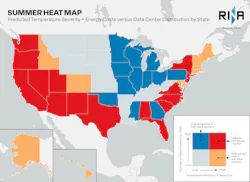
The findings forecasted that nearly a third of states would undergo the highest anticipated impact based on a greater concentration of data centers and high projected summer temperatures and electricity prices. The largest concentration of all three factors was located along the West Coast and Sun Belt regions with eight states predicted to be impacted the most.4 The Heat Map shows that as data centers continue to cluster in specific regions that are prone to higher temperatures, these energy bottlenecks can drive increased utility costs and weaken reliability.
These elements reveal not just weather hot spots, but also zones where demand is outpacing infrastructure upgrades. While many conversations among utilities center on whether the U.S. can generate enough electricity to meet demand (and simultaneously safeguard the grid), the primary challenge is transmission line constraints. Essentially gridlocks on power delivery, the lack of modern transmission lines has become one of the largest barriers to accommodating both growing electricity consumption and the ability to integrate new power generation resources. The U.S. Department of Energy predicts that to meet growing clean electricity demands, we’ll need to expand transmission systems by 60% by 2030 and potentially triple them by 2050.
The converging of these pressures reveals a key lesson from summer 2026: The heart of U.S.’s energy challenge isn’t simply a power generation issue, but a larger infrastructure and transmission issue as energy demand outpaces our existing infrastructure’s capabilities.
Where We Go From Here
1. Expand Flexibility to Meet Demand
Peak demand remains a challenge for utilities. Demand response programs can reduce stress on the grid during critical hours when residential demand surges. However, a post-pandemic world has shifted these hours making rolling brownouts more common.
Utilities must rethink traditional strategies and look toward a more diverse portfolio of energy resources to balance demand. There’s no single solution for the industry’s demand challenges, but a combination of renewables, battery energy storage systems, flexible generation and existing assets that can work together to support reliability will be key.
2. Accelerate Additional Power Resources
Eighty-eight percent of renewable energy sources came online in the last year, more than any other type of source. Renewable energy also continues to be one of the most cost-effective sources. For example, large-scale wind and solar investments in the Texas region provided over one-third of the state's electricity in 2025 and remain a cost-effective solution.
Battery energy storage systems (BESS) are also essential for helping utilities bridge the time between when renewable energy is captured and when customers need it most. By storing excess electricity and delivering during peak hours, BESS helps manage reliability and control costs. As extreme weather becomes more frequent and peak demand less predictable, BESS and renewables remain a critical link to reliable power.
3. Modernize Transmission Infrastructure
Ultimately, investing in transmission line modernization across the U.S. remains the most impactful strategy. Modern, advanced transmission capabilities allow utilities to provide lower-cost electricity into constrained regions, increase grid resilience during extreme weather events and further support the introduction of new generation resources.
Summer 2026 revealed that the nation’s energy challenges are not defined by a single factor, but a collection of influences. The future of energy requires investing in a more flexible and modernized solution that addresses not only the needs of consumers, but allows utilities to establish a resilient energy future.
About the Author
Larry Paulhus
Larry Paulhus is Head of Electric Consulting at RINA.