Electricity as a Weapon of War: The Global Crisis of Power Infrastructure in 2026
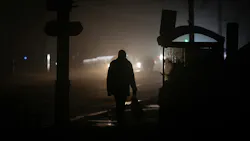
In 2026, electricity is often used not as an instrument to bring health, wealth, productivity and prosperity to the people of the world, but as a weapon of war. As I began writing this article, several recent news stories stood out.
On Oct. 8, 2023, days after Hamas militants carried out attacks in southern Israel that killed hundreds of people, the Israeli government announced it would cut off electricity supplies to the Gaza Strip. Human rights organizations widely condemned the move. Later, in March 2025, Israel also cut power to a desalination plant supplying drinking water to Gaza.
On March 23, 2026, President Donald Trump reportedly chose not to follow through on earlier threats to strike Iran’s power grid after what he described as productive ceasefire talks. Still, Defense Secretary Pete Hegseth later said the United States was “locked and loaded” to target Iranian infrastructure, including power generation facilities, if diplomacy broke down.
Israeli officials said the utility shutoffs in Gaza were intended to pressure militant groups, including Hamas. Meanwhile, U.S. threats against Iranian infrastructure were tied to efforts to pressure Iran to reopen the Strait of Hormuz, whose closure threatened global energy markets as of press time.
In another theater, the Ukraine-Russia war grinds on, with power infrastructure frequently targeted by missiles, shelling and drones. T&D World has previously reported on utility workers laboring to restore power and complete infrastructure projects under the threat of gunfire.
Ukraine’s Deadly Power Crisis
Ukraine was working to become energy independent from Russia for years before the 2022 invasion.
Russia’s strategy to disrupt the warfighting abilities of Ukraine — as well as the lives of ordinary Ukrainians — has included striking at transmission lines and occasionally power plants and their associated T&D equipment. According to a report by the Washington, D.C.-based nonprofit, the Center for European Policy Analysis (CEPA), the Russians have adopted a system of “islanding,” which means something very different than the way people who talk about power grids usually use this word.
The goal is to break up Ukraine’s power grid into isolated pockets, forced to operate without supporting one another. This forces Ukraine’s armed forces to fight without powered repair depots, logistical hubs and production facilities, but it also leaves Ukrainian citizens in the dark and cold during sub-zero winters.

Paul Shmotolokha, CEO of New Use Energy, said the Russians first focused their attacks on power plants, and have destroyed the Nova Kakhova hydroelectric station on the Dnipro River, which triggered a massive environmental disaster as well as sent Ukraine deeper into an electricity supply crisis.
“They have targeted every coal, gas and diesel power plant. This winter they brought total power generation below 40%,” Shmotolokha said. “They also target high voltage transmission lines — especially the ones that bring power from neighboring countries. They then target substations. Hundreds of them have been hit.”
Shmotolokha’s family has ties to Ukraine, as his parents were refugees during WWII, and his company worked to supply portable power supplies to medical facilities in Ukraine. New Use Energy has deployed over 600 portable power units in over 50 hospitals across Ukraine, according to its website.
According to CEPA, only about 60% of Ukraine’s electricity demand can currently be met because of damage caused by attacks by cruise missiles, aircraft and drones. Aerial attacks are focusing on isolated 750kV and 330kV transmission lines, as well as upon power plant substations.
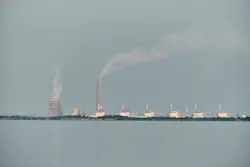
Most of Ukraine’s power comes from nuclear power plants, and before the outbreak of war, there were four owned and operated by the Ukrainians. That number dropped to three in March 2022 when the Russians seized control of Zaporizhzhia Nuclear Power Plant (ZNPP), the most powerful nuclear plant in Europe.
Shmotolokha said the situation at ZNPP is “another Chernobyl disaster waiting to happen,” adding that it could put Europe and Russia at risk of irradiation.
“ZNPP is very close to a major population center, closer than Chernobyl was to Kyiv. There often are critical moments when power is shut down by Russians to the reactor or there isn’t enough water for cooling,” Shmotolokha said. “Everyone is concerned massively about it. The Russians use remaining Ukrainian specialists to run it, but they are irresponsible.”
At ZNPP, the small staff of Russian plant operators often struggle to keep the power plant connected to an external power source, with most of its T&D connections having been bombed in the struggle to control the plant. This is obviously not a safe situation for the operators of a nuclear power plant to work in.
The reactors were shut down a month into its occupation, but the Soviet-era power plant, which is located near what are currently the front lines of a war, still needs electricity to keep reactors nominal and prevent an accident. During times of outage, the plant relies on its diesel gensets for backup power, however these units were never intended to function indefinitely. The transmission connection is crucial to the safety of the plant, and the plant has been subjected to about a dozen such blackouts.
The International Atomic Energy Agency said it is still attempting to negotiate another ceasefire to help such repairs as they are needed. Ukraine has said the Russians are failing to perform necessary repairs and maintenance at the plant, creating a dangerous situation.
Officials with Energoatom, the former Ukrainian operator of the plant, have said restarting ZNPP would be unsafe while it is under Russian control. Russia’s Rosatom said it would like to restart the plant but was not specific as to when it would attempt this.
For the Ukrainians, repairing the power grid is a matter of life and death in more ways than one, as Russian forces often target grid workers, Shmotolokha said.
“[I]n frontline areas, they target the workers that are trying to fix the substations. Often, they double-tap them. They hit them, wait, then the workers go out and they hit them again.”
There has not been an accompanying assault on Russia’s power grid from Ukraine, he said.
“Ukraine is focusing on oil export facilities, refining, storage and processing. They call this ‘sanctions’ against oil exports and have degraded over 40% of Russia’s exports this way,” he said.
Iran’s Power Grid Threatened
On April 5, 2026, the International Atomic Energy Agency (IAEA) reported that a projectile struck near Iran’s Bushehr nuclear power plant, the fourth such incident in recent weeks amid escalating US-Israeli strikes in the region. The watchdog said there was no increase in radiation levels, and Iranian authorities stated that the plant itself was not directly damaged. Neither the United States nor Israel has confirmed involvement.
Construction at the Bushehr plant, which began in 1975 under the Shah’s government, was repeatedly interrupted by events like the Iranian Revolution in 1979, and the site was bombed multiple times in the Iran-Iraq War. After the collapse of the Soviet Union, the Russian Federation stepped in to help the plant achieve construction in 1995. Rising costs nearly stopped construction again in 2007, but Bushehr NPP started sending electricity to the Iranian grid in 2011, making it the first civilian nuclear plant in the Middle East. Russia’s Rosatom handed control over to the Iranians in 2013, with the two entities planning a handful of other nuclear units at the site.
The Iranian power grid is one of the most robustly constructed in the Middle East. It was built to be both large, covering the vast stretches of land that make up Iran, and with substantial regional interconnections and redundancy intended to reduce vulnerability to large-scale outages or attacks.
In 2022, Iran generated 361 terawatthours (TWh) of net electricity, 93% of which was from fossil fuel sources, according to 2022 data from the DOE’s Energy Information Administration.
The Shah of Iran once said oil was too precious a resource to burn for electricity and planned to power Iran’s economy with tens of thousands of megawatts of nuclear power. The post-revolution Iranian government continued pursuing many of those nuclear ambitions, but hit many snags on the way, with Bushehr so far being the country’s only operational nuclear plant.
Iran derives much of its electricity from fossil fuels, with natural gas providing more than 85% of power generation, according to the EIA. Oil provided another 8%. Oil use in the power sector has fallen in recent years because of the changing impact of economic sanctions.
“Because sanctions limited Iran’s oil exports and production of associated natural gas for a while, Iran used more oil for domestic purposes after 2018. Because Iran increased its oil exports after 2020, oil use in the electric power sector fell,” according to the EIA.
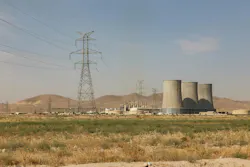
A combination of aging power plants, demand from the oil and gas industry, cryptocurrency mining and highly regulated and subsidized electricity prices spurred demand for electricity in Iran in recent years. In 2023, peak summer demand in Iran exceeded supply by 12 gigawatts (GW), and available capacity was less than 78% of installed capacity, according to the EIA.
In an address to the world on the Iranian conflict, Trump said, “If there is no deal, we are going to hit every one of their electric generating plants very hard, and probably simultaneously.” Trump said the United States could “bring them back to the Stone Age” if negotiations failed. Iranian-born American Massoud Amin, professor emeritus of electrical and computer engineering at the University of Minnesota, told the Minnesota Post that the UN has condemned attacks against critical civilian infrastructure as violations of humanitarian law, adding that the International Criminal Court has issued arrest warrants for Russian officials for the same conduct.
“We have already run this experiment,” Amin said. “In Syria, the war destroyed more than 70% of the country’s power generation capacity. The result was not military victory or defeat. It was 14.6 million civilians requiring humanitarian assistance … The suffering did not fall on the regime. It fell on the population.”
Lebanon’s Solar Revolution
Today, Lebanon’s power grid is in crisis and can supply the Lebanese people with a few hours of electricity per day, because of war, political strife and corruption. How much electricity one may have access to often depends on your distance from the capital, Beirut, with energy rationing hitting far-flung areas worst of all.
As I write this, Électricité du Liban (EDL) is working to repair damage to southern Lebanon’s power distribution network caused by Israeli bombings, according to newspaper L’Orient Today. However, this is a newer development than many Westerners might believe.
Vladimir Abdelnour, energy researcher at Arizona State University’s Laboratory of Energy and Power Solutions (LEAPS), said before the 1975 civil war, Lebanon had reliable electricity relative to the region and relative to the size of the country. Abdelnour has lived and worked in Lebanon for years.
“It was not perfect, but it was functioning, centralized and able to provide electricity in a way that supported daily life, businesses and institutions,” Abdelnour said.
The electricity system is a very physical system, he said. It needs constant maintenance, fuel logistics, protection systems, substations, transmission lines, dispatch coordination, meter reading and billing. When a country enters a long civil war, all these things start breaking at the same time.
“So the grid did not fail in one single moment; it degraded over time,” he said. “From 2002 to around 2011, the grid kept degrading. The causes were technical, financial, and political at the same time: corruption, lack of cost recovery, lack of investment, fuel procurement problems, and no independent regulator with real authority.”
Around 2011, he said, a system of “street entrepreneurs” came about. They proliferated in Lebanon’s neighborhoods and villages, installing neighborhood-scale diesel generator mini-grids. When EDL could not provide electricity, these private or community diesel systems filled the gap.
So, a power user in Lebanon might use several different kinds of power grid depending on what was available at the time. This became even more innovative and complicated when manmade disasters continued to strike Lebanon.
“At the same time, the banking system failed. People could not access their savings normally. The Lebanese pound collapsed. The government could no longer maintain the old fuel subsidy system,” he said. “So, almost overnight, the cost of electricity increased dramatically.”
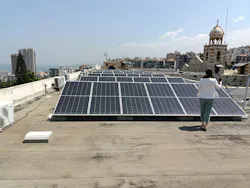
This is when solar power, available for cheap from Chinese manufacturers and installed by local Lebanese entrepreneurs, exploded.
“It was not driven by climate policy. It was driven by survival. People were not installing solar because they wanted to be green. They were installing solar because they needed to keep the refrigerator on, the lights on, the water pump running and the internet working,” he said.
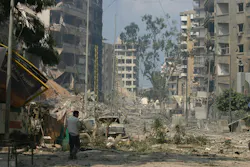
However, since Oct. 7, 2023, conflicts in Gaza spilled over the Lebanese-Israeli border. According to Amnesty International, Israeli strikes hit solar installations and associated power grid equipment in Lebanon, which the organization characterized as attacks on civilian energy infrastructure — another example of electricity infrastructure becoming a target in modern warfare.
“This matters because Lebanon’s electricity system is no longer only the national grid. In practice, the electricity system is a layered system: EDL, diesel generators, solar rooftops. So when diesel generators are struck, that is energy infrastructure,” Abdelnour said.
In Lebanon, people organize their daily lives around when electricity will be available, often drawing upon three different power grids — the EDL utility grid, the diesel gensets grid, and the solar power grid — as they come online.
“This creates a very unusual daily life. People organize their day around electricity availability. They think in terms of time of use, but not like a normal utility time-of-use tariff in the United States. It is not just ‘electricity is cheaper at night.’ It is more like: when EDL comes, you use one set of appliances; when the diesel generator is on, you use another set; when the sun is strong, you use another set,” he said.
A best-case scenario for his home country, Abdelnour said, would be to create village and neighborhood microgrids that combine rooftop solar, community solar, batteries where economic, existing diesel generators as backup, and a point of common coupling with the national grid, EDL.
“Lebanon already has the ingredients for microgrids,” he said. “The missing piece is formal integration.”
What stands in the way are clear regulations, vested business interests, appropriate financing, technical standardization and electricity equity, he said.
“The biggest positive factor is that the assets already exist. Lebanon does not need to start from zero. The rooftops have solar. The generators exist. The communities know how to manage scarcity. The private sector has installers and technicians. There is practical knowledge everywhere,” he said.
Where The Industry Stands
As representatives of the global electric power industry, I think it is worth thinking about the ways in which electricity is used as just another weapon for fighting wars. It’s true that regardless of what any of us think about it, it will probably continue to happen.
Shmotolokha said striking power infrastructure should constitute a war crime, and said Russia was a criminal state as a result of its attacks.
“This is why Trump’s threat to do this in Iran ran into opposition in the USA. You can hit military generators and military sites, but not civilian. If you do, it constitutes total war and not limited war,” he said.
Hitting power grids brings about horrible suffering and economic damage, he said, adding that the utility industry should be absolutely against it, but should also prepare for it as it has proven to be an amazingly effective tool.
“The industry should be building in [electromagnetic pulse] redundancy. There should be a national stockpile of transformers. The threat of an EMP is not taken seriously enough in this country. It could send us to the Stone Age without irradiating land,” he said.
The USA is not prepared to defend itself in this new drone-based form of warfare, he said.
“An agent can have a drone with a warhead, fly it from 5 miles away and — boom. They don't have to even be near a site today to affect it. We are way behind in preparations.”
I can’t help but remember a letter sent from Ukrainian engineers to Russian engineers in 2022, appealing for the peaceful delivery of electricity to the people who need it.
“We are power engineers! We chose to provide people with heat and electricity to be our life credo. Our work is the basis of the economy and well-being. We are confident that you are able to stop your government, which unleashed this criminal war,” the Ukrainian engineers wrote to their Russian counterparts.
“We are not complaining to complain. Not at all. It's not in our nature, you know. Today we turn to you, to the same people and professionals,” they wrote. “We stand firm in spirit and faith that we will win… Our victory will give you a chance to gain freedom and return to the civilized world.”
About the Author
Jeff Postelwait
Managing Editor
Jeff Postelwait is a writer and editor with a background in newspapers and online editing who has been writing about the electric utility industry since 2008. Jeff is senior editor for T&D World magazine and sits on the advisory board of the T&D World Conference and Exhibition. Utility Products, Power Engineering, Powergrid International and Electric Light & Power are some of the other publications in which Jeff's work has been featured. Jeff received his degree in journalism news editing from Oklahoma State University and currently operates out of Oregon.