Fortifying the Houston Power Grid
Key Highlights
- CenterPoint's GHRI includes programs for grid hardening, undergrounding, vegetation management, automation, and monitoring to improve resilience against storms and wildfires.
- Over 520 miles of power lines have been undergrounded, with plans to add 1,200 miles in the next three years, focusing on high-risk areas like hospitals and water-critical zones.
- The utility uses LiDAR and digital twins to identify weak points and prioritize undergrounding, balancing costs with the need for reliability and safety.
- Installation of storm-resistant fiberglass poles and smart grid devices aims to withstand hurricane-force winds and quickly isolate faults, reducing outage durations.
- Effective customer communication is prioritized through a Community Progress Tracker and proactive outreach, ensuring transparency during infrastructure upgrades.
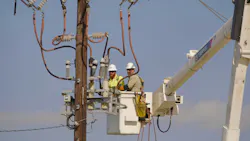
Nearly two years ago, Hurricane Beryl roared into CenterPoint Energy’s service territory, uprooting thousands of trees, causing extensive damage to the distribution system and inflicting more than 2.1 million outages. Following the storm, the utility launched its Greater Houston Resiliency Initiative (GHRI) to safeguard its system against severe storms and the threat of wildfires.
Nathan Brownell, CenterPoint's vice president of resilience and capital delivery, said the events gave the utility an opportunity to improve its performance and enhance the grid's resiliency. GHRI consists of multiple programs focused on grid hardening, undergrounding power lines, installing more storm-resilient poles, vegetation management, automation, self-healing, and technology and monitoring.
“When extreme weather comes in, we look at how we can take a punch and get back up quickly from it and reduce outages,” he said. “We have put together these programs to invest in our systems to make them more resilient.”
While CenterPoint would consider undergrounding all its overhead lines, this approach isn’t financially feasible. As a result, it is trying to balance the overhead and the underground work from a cost perspective.
“It is significantly more expensive to underground than it is to do overhead, which is why we are taking a targeted approach,” Brownell said. “At the end of the day, everything we do impacts our customers’ bills, and we want to make sure we keep the cost impact at the forefront of what we’re doing and provide the level of service they want at the cost they are expecting.”
Moving Lines Underground
To determine where to underground power lines in its service territory, CenterPoint’s engineering team is leveraging LiDAR data to model the infrastructure and construct a digital twin.
“Within that digital environment, we can understand where we have weak points in our system and what are the highest priority,” Brownell said. “That type of information is driving our investment strategy of where we need to go underground and where we can go ahead and harden the overhead lines.”
So far, CenterPoint has undergrounded more than 520 miles of line and plans to do an additional 1200 miles of undergrounding over the next three years. The utility’s undergrounding program is broken down into three different areas — freeway crossings, hospitals and areas with a high tree fall-in risk, particularly near water or critical care facilities or buildings providing necessary community services.
“In every situation, we are using modeling to understand what’s the risk, what are the customers who are on those lines and what is the best solution,” Brownell said. “We may decide it’s a good candidate to go underground because of all the risk that’s there.”
When it comes to freeways, power lines with wood poles can pose a risk from a resiliency standpoint, especially during high winds, icing or hurricanes, Brownell said.
“Undergrounding those makes them more resilient to extreme weather,” Brownell said. “We also have seven large hospitals that serve our community, and we are undergrounding those express feeders so they will have better day-to-day reliability.”
CenterPoint Energy is also assessing fall-in risks by leveraging LiDAR information and modeling to identify where trees could potentially come down outside the easement and strike power lines. This proactive approach can help with not only safeguarding the system from storms, but also mitigating wildfire risks, especially in the west and north sides of its service area.
“We have a very dense tree canopy here in Houston, and we have trees everywhere,” Brownell said. “We are identifying the areas that are most at risk for potential wildfires and looking at undergrounding circuits that may have dense canopies of vegetation, using materials that may be more fire-retardant and building the types of risk into our planning.”
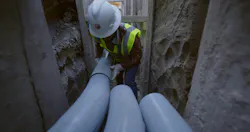
When undergrounding a power line, the field crews first construct a three-phase concrete duct and install the underground power line. The team will then begin switching power from the overhead lines to the underground system, and as they connect the lines underground, customers will experience a brief outage. At a later time, the lineworkers will take the older overhead lines out of service and remove the existing poles and line to eliminate any safety hazard in the future.
“If they’re not energized or serving a purpose, they can pose as a potential risk in the future from a potential fall-in, so we want to remove those,” Brownell said.
Following Best Practices
Because CenterPoint has a large footprint, the utility is looking for ways to improve field productivity. For example, crews perform trenching work in rural areas but use boring methods in dense urban areas to minimize restoration.
“We are learning the best places to put our lines underground, the best types of materials, and the expected productivity costs and safety from these projects, too,” Brownell said.
To do the work safely and efficiently in the field, CenterPoint is also embracing lessons learned from other electric utilities with years of undergrounding experience. For example, CenterPoint is working with its peer utilities in Florida and on the East Coast to leverage their best practices in the Houston service territory. Case in point: CenterPoint is now leaning toward using an engineering, procurement and construction (EPC) model.
“When you think about an overhead-to-underground, it’s much more challenging because you have overhead and underground engineering, permitting and communications,” Brownell said. “The EPC methodology consolidates all that engineering, coordination, permitting and outages into one vendor. For us, we’ve seen increased efficiency on our projects being able to be done at a better rate.”
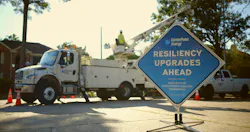
Another key consideration when undergrounding power lines and undertaking other GHRI program-related projects is communicating with customers. CenterPoint aims to communicate with customers months in advance about when and why they’re coming, and how long they’ll be on their property.
“When the work is being done in some of our urban areas, you’re out in the neighborhoods and disrupting their day-to-day lives,” he said. “The communication is a critical piece of the success for all the work we are trying to do. We have the privilege of serving almost 3 million customers, and we don’t want to have our customers surprised if they see us in their backyard.”
To provide more transparency into its work plans and improve communication with its customers, CenterPoint launched a Community Progress Tracker in mid-February. This web-based, customer-focused map allows the public to track and measure grid improvement projects on their street and in their neighborhood or zip code.
"Our new Community Progress Tracker gives our customers a clear window into the work we're doing in their local neighborhoods to improve their service and build a stronger and more resilient electric system," said Tony Gardner, chief customer officer at CenterPoint. "Whether they access it on their phones, tablets, laptops or desktops, our new tracker details all the different types of work we are doing and the critical upgrades we've made in their communities."
Beyond communicating with its customers, CenterPoint is safeguarding its employees by using third parties to do field inspections, ensuring its employees are wearing the proper personal protective equipment, completing the correct outage forms and attending job briefings.
“It’s just another check mark to ensure our employees and our qualified vendors are operating safely,” Brownell said.
Clearing Lines and Reducing Outages
CenterPoint Energy is not only undergrounding power lines in targeted areas but also zoning in on vegetation management. The utility cleared about 4,500 miles of power lines and achieved a 50 percent reduction in vegetation-related outages last year.
“I think we have one of the most aggressive vegetation trimming plans in the nation,” he said. “Through our system resiliency plan, we have approval to go to a three-year accelerated schedule, so we will trim all feeders and laterals on a three-year trim cycle.”
CenterPoint kicked off its three-year cycle in January 2026, and this year, the utility will trim more than 8,000 miles of vegetation. The utility, which used 3D modeling software to identify the highest-risk vegetation, aims to have 70 percent of its high-risk vegetation trimmed or removed by July 1 of this year.
“We front-loaded our plan deliberately so we’re better prepared for hurricane season,” Brownell said.
Another way the utility is preparing for hurricane season is by installing intelligent smart grid devices to identify and isolate faults on the lines. CenterPoint plans to install almost 1,000 of these devices over the next three years.
“Instead of having a complete circuit go out, maybe 5,000 customers will be impacted because of these smart reclosers,” Brownell said. “This will be a long-term program for us, and we’re heading towards completely self-healing our grid where the circuits will be able to connect to one another automatically without any type of human interaction. This is something we’ve seen other utilities do and have success, and we’re investing to provide this level of service to our customers.”
Installing Storm-Resistant Poles
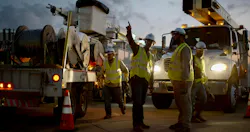
Another important aspect of the GHRI plan is hardening the overhead infrastructure. Each pole is designed to withstand the extreme weather expected in CenterPoint Energy’s service territory. In the southern part of CenterPoint’s service territory along the coast, new fiberglass composite poles will withstand hurricane-force 132 mph winds.
“Every pole we replace makes our system stronger and more equipped to withstand the next major storm, reducing impacts to customers, improving restoration times and giving our customers the resilient, reliable service they expect and deserve,” Brownell said.
As of December 2025, line crews installed more than 50,000 poles across CenterPoint Energy’s 12-county Greater Houston area service territory. CenterPoint plans to install 35,000 more poles in 2026 to replace the current wood poles in areas most impacted by powerful storms and winds.
By the end of the program, CenterPoint Energy aims to replace or brace 130,000 poles across its service territory. These poles will not only be more resilient to extreme weather conditions but also easier to install in the rear easements of customers’ backyards.
“When we think about it from a restoration standpoint, a broken wood pole in the backyard is very difficult because it takes a crane and three or four hours to put in a pole that meets wind-loading standards,” he said. “The fiberglass poles, however, can be broken down into four segments and hauled on a lineman’s shoulders and then assembled on site. It’s another tool we’re using in our toolbox to provide better resiliency and reliability.”
Because fiberglass poles are available in different composite materials and dimensions, CenterPoint is currently working with three manufacturers. Each vendor has specific standards to meet the utility’s needs and resiliency standards, from using crossarms to opting for armless construction. Also, CenterPoint can customize the poles with holes for transformers, steps and other modifications.
“A lineman can’t climb fiberglass like wood, so we are adding fiberglass steps and piloting new structures at the top where they can climb up on top and walk around,” Brownell said.
Paving the Path to Resiliency
As many hardening projects are underway in 2026 and beyond, Brownell said it is a long-term, multi-decade effort. Since Hurricane Beryl hit CenterPoint Energy’s service territory two years ago, the utility has hardened nearly 60,000 poles and trimmed more than 8,000 miles of vegetation.
“What really gives me a lot of optimism is that the things that we are doing are working and making an impact on our customers,” Brownell said. “We are not only building this grid to be the most resilient long term, but we’re also seeing day-to-day reliability benefits for our customers. It’s an exciting time to be part of this program.”
For example, CenterPoint reduced customer outages by more than 100 million minutes in 2025 compared to 2024, and, on average, customers experienced almost 35 fewer minutes of outages last year than the year before. Jason Wells, president and CEO of CenterPoint Energy, said historic progress was made in 2025 across the Greater Houston area, and the teams remain committed to the program again this year.
“The series of actions taken by our 2,800-strong local workforce is delivering results, reducing the impact of outages and enabling us to restore power faster when outages occur,” Wells said. “All of our teams remain committed to building the most resilient coastal grid in the country and providing the energy future that our neighbors, friends and customers all across Houston expect and deserve.”
Editor’s Note: To learn more about the GHRI program, visit CenterPointEnergy.com/TakingAction. For more insight, you can also listen to a future Line Life Podcast episode featuring Nathan Brownell, vice president of operations at CenterPoint Energy, at linelife.podbean.com.
CenterPoint Energy’s Resiliency Plan: By the Numbers
CenterPoint is forging ahead on its Greater Houston Resiliency Initiative (GHRI). Here are some of the major milestones the utility has made over the last two years since Hurricane Beryl.
- Installed more than 62,000,storm resistant distribution pole as of April 1, 2026
- Trimmed or removed more than 8,000 miles of high-risk vegetation near power lines to reduce storm-related outages
- Undergrounded 520+ miles of power lines to improve resiliency
- Installed 150 new weather monitoring stations to enhance situational awareness and storm preparation
- Installed more than 500 automation and intelligence devices to help reduce outage impacts and reduce restoration times
- Achieved 100+ million fewer customer outage minutes in 2025 compared to 2024
About the Author
Amy Fischbach
Electric Utilities Operations
Amy Fischbach is the Head of Content for T&D World magazine and manages the Electric Utility Operations section. She is the host of the Line Life Podcast, which celebrates the grit, courage and inspirational teamwork of the line trade. She also works on the annual Lineworker Supplement and the Vegetation Management Supplement as well as the Lineman Life and Lineman's Rodeo News enewsletters. Amy also covers events such as the Trees & Utilities conference and the International Lineman's Rodeo. She is the past president of the ASBPE Educational Foundation and ASBPE and earned her bachelor's and master's degrees in journalism from Kansas State University. She can be reached at [email protected].