Trump Blocks Some Foreign-Made Grid Equipment in U.S. Citing ‘National Emergency’
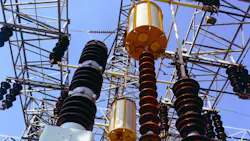
President Donald Trump signed an executive order (EO) on Wednesday targeting the importation of foreign-made equipment that serves critical bulk-power infrastructure needs across the country.
Under EO 14420, titled “Declaring a National Emergency to Secure the United States Bulk-Power System,” President Trump detailed the order as a national emergency. In a statement, Trump cited security, foreign policy and economic risks from certain foreign actors that are “increasingly creating and exploiting vulnerabilities” in the U.S. for these actions.
Among those targeted vulnerabilities, Trump stated, is the U.S. bulk power system. It provides vital electricity for the nation’s defense system, emergency services and other related infrastructure.
“During my first term, I found that the bulk power system could be a target of those seeking to commit malicious acts against the United States, including malicious cyber activities,” Trump said in a statement. “The threat to the United States regarding foreign supply of bulk-power system electric equipment has become even more acute.”
The Trump administration points to the rapid growth of manufacturing, data centers, artificial intelligence and defense production, which has increased the nation’s dependence on abundant, reliable power. Due to the reliance on foreign resources for this bulk-power system electric equipment, Trump states this creates a supply chain vulnerability that could cause significant disruption in the U.S. as a result of intentional trade disputes or other causes.
According to the White House, any acquisition, importation, transfer or installation of any foreign-produced bulk-power system electric equipment (subject to the jurisdiction of the U.S.) is prohibited. To enforce this, the U.S. Secretary of Energy and other senior executive branch officials will have 180 days to submit recommended revisions to the Federal Acquisition Regulation (FAR).
Those revisions are to ensure that national security risks are adequately considered in any procurement deals. The order adds that within 90 days of receiving those recommendations, the FAR Council must consider proposing the relevant amendments for public notice and comment.
On Thursday, the National Electrical Manufacturers Association (NEMA) extended its support over the Trump administration’s bulk power measures. NEMA states its leadership looks forward to working with the administration to ensure the shared vision of a secure, reliable grid.
“President Trump’s order elevates our shared goal of protecting America’s bulk-power system and the critical equipment and supply chains that enable it,” said NEMA President and CEO Debra Phillips in a statement.
This framework builds off the previous Trump administration's initial 2020 action, “Securing the United States Bulk-Power System.” It directed the Secretary of Energy to work with various federal agencies to ensure the acquisition of bulk-power systems was in line with national security demands.
Former President Joe Biden later revoked the measure, claiming the U.S. needed a more long-term security plan, pursing an alternative measure under the Defense Production Act to get more transformers manufactured domestically.
As many energy manufacturers had initiated producing resources domestically at scale to reduce supply chain uncertainty, this accelerated the push of Foreign Entity of Concern (FEOC) restrictions imposed by the Department of Energy in 2024.
T&D World contributor Mike Beehler, a national spokesperson for the Power Delivery Intelligence Initiative, outlined 10 steps utility executives should take to prepare:
- Stand up an internal EO compliance task force immediately
- Map and inventory all in-scope BPS equipment and associated digital elements
- Screen the supply chain against Covered Foreign Entity criteria
- Pause or tightly control new acquisitions, imports, transfers and installations of potentially covered equipment
- Assess existing installed equipment for risk and prepare mitigation readiness
- Engage vendors, OEMs and domestic alternatives aggressively
- Strengthen cybersecurity, OT segmentation and monitoring for foreign-sourced or remote-capable assets
- Update procurement, contracting and compliance policies and training
- Model financial, reliability and regulatory impacts; engage stakeholders
- Establish ongoing monitoring, reporting and adaptive processes
“This positions a utility to comply with prohibitions on new transactions, respond to conditions on legacy equipment, minimize reliability disruptions and participate in EO implementation,” Beehler noted.
About the Author
 Eric Moody