Grid Strategies: Interconnection Reforms Showing Progress, but More Changes Needed
Generator interconnection reforms are beginning to improve the process of connecting new generation resources to the grid, but additional changes are needed to address growing electricity demand and reduce project backlogs, according to a new report from Grid Strategies.
The report, The State of Generator Interconnection Reform, examines recent efforts by grid operators, regulators and policymakers to address longstanding delays in generator interconnection queues. The issue has gained increased attention as utilities, grid operators and policymakers work to meet rising electricity demand while bringing new generation resources online more quickly.
Grid Strategies notes that reforms adopted by the Federal Energy Regulatory Commission (FERC) through Order No. 2023 established a number of changes intended to improve interconnection processes. Those reforms include:
- moving to a first-ready, first-served cluster study approach.
- establishing deadlines and penalties for study delays.
- creating procedures intended to improve efficiency and transparency in queue management.
According to the report, interconnection backlogs remain a significant challenge across regional transmission organizations (RTOs) and independent system operators (ISOs). Previous analyses by Grid Strategies and The Brattle Group found that several regions received low grades for interconnection performance, reflecting ongoing concerns about lengthy study timelines, uncertainty around upgrade costs and project withdrawals that can trigger additional restudies.
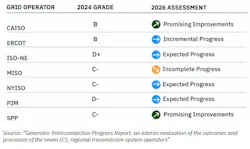
The report highlights several areas where further reforms could accelerate the connection of new generation resources. Recommendations include:
- providing greater upfront cost certainty for developers.
- expanding fast-track approaches that utilize available transmission capacity.
- improving study processes to identify available system headroom.
- speeding construction of needed transmission upgrades.
Grid Strategies argues that continued improvements are increasingly important as load growth accelerates and new generation resources seek access to the grid. The report notes that delays in interconnection can affect both reliability and affordability by slowing the addition of new generation capacity and limiting competition among resources seeking to serve growing demand.
The report concludes that while recent reforms represent meaningful progress, additional action will be needed to ensure that interconnection processes can keep pace with the volume of proposed generation projects and support the reliable, cost-effective expansion of the electric power system.