Peter Hubbard, Georgia PSC Commissioner Talks Energy, the Race for the PSC
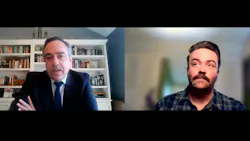
(Editor's Note: A complete interview on this subject will soon be available on the T&D World Live Podcast)
Affordability remains top of mind for voters in a race for the Georgia Public Service Commission, says Peter Hubbard, Commissioner with the PSC who is up for re-election in that governing body.
“We're in a time of expansion. We are building out new power generation, new transmission, over 1000 miles of new transmission and over 1100 miles of rebuild transmission in Georgia. And it's largely a function of the data centers that are coming to the state,” Hubbard said.
One factor that is animating the race was the six rate increases over the last few years. Those rate increases increased the average bill by about $52 per month, according to Hubbard.
“That certainly brought into the public's attention the question of affordability,” he said. “Data centers that are coming to the state that will put pressure on bills one way or the other going forward, but also those rate increases that we had in the recent past that brought us to where we are today.”
Voters may not be able to articulate why their bills are increasing, but the pain point is felt, he said.
“One of the ways that we need to think more clearly about the decisions we're making is how does this impact folks' bills and maybe more proactively put forward solutions that we know are going to bend that cost curve downwards, things that are definitely cost-effective in other jurisdictions, other states, other markets. And we should be doing them here in Georgia,” Hubbard said.
One example of how this could be done is by doing more with the transmission infrastructure already in place, he said.
“How can we squeeze more juice out of them, if you will? How can we use them more effectively, raise their capacity factor?” he said. “How can we use them in times when, potentially there's spare capacity to move the energy, perhaps with a virtual transmission line batteries on either end of a circuit, and avoid building out new transmission or building out new resources just because we're simply using what we've already invested in more effectively.”
The PSC races, depending on what voters decide, could flip control of the commission from Republican control to Democratic control. Hubbard, who is a Democrat, says this could mean a lot of changes in Georgia.
“There's a lot of things that just have gone on underscrutinized or unscrutinized at the commission. You know, for example, having investor-owned utilities come in to justify the rates that they're charging. We didn't have an electric rate case last year and we haven't had a gas rate case in over a decade. And, you know, there's probably some issues there that need addressing,” he said.
Hubbard called data centers a number one issue for Georgia voters, adding that many have chosen the state as a site for new projects hoping to capitalize on low electricity rates as well as generous subsidies offered by state and local governments.
“Folks are not terribly pleased with data centers being plopped down in their neighborhoods, oftentimes without really any meaningful engagement with the community beforehand,” he said.
“My chief concern is that, number one, in this state, we are building the wrong resources for data centers,” he said, adding he would like to see more solar, wind and energy storage resources being built to fuel data centers. Meanwhile, Georgia Power, he said, is focusing mostly on gas-fired power and batteries.
Data centers are, he said, a different breed of customers, much larger than normal, and operate differently that what the power grid can provide in some cases.
“So we just need to be thoughtful about how we are incorporating these new customers and making sure that there is no risk or cost shifting taking place from them onto other customer classes, particularly residences,” he said.
Under Republican control, the commission has, in the past, believed in the ability of utilities to self-regulate, he said. This is not the philosophy Hubbard favors.
“I think we should be a bit more proactive, ask tougher questions, scrutinize things, not take at face value what's put in front of us, maybe proactively put forward alternatives that should be evaluated as well,” he said.
About the Author
Jeff Postelwait
Managing Editor
Jeff Postelwait is a writer and editor with a background in newspapers and online editing who has been writing about the electric utility industry since 2008. Jeff is senior editor for T&D World magazine and sits on the advisory board of the T&D World Conference and Exhibition. Utility Products, Power Engineering, Powergrid International and Electric Light & Power are some of the other publications in which Jeff's work has been featured. Jeff received his degree in journalism news editing from Oklahoma State University and currently operates out of Oregon.