Ready, Set…Stop? Five Ways to Plan Tranche-Scale Transmission Projects in an Era of Scarcity
Key Highlights
- Bring contractors and suppliers into planning before the RFP, ideally when engineering is 10% to 30% complete.
- Standardize designs and buy ahead to secure materials and supplier production capacity.
- Forecast demand across multi-year programs so crews, equipment and materials can be redeployed as schedules shift.
- Treat site access as an engineering requirement, including field verification and temporary access easements.
- Plan for labor constraints by securing multiple construction options and making room for apprentices and new entrants.
The U.S. grid is entering the largest expansion in its history. Utilities built or upgraded fewer than 1,500 miles of transmission in 2024, and projections for 2035 call for tens of thousands of new and upgraded miles. That jump was the backdrop for a recent T&D World webinar, “Ready, Set, Stop?”, moderated by Nikki Chandler, editorial director for the Energy Group at T&D World including myself, Alex Machoka, vice president of transmission and substation construction at Oncor, and Joe Ebersbach, vice president of the West Region and extra high voltage at New River Electrical.
This article is a summary of that webinar. You can listen to the entire event here.
For decades, planning a transmission project meant looking backward: at historical load growth, the last project’s performance, and which materials and crews were available. Such “just in time” planning worked when capacity was there for the asking. It no longer is. Utilities, contractors, manufacturers and industries are now chasing the same labor, trucking, specialty equipment and field leadership at the same time. While it is tempting to treat tranche-scale programs as more of the same, just more line miles, the reality is that the execution risk is not linear. Every added mile compounds complexity across the entire value chain, and one delay no longer stays on its own project.
Simply put, doing business the old way will no longer work for the new road ahead. Here are five things planners can do to keep projects on track and survive the supply chain crunch.
1. Bring contractors and suppliers in before the RFP
The traditional sequence of engineering, issuing the RFP, awarding the work, and only then securing materials and crews has become a liability. Alex Machoka explained that with roughly two-year turnarounds, engineer-to-order no longer fits. Ahead of Oncor’s first 765 kV construction, which begins next year, the utility formed a cross-functional team spanning regulatory, planning, grid operations, standards, engineering, supply chain and environmental. It has met monthly for about a year to build execution and energization playbooks and a detailed risk register. Contractors were assigned before right-of-way acquisition so they could weigh in on standards, from member weights to crane selection to right-of-way access.
Joe Ebersbach put a number on when to start. Engaging contractors when engineering is 10 to 30 percent complete lets them influence siting, constructability, access and foundations, which is what allows them to hold a price and a schedule. As he put it, “the construction of these lines is really the easiest part. The guys that do this work are very good at it, but we’ve got to get the constraints out of their way.” Machoka acknowledged that utilities tend to be shy of unsolicited advice, but said contractors are worth asking: “They’ve seen a lot. They know how projects fail and how projects succeed.” Asking first is the utility’s move.
2. Standardize and buy ahead
Oncor has standardized its equipment and materials and is moving toward standard structure heights, much like the old wood-pole approach, so engineers design to what is already on hand. That makes bulk orders and reserved supplier production slots possible for items such as transformers and breakers.
Even so, Machoka reported that while about 90% of orders arrive within quoted lead times, supplier labor shortages have caused missed committed dates, and permitting by cities and the U.S. Army Corps of Engineers can run longer than expected. Both show up as expediting costs or slips that hit downstream projects. Ebersbach added that procurement increasingly drives design, as data center developers buy what is available and design around it. Widening the supply base helps.
3. Forecast at the program level, not job by job
Oncor looks five years ahead, with project management, sourcing, engineering, construction and right-of-way teams at the table. Knowing whether the work will be 138 kV steel monopoles or 765 kV lattice lets it forecast material and equipment needs and give manufacturers a demand signal they can use to plan their own labor and steel.
Jobs move and critical materials arrive late, but when work is viewed as a program, crews, equipment and materials can be redeployed instead of left idle. Machoka also pointed to master service agreements and unit-based pricing as a way to blunt market swings compared with going back to market every time. Expect costs to stay elevated: Ebersbach has seen Midwest labor costs spike in recent months, and higher prices do not necessarily mean higher contractor margins.
4. Treat site access as engineering, not an ancillary line item
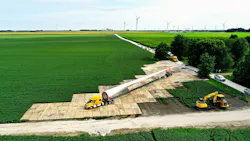
Access often gets bucketed with services like portable toilets and traffic control, and scoped as a quantity rather than a solution. But a line mile does not translate into a fixed amount of anything. Terrain, wetlands, floodplains, seasonality, equipment loads, crossings, work pads and parcel rights all matter, and 765 kV loads change the math again. A desktop review is no substitute for field verification.
When access is scoped late, bids fill with assumptions, and each bidder prices its own interpretation of the job. A wide bid spread can look like a win on affordability when it is really scope uncertainty. Machoka warned, “You can have the entire right-of-way acquired, but you don’t have ways to get to that right-of-way, and that could also stop your project.” Temporary access easements need to be identified during acquisition. I have seen the alternative firsthand: when access is left until the last minute, nobody has a plan for if it rains, and then stretched field crews are left to improvise while equipment sits waiting. The cost of getting this wrong is never just more matting. It is remobilization, change orders, lost productivity and, most importantly, safety exposure, because decisions get made under schedule pressure.
5. Protect your scarcest resource: People
Ebersbach said “labor, equipment and teams are near 100% utilization today, and demand will … outpace supply,” a squeeze he expects over the next three to five years. The sharpest gap is project and construction management leadership. Contractors who say they can build everything are making a promise that is getting harder to keep, so utilities should line up more than one construction option in case a project goes off track.
Machoka added a practical point: check that your rate structures leave room for apprentices and new entrants, not only senior hands.
The bottom line
Nikki Chandler summed up the discussion well: The surprises on these programs are not random. They hide where one party assumed capacity, scope or access would be there and nobody checked. When she asked what a project manager starting a 345 kV or 765 kV job in 2027 should change this quarter, all three of us gave versions of the same answer: engage earlier, and include access in that conversation. The old way of planning was built for a market that no longer exists; this is a new era of scarcity. The projects that succeed will be the ones where utility, contractor and supplier plan together, earlier and in more detail than this industry is used to.
About the Author
Tyler Reeves
Tyler Reeves is Chief Commercial Officer at Sterling Solutions, the nation’s leading manufacturer of Cross-Laminated Timber (CLT) site access mats and a trusted project partner for utility, energy, and emergency response teams.