Interview: The Rise of Composite Utility Structures for Grid Hardening
Key Highlights
- Utilities are moving toward targeted deployment of composite poles in high-value, remote, or environmentally vulnerable areas to maximize resilience benefits.
- Regulatory pressures and increasing weather-related disruptions are prompting utilities to adopt more strategic, risk-based infrastructure investments.
- Composite structures are viewed as one of several tools to harden critical grid components, especially where failure costs are high.
- Regional manufacturing facilities, like Resilient Structures' Houston plant, support local jobs and enhance supply chain resilience for utility infrastructure needs.
- Utilities are balancing resilience, cost, and rapid expansion, leading to more sophisticated, data-driven decision-making in grid modernization efforts.
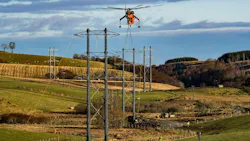
The discussion around grid hardening is becoming less about finding a single “best” material and more about matching infrastructure investments to specific risk profiles and operating environments. This was a recurring theme during a recent conversation T&D World had with John Higgins, CEO of Resilient Structures (formerly RS Technologies) who reflected on how composite utility structures have evolved from a niche product into a more widely accepted tool for targeted resilience strategies.
Higgins, who has spent nearly 25 years in the transmission and distribution industry, traced his career through major utility services organizations before taking the helm at Resilient Structures more than two years ago. During that time, he said the industry’s perception of composite poles has shifted significantly as utilities confront growing reliability pressures tied to storms, wildfire risk, electrification and aging infrastructure.
“For years, everybody told me T&D was going to become sexy,” Higgins said during the interview. “And now it finally kind of is.”
That heightened visibility has come alongside mounting pressure on utilities to strengthen systems against increasingly severe weather and growing customer expectations around reliability. Higgins said those pressures are driving utilities to take a more strategic approach to infrastructure selection rather than viewing pole materials as a one-size-fits-all decision.
Instead of positioning composites as a universal replacement for wood, steel or concrete, Higgins emphasized that utilities are increasingly deploying the structures in targeted applications where the economics of resilience are easier to justify over the long term.
According to Higgins, three primary use cases are driving the strongest adoption.
The first involves critical structures and circuits where failure carries outsized operational or economic consequences. Poles supporting high-value equipment, major feeders, hospitals or key industrial loads are increasingly being evaluated differently than standard distribution assets.
“If a pole has $20,000, $30,000 or $50,000 worth of equipment on it, you don’t ever want that pole to hit the ground,” Higgins said.
The second category centers on remote or difficult-to-access installations where replacement or maintenance costs can become extremely expensive. Utilities operating in mountainous terrain, wetlands or heavily constrained urban and backyard environments are looking more closely at lifecycle costs instead of only upfront installation expenses.
The third involves areas where conventional materials historically experience accelerated degradation, including coastal regions, wildfire corridors and locations exposed to persistent environmental stressors.
Those use cases align closely with the broader resilience planning efforts many utilities are now undertaking across North America. Higgins noted that regulators are also playing a larger role in pushing utilities toward system hardening investments, particularly following major weather events.
“We spend a lot of time educating regulators,” Higgins said. “The regulators are putting a lot of pressure on utilities to drive the kind of resiliency customers are expecting.”
That pressure is converging with another major industry trend: load growth. Higgins pointed to electrification, new generation development and rising demand from large industrial and data center customers as additional drivers behind new infrastructure investment.
“There’s so much new build going on because of electrification and load growth in general,” he said. “Utilities are saying, ‘If I’m going to build it, I’m going to build it right.’”
The conversation also touched on CenterPoint Energy’s long-term resiliency efforts following major storms in the Houston region, including hurricanes and the 2024 derecho event. Higgins described the utility as an example of how some companies are integrating multiple resilience tools into broader hardening strategies, including stronger communications, infrastructure planning and selective deployment of more resilient structures.
As part of that effort, Resilient Structures recently announced a long-term supply agreement tied to a new manufacturing facility in Houston. Higgins said the investment reflects both growing utility demand and the importance of regional supply chain capabilities.
The Houston facility is expected to support approximately 350 local jobs and provide additional manufacturing capacity closer to Gulf Coast utility customers. Higgins said the localized supply chain also resonated with state and regional stakeholders focused on infrastructure investment and reliability.
For Higgins, the broader takeaway is not that one material will dominate the industry, but that utilities are becoming more sophisticated in how they evaluate infrastructure risk and lifecycle value.
Composite structures, he said, are increasingly viewed as one more tool utilities can use to harden critical portions of the grid where the cost of failure is highest.
And as utilities continue balancing resilience, affordability and rapid system expansion, those targeted deployment strategies may become an increasingly common part of grid modernization planning across both transmission and distribution systems.
About the Author
 Nikki Chandler
Nikki Chandler
Group Editorial Director, Energy
Nikki is Market Content Director for the Endeavor Business Media Energy group, which includes T&D World, EnergyTech and Microgrid Knowledge media brands. She has 30 years of experience as an award-winning business-to-business editor, with 24 years of it covering the electric utility industry. She started out as an editorial intern with T&D World while finishing her degree, then joined Mobile Radio Technology and RF Design magazines. She returned to T&D World as an online editor in 2002, and took over as managing editor in 2017, then market content director in 2023. She has contributed to several publications over the past 30 years, including Waste Age, Wireless Review, Power Electronics Technology, and Arkansas Times. She graduated Phi Beta Kappa with a B.S. in journalism from the University of Kansas.