Transforming Utility Inspections: How PEC Integrates Drone Data for Proactive Asset Management
Key Highlights
- PEC uses drone inspections to identify issues like hotspots and structural deterioration that are not visible from ground level, enabling early intervention.
- Integration of drone data into PEC’s asset management system allows for organized, traceable, and accessible information, improving maintenance planning and response times.
- The move from reactive to proactive maintenance has resulted in increased operational efficiency, safety, and reduced land impact and member complaints.
- Collaboration with a trusted partner and customization of the data management platform were critical to successfully embedding drone insights into existing workflows.
- PEC plans to expand drone use into distribution operations, including storm damage assessment and right-of-way inspections, to support future infrastructure needs.
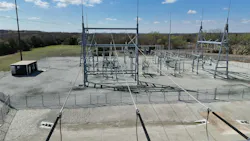
On a routine inspection day, everything can appear normal from ground level. Insulators look intact. Connectors seem secure. Equipment hums as expected. Yet some of the most critical warning signs of failure — overheating connectors, structural deterioration, or subtle equipment damage — aren’t often visible from a technician’s vantage point on the ground.
Drones have changed that, giving utilities the ability to see more than ever before. But seeing more is not the same as knowing more.
For electric utilities, the challenge isn’t just visibility — it’s context. The real value of drone inspections lies in turning aerial observations into structured, addressable data that can be tied to specific assets, tracked over time, and used to drive maintenance decisions. Without that integration, drone data remains just another layer of information.
People’s Electric Cooperative (PEC), serving south-central Oklahoma, recognized this gap and began incorporating drone technology into its inspection workflow. While drones provided a new aerial perspective that enhanced the quality and insight of field observations, they also raised a more important question: How could drone data be integrated into the cooperative’s asset management system for consistent, system-wide use?
Answering that question required PEC to reexamine how inspections were performed, how information was documented, and where insights were being lost between field work and asset management.
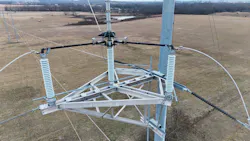
The disconnect between data collection and data management marked a turning point. PEC had proven the value of drone inspections in the field, but scaling that value required bringing data into a centralized, asset-based workflow.
The Challenge: Improving Visibility Across a Growing System
People’s Electric Cooperative serves more than 24,325 active meters across 11 counties — Garvin, McClain, Pontotoc, Murray, Johnston, Hughes, Coal, Pittsburg, Atoka, Seminole, and Carter — and maintains 5,102 miles (8,210 km) of distribution line, 99 miles (159 km) of transmission line, and 23 substations. With 83 full-time employees — including three substation technicians — PEC manages a large, geographically diverse infrastructure network with a relatively lean workforce.
Over time, the cooperative has expanded and modernized its system. It was the first electric cooperative in Oklahoma to remotely monitor all substations using SCADA, and has continued investing in infrastructure upgrades, including transitioning to stronger, longer-lasting steel poles for new construction and replacements.
Today, PEC maintains approximately 102,000 poles, more than 37,500 of which are steel. The cooperative has also diversified its energy resources. It recently added 30 reciprocating internal combustion engine generators powered by locally produced natural gas to support renewable energy sources and is developing a 5-MW solar site in Pontotoc County, using a single-axis tracking system to maximize energy production.
Despite these advancements, routine inspections of substations, transmission, and distribution infrastructure remained a demanding task. Monthly inspections required personnel to travel across the service territory, often on foot or using all-terrain vehicles.
While effective, this process had limitations. Terrain restricted access to certain locations; weather occasionally delayed inspections; many components were difficult to evaluate thoroughly from the ground; and time constraints posed some of the greatest challenges. All underscored the need to seek new solutions.
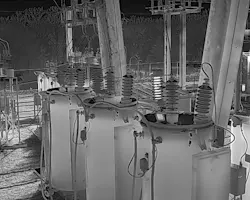
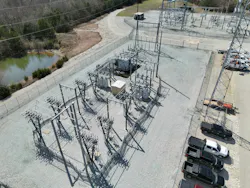
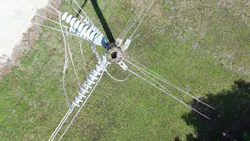
To address these challenges, PEC began incorporating drones into its inspection workflow as an initial step toward modernizing field inspections. The aerial perspective and thermal footprint helped inspectors evaluate components such as transmission pole tops, connectors, and insulators from multiple angles, monitoring them for hot spots and failing connections, without requiring personnel to enter restricted areas or climb structures.
However, while drones improved visibility in the field, they also exposed a critical gap. Because inspection data collected by drones was managed outside PEC’s core asset management system, teams found it difficult to organize, analyze, and apply the information effectively across operations.
As a result, drone use remained largely reactive rather than strategic, limiting its ability to fully support proactive maintenance and long-term asset management.
PEC recognized the need for a more efficient, data-driven approach — one that fully connected field data to its asset management processes.
Integrating Drone Inspections Into Asset Management
To close this gap, PEC shifted its focus from simply capturing better inspection data to making that data actionable. Rather than treating drone inspections as a standalone tool, the cooperative worked to embed aerial data directly into their asset management workflow — tying every image, thermal scan, and inspection detail to a specific asset to support more informed maintenance decisions.
With drone technology advancing, PEC explored several solutions but found none that fit. Rather than forcing a fit, the cooperative turned to a partner.
Since 2013, PEC has used MinMax Technologies’ eSMART platform to document inspections, manage work orders, and track assets across its system. The platform’s flexibility and customization, supported by a responsive team, have served the cooperative well. Because of that relationship, PEC approached MinMax with a vision for integrating drone data directly into its asset management environment — laying the groundwork for a more unified and scalable solution.
The collaboration began with hands-on development sessions at PEC’s facility, where programmers from MinMax worked closely with PEC personnel to observe drone flights, review pre- through post-flight procedures, and collect mapping data to better understand how drone data could be used and integrated.
The result was a system that aligned precisely with PEC’s goals — drone inspection support embedded in its existing asset management platform — marking a significant advancement in how field inspection data is captured, managed, and acted on.
Before fully implementing the program, PEC personnel obtained the necessary Small UAS Rule (Part 107) remote pilot certification, ensuring drone operations complied with federal aviation regulations. While learning flight rules and requirements took time, the cooperative developed robust operational procedures to support safe flight operations and proper data management, keeping public safety top of mind.
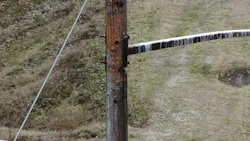
Now, drones are an integral tool within PEC’s inspection workflow for substation, transmission and distribution assets. Drone imagery, thermal scans and inspection results link to individual assets in the eSMART system via GPS coordinates. Inspection data can be reviewed alongside historical records, attached to work orders, and analyzed through the platform’s reporting tools.
Visibility, Efficiency, and Proactive Maintenance
Integrating drone inspections into the asset management system has delivered measurable improvements across inspection quality, operational efficiency, and system reliability. By moving from standalone drone use to a fully integrated inspection workflow, the cooperative has shifted from a reactive inspection model to a more proactive, data-driven maintenance strategy.
Reliability and Visibility: One of the most immediate benefits has been improved issue detection. Drone-enabled inspections of assets, particularly when paired with thermal imaging, have allowed PEC to identify developing equipment failures that may not have been visible during ground-based inspections.
During one routine inspection, a drone identified a hotspot on a circuit feeder caused by a failing connector. After reviewing the thermal data in the system, crews were able to isolate and repair the issue in approximately two hours — preventing what could have resulted in an extended outage and significant repair costs.
In another instance, drone imagery revealed a transmission pole top in critical condition that was not visible from the ground during a routine inspection. Identifying the issue early allowed PEC to address the problem before it escalated into a reliability concern.
Efficiency: Beyond issue detection, the integration has significantly improved inspection efficiency. Drone technology enables faster access to remote or hard-to-reach areas, reducing the time required to complete inspections while increasing the amount and quality of data collected. As a result, PEC has improved inspection coverage without increasing staffing.
The use of drones has also reduced the need for all-terrain vehicle access in sensitive areas, thereby minimizing land damage complaints. At the same time, inspection data is now immediately accessible in the system, allowing teams to review asset-level data and generate reports for management and accounting processes.
Safety: Safety improvements have been equally impactful. By using drones to inspect energized and hard-to-access equipment, PEC has reduced the need for personnel to enter high-voltage environments or climb structures during routine inspections. This lowers risk exposure while maintaining a high standard of inspection quality.
Accuracy and Data Consistency: The integration of drone data into PEC’s asset management system has also improved data accuracy and consistency. By linking inspection results directly to specific assets using GPS coordinates, the cooperative has reduced the likelihood of errors and ensured that inspection data is organized, traceable, and actionable.
PEC has realized other operational benefits as well:
- Reduced land impact and fewer member complaints.
- Better data accessibility and cross-departmental visibility.
- Lower operational costs through fewer repeat visits and faster repairs.
By transforming how data is collected and used, PEC has strengthened its ability to maintain system reliability while making more efficient use of cooperative resources.
Building a Connected Inspection Strategy
PEC’s experience with drone inspections underscores a key reality for utilities: Adopting new technology is only part of the solution. The greatest impact comes from how that technology is integrated into existing workflows and used to enable better decision-making.
By embedding drone data directly into the asset management system, PEC ensured inspection insights were consistently documented, organized, and accessible across the organization. This move transformed drone inspections from a supplemental tool into a core component of the cooperative’s inspection and maintenance strategy.
One of the most important lessons from PEC’s implementation is that deploying new technology is only the first step. Drones were initially adopted to improve inspection visibility in the field. While that strategy delivered immediate benefits, it also revealed gaps in how that data was handled organizationally.
PEC also recognized the value of collaboration with a trusted partner. With a long history of providing ongoing support and innovation, MinMax worked closely with the PEC team during development to ensure the solution reflected real-world workflows and could be adopted without disrupting existing processes. The level of customization proved critical to a successful launch.
Another key takeaway is the importance of standardizing how inspection data is captured and managed. By linking drone data directly to specific assets, PEC created a more structured and reliable inspection process — reducing inconsistencies and improving data accuracy across the system.
For utilities considering similar initiatives, PEC’s experience highlights a practical path forward: Focus on integration, prioritize usability, and build processes that allow new technology to scale effectively over time.
This progression — from adoption to integration — proved essential in unlocking the full operational value of drone technology.
Looking Ahead: A Future-Ready Approach
Building on the success of its transmission inspections, PEC is expanding its drone program into distribution operations, integrating it into inspection workflows across the system. Future use goals include storm damage assessment, right-of-way inspections, and field inventory processes.
As distribution poles and asset data are incorporated into the new system, drone inspections are expected to play an increasingly important role in monitoring aging infrastructure and prioritizing maintenance activities.
As customer growth expands, infrastructure continues to age, and operational demands increase, utilities are under growing pressure to do more with limited resources. PEC’s experience demonstrates that the full benefit of emerging technologies lies not simply in their adoption but in how effectively they are embedded into everyday operations.
Drones make it possible to see more, but as PEC has demonstrated, visibility alone is not enough. By integrating drone data into its asset management system, PEC has transformed aerial observations into asset-level insight — enabling faster, more confident decisions and a clearer understanding of system conditions. As this strategy expands, drone inspections are becoming a critical component of more intelligent, proactive infrastructure management.
About the Author
Matt Cooley
Matt Cooley ([email protected]) serves as Distribution Services Unit Manager at People’s Electric Cooperative. Prior to this role, he was the Director of Substation/Transmission Services, where he played a key role in improving system efficiency and workflows. With a forward-thinking approach, he focuses on leveraging technology to enhance operations and drive efficiency, emphasizing innovation, collaboration, and continuous improvement in service to the cooperative and its members.