When Wall Street Notices Your Blind Spot: The Need for Last-Mile Monitoring and Grid Modernization
Key Highlights
- JPMorgan Chase's $1.5 trillion investment underscores the strategic importance of grid resilience for national security and economic stability.
- Most distribution systems remain analog, with over 90% of outages originating at the last mile, highlighting a critical visibility gap.
- AI-powered real-time monitoring enables predictive maintenance, reducing outages, safety risks, and wildfire hazards.
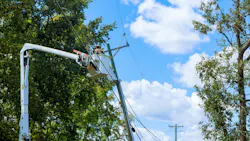
Last October, JPMorgan Chase announced a $1.5 trillion, 10-year initiative to invest in industries it deems essential to U.S. national security and economic resilience. The firm grouped its priorities into four themes and 27 specific sub-areas. Alongside defense technology, artificial intelligence, and quantum computing, one area stands out for anyone in this industry: grid resilience.
When one of the world's largest financial institutions places the ability of energy networks to withstand disruption in the same framework as national defense and frontier technologies, it is a signal worth taking seriously. Grid modernization is no longer a utility capital allocation debate. It is now a mainstream economic and national security conversation.
The question utilities should be asking is whether their investment priorities reflect the same assessment.
For many, the honest answer is: not yet — though the awareness of that gap is growing.
Over the past two decades, the industry has made real progress in generation and transmission. Smart meters are widely deployed. Energy management systems have grown more sophisticated.
That investment paid off, yet the distribution system, where 90% of outages occur, has not kept pace. The last mile of that system, especially the transformers that deliver power directly to homes and businesses, remains largely unmonitored.
The DOE's own Electricity Advisory Committee called this out in its June 2025 report, describing a "critical visibility and controllability gap" at the distribution level that hinders reliability, operations, and affordability. Distribution networks in much of the country remain predominantly analog.
When a distribution transformer fails, utilities learn the same way their customers do: the lights go out. The good news is that AI-powered monitoring can change that equation, enabling engineers to predict and prevent failures once treated as unavoidable emergencies.
South Plains Electric Cooperative, near Lubbock, Texas, put this to the test on some of its most demanding industrial accounts, facilities where equipment failure is not merely a service interruption but a genuine safety risk.
When it deployed real-time transformer monitoring, it changed how their engineers planned. Live load readings fed directly into load-flow models, providing planners with data rather than estimates. Maintenance decisions were based on actual conditions, and continuous monitoring for overloads and early faults reduced the risk of failure near high-fuel-load facilities.
That is what last-mile visibility looks like in practice. It is more than a dashboard; it is a different quality of decision-making in the field.
Faulty or failing distribution equipment is also a key contributor to utility-driven wildfires, accounting for roughly 5% of all U.S. wildfires each year. In a dry year, in the wrong geography, that number can be catastrophic. The 2023 Maui wildfire, the deadliest in more than a century, was traced to utility power lines. Continuous monitoring of conductor conditions, thermal stress, and pole health is a public safety obligation in any territory with vegetation exposure, and today's platforms make that level of awareness achievable.
At the same time, the assets carrying this load are aging. Most distribution transformers in service are at or near the end of their design life. EV adoption is accelerating. Data center construction is driving unplanned demand at a scale that utilities are still quantifying. Transformer lead times have stretched to more than two years.
That combination of aging assets, growing loads, and constrained supply makes real-time monitoring a risk-management imperative. Knowing which transformers are under stress before they fail is the difference between a planned replacement and a far more expensive emergency replacement.
The Edison Electric Institute reports that outage frequency has risen 16% in recent years and outage duration has increased 20 percent. During a major storm, utilities with last-mile visibility can build a digital picture of damage as it unfolds, pinpointing where to send crews and what equipment to bring before a single patrol hits the road. The restoration advantage is measurable in hours. In communities that depend on continuous power for medical equipment, water treatment, and emergency services, those hours matter.
Real-time distribution intelligence lowers both operating and capital costs by eliminating unnecessary truck rolls and replacing slow, manual inspection cycles with condition-based maintenance. These are not soft benefits. They appear directly in restoration budgets and rate cases.
Grid modernization is sometimes framed as a long-term aspiration with uncertain near-term returns. The data does not support that framing. The costs of not modernizing are already evident in restoration budgets, insurance exposure, and the erosion of public confidence that follows every prolonged outage.
The distribution infrastructure that supplies American homes and businesses deserves the same visibility and intelligence the rest of the grid has had for years. The gap is real, the risk is measurable, and the window for acting ahead of the next major failure is narrowing.
The precedent for this approach already exists, and we use it every day.
The Internet is critical infrastructure. Few would debate that. And no one monitors the Internet through a physical inspection once every five years. Network operations centers watch it continuously — every packet, every node, every anomaly — because the cost of downtime is measured in seconds, not seasons.
The electric grid deserves the same standard.
Public Utility Commissions today require physical inspection of distribution transformers on a five-year cycle. That mandate made sense when continuous monitoring was impractical. It no longer is. Digital inspection platforms now do what fiber and software do for the Internet: provide always-on, real-time awareness of asset health, thermal stress, load conditions, and emerging faults — without a truck roll, without a clipboard, without waiting half a decade to learn what the network is telling you right now.
Forward-thinking utilities are already making this shift — not because regulators require it, but because the operational case is undeniable. When you can see everything in real time, you stop reacting and start managing. That is a fundamental change in how the grid gets run.
The five-year inspection cycle was the right answer for its time. Continuous digital monitoring is the right answer for ours. The Internet showed us what always-on infrastructure awareness looks like. The technology exists, the business case is clear, and forward-thinking utilities are already proving it. The only variable left is how quickly the rest of the industry follows.
About the Author
Ian Aaron
Ian Aaron is the CEO of Ubicquia.