Designing More Resilient Overhead Lines for Today’s Grid
Key Highlights
- Distribution networks are typically built over decades with varied hardware, making resilience dependent on ongoing maintenance and decision-making.
- Most outages are the result of long-term issues like corrosion or vegetation encroachment, which can be identified with better data and inspection practices.
- Resilience should be integrated into daily engineering decisions, not treated as a separate project or afterthought.
- Standardizing equipment and procedures simplifies maintenance, speeds up restoration, and reduces operational complexity.
- Choosing the right technology for specific environments—urban vs. rural—is crucial for effective and cost-efficient reliability improvements.
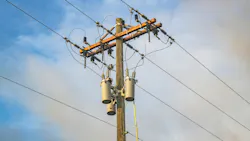
A few months ago, I was looking through photos from a distribution line upgrade and noticed something that many utility engineers would immediately recognize. Along a relatively short stretch of feeder, there were different pole designs, multiple conductor sizes and several generations of hardware installed over time. Nothing about it looked unusual.
In fact, that was the point.
Most distribution networks were not built in a single phase according to one long-term master plan. They evolved. New sections were added as communities grew, equipment was replaced when budgets allowed, and standards changed as technologies improved. Over the years, utilities ended up managing networks that reflect decades of decisions rather than a single design philosophy.
On a normal day, that is rarely a problem. The lights stay on, customers are happy and the network performs as expected. But when strong winds, extreme heat, heavy rain or contamination events occur, the weaker parts of the system tend to reveal themselves very quickly.
The conversation around grid resilience often focuses on major investments, large modernization programs and new technologies. Those certainly have a role to play. Yet many reliability problems can be traced back to much simpler issues that have accumulated over time.
Most Failures Have a Backstory
When customers experience an outage, the immediate cause is usually obvious. A conductor breaks. An insulator flashes over. A cross-arm fails. A tree falls into the line.
What is less obvious is that these failures rarely happen without warning.
In many cases, the visible fault is simply the final chapter in a much longer story. Corrosion may have been weakening a component for years. Hardware may have gradually loosened due to vibration. Vegetation may have been moving closer to the line season after season. By the time the outage occurs, the real problem has often existed for a long time.
This is one reason why utilities sometimes struggle to identify recurring issues. Many organizations collect large amounts of operational data, but the records do not always tell the full story. A damaged component may be documented, while the conditions that contributed to the failure remain unclear.
One utility manager I spoke with described it as “fixing the same problem under different names.” The outage reports looked different every year, but the root causes were surprisingly consistent.
That observation highlights an important point. Building a more resilient network does not always start with new equipment. Sometimes it starts with better information.
Utilities that standardize inspection procedures and failure reporting often gain a much clearer picture of where their biggest risks actually exist. Once those patterns become visible, investment decisions become easier.
Resilience Is Not a Project
The term “storm hardening” appears frequently in industry discussions. It is a sensible objective, especially as utilities face more frequent weather-related disruptions.
The problem is that resilience is sometimes treated as a special initiative rather than a normal part of engineering practice.
A utility might strengthen a few vulnerable structures or install additional switching devices in areas that have experienced repeated outages. Those improvements are valuable, but they do not automatically make the broader network resilient.
In my view, resilience works best when it becomes part of everyday decision-making.
Whenever a line is built, upgraded or refurbished, engineers should ask a few simple questions. Are the design assumptions still realistic? Do the loading criteria reflect current operating conditions? Are the selected components likely to simplify maintenance ten years from now, or make it more complicated?
These are not the kinds of decisions that attract attention from the public. Yet over the life of an asset, they often have a greater impact than a single high-profile project.
The Underrated Value of Standardization
One topic that rarely receives much attention outside engineering teams is standardization.
At first glance, reducing the number of pole configurations, insulator types or hardware combinations may not seem particularly exciting. It certainly lacks the appeal of new digital technologies or large infrastructure projects.
However, the operational benefits can be significant.
I have spoken with utilities that maintain dozens of variations of essentially the same structure. Over time, this creates challenges in design, procurement, inventory management and maintenance. Spare parts become more difficult to manage, and field crews encounter a wider range of equipment in the network.
By contrast, utilities that adopt a more standardized approach often discover that many routine tasks become easier. Engineers spend less time reinventing solutions. Purchasing becomes more predictable. Maintenance teams know exactly what they are dealing with.
The benefits become especially noticeable after a major outage event. When crews have access to familiar equipment and readily available spare parts, restoration efforts typically move much faster.
Customers may never notice standardization when everything is working normally. They certainly notice when service is restored quickly after a disruption.
Matching Technology to the Environment
Another lesson that repeatedly emerges in overhead line design is that there is rarely a universal solution.
Bare conductors remain the right choice for many applications. They are cost-effective, well understood and perform reliably when adequate clearances and vegetation management practices are maintained.
Yet not every corridor offers those conditions.
As urban areas expand and infrastructure becomes more congested, utilities often face new challenges involving clearances, vegetation and public safety. In these situations, covered conductors or aerial bundled cable can offer meaningful advantages.
The important thing is not deciding which technology is best overall. The better question is which technology is most suitable for a particular environment.
Too often, specifications evolve around historical preferences rather than current operating realities. A conductor that works perfectly in a rural corridor may not be the best option for a densely populated urban area. The reverse is equally true.
Resilient networks are usually built through thoughtful engineering choices rather than rigid adherence to a single standard.
A Different Kind of Distribution Network
The way distribution feeders operate is also changing.
For decades, network planning was based on a relatively straightforward assumption: electricity flowed from the substation to the customer.
That assumption is becoming less reliable.
As distributed generation continues to grow, power can move in multiple directions throughout the day. A feeder that was originally designed for one-way power flow may now experience reverse power flow during periods of high solar generation.
This shift introduces new considerations for protection systems, voltage regulation and network operations.
The challenge is not limited to utilities with large amounts of distributed generation today. It also applies to utilities that expect these resources to expand in the future.
When major upgrades are being planned, it makes sense to consider how the network may operate ten or twenty years from now rather than focusing exclusively on present-day conditions.
The cost of preparing for future flexibility during a planned project is often far lower than the cost of redesigning the system later.
Seeing the Network More Clearly
Inspection practices are evolving as well.
Traditional patrols remain extremely valuable. Experienced line crews can often identify issues that technology alone might miss. At the same time, utilities are increasingly supplementing those inspections with drones, high-resolution imagery and advanced sensing tools.
What interests me most is not the technology itself but what utilities do with the information it provides.
Collecting more data is relatively easy. Turning that data into better decisions is much harder.
The organizations seeing the greatest benefits are often the ones that connect inspection findings, maintenance records, environmental conditions and asset performance into a single view of network health. Instead of reacting to failures, they are identifying risks before they become outages.
That shift from reactive maintenance to proactive asset management may be one of the most important changes occurring in the industry today.
Small Decisions, Big Results
There is no single upgrade that will make an overhead distribution network resilient.
No technology, device or piece of hardware can solve every challenge utilities face.
More often, resilience is built through hundreds of small decisions made consistently over many years. Better inspection practices. Clearer failure reporting. Smarter design standards. Appropriate conductor selection. Greater standardization. More forward-looking planning.
Individually, none of these actions seem revolutionary.
Collectively, they can transform the way a network performs.
As utilities navigate growing demand, aging infrastructure and increasingly unpredictable operating conditions, the objective does not need to be rebuilding the entire system at once. In many cases, the most practical path forward is also the most sustainable: improving the network one decision at a time.
Those incremental improvements may not generate headlines, but they are often what keep the lights on when conditions become challenging. And ultimately, that is the measure of a resilient overhead network.
About the Author
Divya Khatri
Divya Khatri is international sales specialist at Shanghai Risentric Electric Co.