Advancing Distribution System Operator Capabilities
Key Highlights
- The modern power grid features over 60 gigawatts of distributive solar capacity, increasing complexity and requiring advanced monitoring by Distribution System Operators (DSOs).
- There are no industry-wide certification standards for DSOs, leading to variability in roles, responsibilities, and training programs across utilities.
- EPRI has launched a DSO certification program to standardize training, improve retention, and elevate the technical expertise of distribution operators.
- Certification aims to support career progression, reduce pay disparities with TSOs, and enable DSOs to participate more effectively in storm response and mutual assistance efforts.
- The evolving distribution system demands highly skilled, tech-savvy DSOs to ensure grid resiliency, minimize outages, and adapt to rapid technological changes.
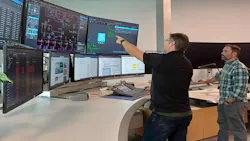
It’s hard to remember to a time when the power grid was simply a supplier of electricity. Back then, it was defined as “generate-transmit-distribute” and the distribute portion was a one-way street. There were no distributive energy resources (DERs) and certainly there were no prosumers producing bidirectional power flows and the distribution operator was a dispatcher. Trouble calls came in and a crew was dispatched, life was simple. Today it’s more convoluted. For example, it’s estimated there is over 60 gigawatts of distributive solar capacity in the U.S. That’s about 2% of the total U.S. electricity generation and a distribution system operator (DSO) is needed to monitor it.
Digital technologies are responsible for this transformational shift in complexity. It’s a constant enhancement to the distribution system, and its operators have to adapt with it. These highly trained operators are essential to managing this increasingly complex power system with its real-time automation, smart devices, and fluctuating energy supply from DERs. All things considered, DSOs are more indispensable to the modern power grid’s resiliency than ever before.
It’s estimated that about 90% of outages take place on the distribution system, so the distribution system is becoming more prominent. A few months ago, the Oak Ridge National Laboratory (ORNL) published their latest research project showing how essential electricity is to the customer. ORNL investigated the specific costs of power outages to local customers across the U.S. The typical cost for commercial and industrial customers averaged US$6,031 in 2024. The total nationwide costs to all customers in 2024 was US$121 billion. With interruptions and outages continuously increasing, those costs to customers will continue to intensify.
State-of-the-art Operator
By focusing on the distribution system, utilities are getting more "bang for the buck" in terms of reducing customer interruptions. Modernizing the distribution system by updating its infrastructure significantly decreases the number of customer power outages, but it has its costs. It provides utilities the highest price-performance ratio, but it requires utilities “upskilling” their DSOs. That, however, is proving to be harder than expected. When the transmission grid was faced with this issue, the North American Electric Reliability Corporation (NERC) created a demanding certification process for the transmission system operator (TSO), with explicit requirements.
On the distribution side this is not the norm. There are no industry-wide certifications or performance expectations for DSOs. This inconsistency has existed from the beginning of the industry. Both of these positions have evolved over the past decades, but the TSO evolved faster. Initially smart grid technologies advanced quicker on the transmission side requiring TSOs to significantly up their game technology wise. As we’ve seen many times before, technology oversteps boundaries and it’s done that with the DSO.
Technological evolution has increased its sophistication of the distribution system to that of the transmission system. That’s causing the borders between the two segments to blur requiring increased coordination between them, but this is deeper than that. The TSOs and DSOs must complement each other by being fast-acting, forward-thinking and tech-savvy. Because of that, it’s imperative that the DSOs certification be on par with the TSOs.
There’s a Plan
Establishing an industry-wide certification program for DSOs is a timely issue in today’s evolving environment. A few years ago, some member utilities came to EPRI (Electric Power Research Institute), an independent, non-profit energy R&D organization, with a request. They recognized the need for a DSO certification program similar to NERC’s TSO to address some of the challenges related to hiring, training, and retaining DSO’s. A collaboration was formed to address the issues associated with DSO certification. This would be a good time to talk to an expert from EPRI, so “Charging Ahead” contacted Brian Deaver. Mr. Deaver is a senior technical executive and research manager for distribution operations at EPRI and has been an integral part of the DSO Certification Program development process.
Deaver kicked off the discussion saying, “This is an exciting time for EPRI and its member companies. When EPRI was asked if they would develop a certification program for distribution system operators, it seemed a good fit, since EPRI has some experience with certifications and training. This would be one more certification program to aid the power delivery industry. The discussions with energy companies pointed out that the role of the DSOs lacked consistency across North America. Those included differences in roles, responsibilities, operations processes, terminology, training, and career progression. For example, in one utility a DSO may be called a distribution dispatcher while in another they may be called an electric grid operator, while they are essentially doing the same job. This may seem trivial but try doing a comparative pay analysis for the DSO position when you have to include 15 different job titles, and they are not utilized consistently in the industry.”
Deaver explained, “In addition, to the wide variation of job titles, there are no standards for training criteria, or job responsibilities or competencies, and so on. The energy companies felt this led to another big issue, career development and retention. Traditionally, distribution operator applicants came from a field craft position within the company with a basic knowledge of the distribution system, but that’s no longer the case. Today, DSO candidates come from outside the utility, and they need training on everything from the ground up. Training programs today vary from On-the-Job training only to extensive training programs including classroom training, field visits, on the job training with trained mentors and checklists, simulator exercises and boards of review. The variations in roles and responsibilities lead to variations in training programs. Another goal of the EPRI DSO Certification is to create more standardized expectations for DSO training programs, both in scope and content.”
Continuing, Deaver said, “One of the challenges for DSO retention is the typical pay differential between the DSO and TSO. It has been common for a fully trained and competent DSO to post for a position as a TSO after a few years as a career step and to get a pay increase. The reason for this pay differential has been the perception of a difference in complexity and advanced technology between DSO and TSO, and in part due to the need for TSOs to achieve certification. The EPRI DSO Certification should help to demonstrate that the DSO position has reached the same level of technical complexity and training requirement as the TSO and hopefully alleviate that inadvertent situation of experienced DSOs moving to the TSO position. The distribution system is only getting more and more complex, and it is essential that these experienced DSOs continue to progress in the distribution control center.”
Deaver offered, “One of the possible benefits of establishing the EPRI DSO Certification is to support the addition of DSOs to Storm Mutual Assistance teams. Today when a utility is hit with a severe storm and requests Mutual Assistance from other utilities they get field crews, field crew support staff and field crew leadership. This allows tremendous scaling of field capabilities but creates a bottle neck reporting into host utility’s control center. That bottleneck can result in a lot of wasted time and longer final restoration time. With the EPRI DSO Certification, it may be possible to also send “Certified” DSOs along with the crews to distribute and decentralize some of the DSO control and alleviate these bottlenecks. It is something we are exploring aggressively.”
In closing, Deaver said, “That’s why EPRI agreed to develop and implement a DSO certification program. On April 21, 2026, EPRI officially launched its DSO certification program, with the goal of having 100 candidates sit for the test before June 1, 2026. After this initial wave, candidates will be able to test on an ad hoc basis. Initially the program is available to EPRI members, And later this year EPRI plans to open the program to all utilities in North America. The utilities will not have to be a member or aligned with EPRI in any way to take part in the program. The goals of the DSO Certification are clear, to improve the hiring and retention of DSOs and to improve the standardization or roles, responsibilities, training and operational processes. It’s also hoped that utility executives will see the value of DSO certification and establish a pay-parity and a career progression competitive with the TSO career path.”
Opportunity
The 21st century power delivery system is a mixture of advanced technologies and legacy systems that puts a great deal of pressure on DSOs to keep the power flowing and interruptions at a minimum. Add to that a customer base whose demands are also increasing and it’s understandable why the need for qualified DSOs who understand today’s distribution network is higher than ever. Training is probably one of the most cost-effective upgrades available to utilities today. Employee certification adds not only their value but prepares everyone for a future where technological change is a certainty!
About the Author
Gene Wolf
Technical Editor
Gene Wolf has been designing and building substations and other high technology facilities for over 32 years. He received his BSEE from Wichita State University. He received his MSEE from New Mexico State University. He is a registered professional engineer in the states of California and New Mexico. He started his career as a substation engineer for Kansas Gas and Electric, retired as the Principal Engineer of Stations for Public Service Company of New Mexico recently, and founded Lone Wolf Engineering, LLC an engineering consulting company.
Gene is widely recognized as a technical leader in the electric power industry. Gene is a fellow of the IEEE. He is the former Chairman of the IEEE PES T&D Committee. He has held the position of the Chairman of the HVDC & FACTS Subcommittee and membership in many T&D working groups. Gene is also active in renewable energy. He sponsored the formation of the “Integration of Renewable Energy into the Transmission & Distribution Grids” subcommittee and the “Intelligent Grid Transmission and Distribution” subcommittee within the Transmission and Distribution committee.