US EV Optimism Rises as Charging Infrastructure Gains Momentum Despite Sales Slowdown
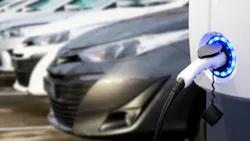
The North American electric vehicle (EV) landscape is expanding, so much so that companies like FedEx Corp. are investing hundreds of millions of dollars to replace thousands of diesel vehicles as a major modernization effort to achieve future carbon-neutral operations.
In the U.S., current EV owners report high satisfaction and state they would “choose electric again,” helping anchor the broader electrification transition. According to a joint report by mapping company HERE Technologies and research firm SBD Automotive, 53% of U.S. drivers say they are more open to considering an EV than they were a year ago.
The co-developed fourth annual HERE-SBD EV Index 2026 assessment highlighted this growing optimism, fueled by positive perceptions of public charging availability, which helped this outlook jump from 28% in 2025 to 47% in 2026.
To formulate this view of EV readiness, the two companies pair a proprietary EV infrastructure ranking system with consumer surveys. The 2026 analysis included insights from more than 4,000 drivers across the U.S., Europe, India and Australia in June and July 2026.
In the U.S., East Coast states reportedly continue to lead the country in EV market adoption. The top five states in the EV index, according to HERE and SBD, are: Delaware, Washington, D.C., New Jersey, Massachusetts and Connecticut.
U.S. consumer sentiment rises despite slower EV uptick
Data from the Alliance for Automotive Innovation's EV Sales Dashboard highlight that U.S. EV market share is 5.37% year-to-date, down nearly 3% from the full prior year in 2025. Researchers note that the expiration of the federal EV tax credits contributed to this drop in sales as buyers rushed in late 2025 to secure the $7,500 incentive before it disappeared.
Among the 21.4 million electric vehicles newly registered worldwide in 2025, German non-profit research institute Baden-Württemberg (ZSW) reported that China accounted for 14 million of those new global registrations.
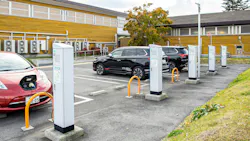
The U.S. was a distant second, accounting for a cumulative total of 7.1 million EVs on the road, while Germany was listed third with 3.2 million EVs. But despite North America’s slower EV adoption compared to Asian markets in places like China, HERE and SBD noted that Americans are still significantly more optimistic about EV ownership.
"This year’s EV index shows Americans are becoming more open to the idea of driving an EV and more confident in the infrastructure needed to support them,” said Robert Fisher, senior consulting manager at SBD Automotive, in a statement.
The 2026 HERE-SBD EV Index attributes growing consumer optimism to broader charging network expansion and volatile fuel costs. In fact, 57% of U.S. drivers surveyed said gas prices influenced their interest in EVs. Among current EV drivers, that figure reportedly rose to nearly 80%.
Charging availability and driving range still ranked among the top three barriers in the EV transition. Those concerns contributed to a roughly 15% decline in interest since last year’s report, HERE and SBD explained.
Among non-EV drivers, 10% fewer reportedly intend to purchase a gas vehicle as their next vehicle compared to last year’s survey. If price and specifications were the same, 8% of consumers surveyed said they would choose electric—with 12% saying they see no barriers to EV adoption.
Infrastructure expansion influencing market barriers
While charging availability and driving range still ranked among the top three barriers, those selecting these concerns declined by 14% and 15% respectively since last year’s report. The U.S. reportedly added 31,600 public charge stations since last year’s Index, representing 13% of the country’s total charge points.
“While EV uptake may be slowing, the findings suggest continued investment in charging infrastructure is starting to translate into greater consumer confidence,” Fisher added. “Consumer sentiment often leads purchasing behavior, making confidence an important indicator to watch as the market continues to evolve.”
That improvement, HERE and SBD noted, increased the total EV charging power footprint by 47%, from 14.1 GW to 20.7 GW, to improve charging performance and reduce charging wait times for drivers. However, U.S. coverage still reportedly remains uneven. Despite the gaps, rising sentiment is a critical indicator of where the market may be headed, with 60% of U.S. respondents expressing confidence in the country's ability to develop the EV infrastructure needed.
“The latest findings show that confidence in EV ownership is increasingly tied to confidence in the charging experience. Drivers want to know where chargers are located, whether they’re available, how quickly they can charge and how charging fits into everyday journeys,” said Denise Doyle, chief product officer at HERE Technologies. “As EV adoption grows, high-quality location data and real-time charging information will play an increasingly important role in helping drivers make the electric transition with confidence.”
About the Author
 Eric Moody