IONATE Deploys Smart Grid Solutions to Modernize General Motors' Michigan Plant
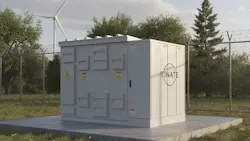
General Motors (GM) and U.K.-based IONATE, a developer in energy infrastructure technology, are collaborating to deploy IONATE's proprietary smart grid solutions at the automaker's manufacturing plant in Romulus, Michigan. The announcement on Thursday marks the energy infrastructure developer’s entry into the U.S. market following the launch of several utility projects across the European grid.
GM’s 900,000-square-foot Romulus Propulsion Systems plant is currently scaling production of 10-speed transmissions for full-size trucks and SUVs, backed by a recent $300 million investment to expand capacity. Through this new partnership, the facility is integrating IONATE’s Hybrid Intelligent Transformer (HIT) technology, which claims to detect and resolve power flow issues in real time before they affect operations or the surrounding utility grid.
The HIT units were featured in live European grid installations, powering local homes and businesses alongside energy giant Energias de Portugal (EDP) in 2023. The real-time pilot projects measured the regulated voltage spikes caused by the expansion of distributed energy resources such as electric vehicle (EV) charging stations and solar systems. IONATE also collaborated in 2024 with one of London’s largest distribution operators, National Grid Electricity Distribution and researchers from Cardiff University, which measured cost-effective ways to remove grid congestion by deploying HIT units.
By targeting these fluctuations, IONATE founder and CEO Matthew Williams claims the HIT technology can accommodate local utility distribution grids to accept up to 33% more renewable energy without overloading. According to company projections, the tech can carry 25% more power without upgrading poles and wires, reduce power losses by 6% and operate at greater than 99% efficiency—all while integrating into existing substations and facilities.

“Deploying the Hybrid Intelligent Transformer with General Motors marks a significant step in reinforcing industrial power infrastructure with solid-state intelligence,” Williams said in a statement. “GM's manufacturing operations demand the highest standards of reliability, efficiency, and power quality – and that is what we build for.”
For GM, this deployment will help the automaker advance next-gen technology with real-time visibility and control over power quality, enhancing energy resiliency for its manufacturing production. It also positions them among the company among the first industrial users in the U.S. to deploy this smart energy infrastructure, which offers a potential model for other manufacturers and grid operators facing energy system modernization pressure.
“Maximizing efficiency and resiliency is crucial in GM’s manufacturing system, and it’s why we’re implementing innovative technology to enhance our energy management and the overall grid,” said Luis Cervantes, executive director of manufacturing excellence at GM.
Engineering teams from both companies have reportedly worked with U.S.-standard 3MVA IEEE units while finalizing the official rollout of HIT system integration in the Romulus plant.
About the Author
 Eric Moody