Strengthening America's Power Grid Against Hurricanes and Wildfires
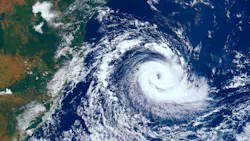
As hurricane season begins and wildfire risks increase across the country, America's electric companies are preparing to respond to extreme weather events that can cause power outages.
“We know extreme weather will continue to impact communities across the country — the question is not if, but when,” said Jennifer DeCesaro, senior vice president of industry operations at the Edison Electric Institute (EEI). “Electric companies prepare year-round — investing in stronger infrastructure, deploying new technologies and coordinating across the industry to enable a rapid, safe response when severe weather strikes.”
Investing in a More Resilient Grid
The grid has remained strong and stable over time, with most power outages—about 80 percent—caused by severe weather, according to a new analysis from Concentric Energy Advisors (CEA). The electric power industry is focused on reducing those impacts and restoring power safely and as quickly as possible during storms.
EEI's member companies are investing at historic levels—nearly $1.4 trillion over the next five years—to strengthen the grid and make it more resilient to extreme weather. According to the report, roughly 21–33 percent of transmission and distribution investment is specifically directed toward resilience and hardening. That includes burying outage-prone power lines, replacing wooden poles with stronger steel and concrete structures, elevating substations against flooding, and trimming trees near power lines to prevent storm-related outages.
Data-Driven Response Efforts
Data, technology, and advanced forecasting tools are transforming how electric companies prepare for and respond to severe weather. Days before a storm, electric companies use damage prediction models and weather analytics to pinpoint likely impacts and determine where to position crews, equipment, and materials.
“With the smart technology, we're able to make decisions quickly,” said Drew Thompson, program manager of workforce strategies at Entergy.
Electric companies are deploying sensors, real-time monitoring platforms, and grid-enhancing technologies that provide continuous visibility into system conditions and support more informed decision-making during extreme weather events.
Across the industry, companies are also leveraging drones equipped with AI-powered cameras, automated diagnostic tools, and smart grid technologies to inspect infrastructure, identify issues before they cause outages, and reduce restoration times. In the West, member companies are also deploying AI-enabled cameras to detect wildfires earlier, helping first responders act faster.
Mutual Assistance
A hallmark of the electric power industry is mutual assistance—the long-standing tradition of mobilizing resources to help support communities in need.
Ahead of major storms and other natural disasters, electric companies coordinate to identify resource needs and position additional personnel, equipment, and supplies to expedite power restoration. This preparation helps enable a safe, organized, and rapid response in affected communities.
Created decades ago, EEI's mutual assistance network provides a formal yet flexible process for electric companies to request support from companies in other parts of the country not affected by major outages. EEI and its member companies also conduct exercises throughout the year to test and strengthen the system in the event of widespread disruptions.
“In the event of a very large storm, then we may call on our neighboring utility to come and help us out, so that we can restore safely and with the right number of resources,” said David Bunge, senior manager of emergency preparedness at ComEd.
“We're not in it alone,” said Stephanie Gossman, general manager of planning and policy at Georgia Power. “That's one of the things I love about America's electric companies and the fact that we work together across this industry to tackle challenges, including getting the lights back on.”
Watch this video to hear directly from experts on the frontlines of emergency response across the country about how they prepare for and respond to hurricanes, wildfires and other extreme weather events. The video features leaders from ComEd, Entergy, Georgia Power, Hawaiian Electric and National Grid.