Technosylva Expands AI-Driven Weather Software to Curb Power Outages, Boost Grid Preparedness
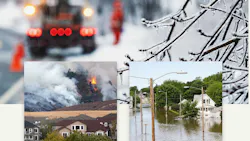
Software developer Technosylva has expanded its platform offering this month to provide utilities with better foresight of weather-related events that can disrupt power grid systems.
The company’s Multi-Hazard Operations platform claims to provide utilities with this ability, built on weather and risk science to help restore power more quickly. Technosylva states that Multi-Hazard Operations is derived from its wildfire modeling system to deliver both predictive outage analytics and restoration operations.
As a result, the expanded platform enables utilities to anticipate, scope and prepare up to five days before an extreme weather event arrives, telling utilities what that storm is likely to do to their system, Technosylva claims. This includes managing post-event restoration efforts as well—all done through platform enhancements in AI and machine learning capabilities.
"Utilities have managed the impact of weather on their systems for decades, but the stakes and the scrutiny have changed," Technosylva CEO Bryan Spear said in a statement. "Our utility customers don't just need to know a storm is coming — they need to know how hard it will hit, where and what it will take to restore service.”
Spear adds that Technosylva has spent roughly 30 years refining and enhancing their models for extreme wildfire and weather conditions. Applying that same science to storms and outages, he states, helps utilities “keep the lights on” for both customers and communities who depend on them.
Houston-based CenterPoint Energy has reportedly deployed Technosylva’s expanded system of prediction and restoration resources. Multi-Hazard Operations can help utilities such as CenterPoint Energy determine how many customer outages to expect and what is needed to restore service within target windows.
The company states its storm-impact models have been trained on thousands of historical weather events with an average prediction accuracy of 82% across storm types, including convective storms. For large-scale synoptic windstorms, Technosylva adds that its model has demonstrated achieving 99% accuracy in predicting total power grid outages during multiple events.
The average U.S. customer experienced roughly 11 hours without power in 2024 — nearly double the annual average of the prior decade, according to the U.S. Energy Information Administration. Major weather events accounted for about 80% of those lost hours.
About the Author
 Eric Moody