How Grupo SAESA Digitized Field Safety Across Chile
Key Highlights
- FYLD has supported Grupo SAESA’s field operations since 2023, digitizing pre-work risk assessments and contractor onboarding.
- In 2025, 99% of jobs had a pre-work video risk assessment, compared with an estimated 60% under the previous paper process.
- Across 62,021 analyzed work orders, completion reached 91.2%, while average job resolution time fell by 28.4%.
- SAESA recorded 27 lost-time accidents and 453 lost workdays in 2025—14 fewer accidents and 149 fewer lost days than estimated without FYLD.
- RigorScore helps assess the quality of risk management, enabling targeted coaching and continuous improvement across crews and supervisors.
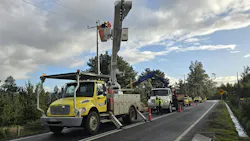
Grupo SAESA is Chile’s third-largest electricity distribution group. The utility serves more than 15% of the country’s population, across 390 cities and towns in 13 regions, over a network of more than 44,000 miles of lines. A large share of the work on that network, from routine maintenance to emergency repairs, is carried out by contractor and partner companies spread across some of the most diverse and remote terrain in Chile.
That structure is what makes the business work. It’s also what makes good safety practices more challenging.
When coordinating a workforce this size, across this much geography, through this many different contractor organizations, you eventually run into the same question: how do you know that a risk assessment carried out by a crew three regions away, working for a delivery partner, meets the same standard as one carried out by your own team ten minutes from headquarters?
For a long time, our honest answer was that there was no way to be certain.
This is the story of how we changed that, what it delivered, and what other safety leaders facing the same issue might do.
The Problem
Around 2022, our Occupational Health and Safety Management team started looking seriously at what was limiting our ability to manage risk consistently across the operation. A few things were true at once.
Our pre-work risk assessments were completed on paper. Paper is fine for a single crew on a single job, but it’s not repeatable at scale. There was no practical way to standardize it, verify it, or compare it across regions and contractor companies. Two crews doing the same category of job, in different provinces and working for different companies, could produce assessments of varying depth and quality. We’d have no consistent way of knowing that until something went wrong.
Supervision had the same limit. A supervisor can only be in one place at a time. Across a network our size, that meant the vast majority of jobs were never seen by a second set of eyes before, during or after work. We were relying heavily on the judgment of the crew alone, and on paper trails that arrived after the fact.
And because so much of our field work is carried out by contractor companies rather than direct employees, achieving a common operating standard meant we needed something all of them could use. Job data was scattered across formats and organizations too, which gave leadership only a partial view of the operation.
None of this showed up as a single incident that forced our hand. It was more that leadership had developed an appetite for technology that could support distributed field work without compromising the operational and safety standards we hold ourselves to. Our team was the one that pushed to turn that appetite into a specific solution.
We wanted a platform that could standardize information, give us visibility into what was happening across the whole operation, and bring AI into the risk assessment process itself to validate and support judgment. The goal was straightforward: better preventive management, better risk identification, fewer and less severe accidents and incidents in the field.
Moving to a New Platform
FYLD has been live across Grupo SAESA’s operations since 2023. We used it to move our risk assessment process from paper to a structured digital format, and then kept extending it into other parts of the operation as we saw where it could help.
Today, the day-to-day looks like this. Each crew creates the job on the platform before starting work, then carries out a video-based risk assessment (VRA) with AI support, capturing hazards, controls, and evidence in a consistent format before anyone picks up a tool. From there, the job leaves a clear trail. Supervisors review and sign off on VRAs and can intervene remotely, which lets them direct their attention to the highest-risk jobs rather than relying on physical site visits.
We also moved contractor onboarding onto the same platform, which sounds like a small administrative change but wasn’t. Getting contractor companies to adopt FYLD was the hardest part of this whole effort. The obstacle was convincing companies that this wasn’t just another compliance requirement handed down by SAESA, but a tool that added real value to their own safety processes.
We had to show that this tool was built for the worker and the supervisor in the field, something that made the job itself easier and helped prevent risks. That required ongoing support and training and demonstrating value through everyday use. Adoption was, and still is, a sustained effort.
One of the most exciting things to come out of this work is something we call RigorScore, which we co-developed with FYLD. RigorScore assesses the quality of the risk management process. It looks at where the gaps are in the assessments workers complete, and how quickly and effectively supervisors intervene when they need to. It’s also helping us understand, in measurable terms, the value AI is adding when it comes to identifying risks, controls, and opportunities for improvement, rather than treating that as an assumption we take on faith.
The utility is also tracking device and connectivity governance across our full fleet of registered devices, so gaps in coverage are something we can see and fix in real time.
Garnering Results
The results, based on our verified 2025 operational data, are the clearest answer I can give to whether this was worth the effort.
All figures below compare work completed with FYLD against an estimate of the same work completed without it, based on our verified 2025 operational data.
Visibility and control
- 285,916 work orders were created and managed through FYLD in 2025, giving leadership a single, real-time view across all 12 of SAESA’s operational zones.
- 99% of jobs had a pre-work video risk assessment completed with FYLD, against an estimated 60% under the previous paper-based process.
- 56.3% of SAESA’s active contracted workforce is now equipped with a digital field tool, far higher than the average digital adoption across Chile’s electrical sector.
- Zone-level reporting means SAESA can now see exactly where performance lags and direct support accordingly.
- 148 supervisors now review and sign off field work remotely through FYLD, rather than relying solely on site visits.
Downtime and job blockers
- Work order completion rate reached 91.2% with FYLD, against an estimated 78.4% without it, across 62,021 operational work orders analyzed in 2025.
- Average job resolution time fell by 28.4% with FYLD, compared with the process before the platform.
- Remote supervision through FYLD avoided an estimated 23,088 hours of travel time and in-person sign-off across the year, time supervisors have redirected to the jobs that need them most.
Safety outcomes
Consistent process control shows up directly in safety results. In 2025, SAESA recorded:
- 27 lost-time accidents, against an estimated 41 had the same volume of work been carried out without FYLD, a reduction of 14 accidents.
- 453 total lost workdays, against an estimated 602 without FYLD, a reduction of 149 lost days.
- Zero fatalities across the network in 2025.
Beyond the headline figures, we’re now completing something close to full coverage of safe work analyses, roughly 35,000 assessments per month. What that coverage gives us is the ability to see quality gaps at both the worker level and the supervisor level, and to deliver custom training, coaching, and supervision at the specific places where they’re needed.
Over time, that’s helping raise the standard of service delivered by our contractor companies and strengthen a shared operating standard across the whole network.
Learnings
Following an event during a technical field process, we reviewed the evidence available on the platform and identified something that had not been apparent before: seemingly routine, identical jobs showed clearly defined patterns in their timings, schedules and how they were carried out.
It was spotting those patterns that enabled us to ask the right questions, investigate what was happening in more depth, and identify practices that were regularly being repeated in the field and needed to be corrected.
That experience marked an important turning point. The real value of AI is not only in processing large volumes of information, but in making visible what, through familiarity and repetition, we often stop seeing. That is when I understood the potential for this tool to help us anticipate issues, learn and make better safety decisions.
What convinces me is not a single moment, It is the pattern across thousands of jobs every month. The gaps in the quality of assessments that were previously invisible are now visible, and the issues are corrected.
The second lesson is that technology doesn’t create a common standard on its own. Contractor adoption was hard precisely because a platform only becomes a shared standard when the people using it believe it makes their own work safer and easier, not just when it satisfies the client’s reporting requirements. We had to earn that belief job by job.
From FYLD’s perspective, the work with Grupo SAESA also points to an important distinction for any utility digitizing field safety. Measuring whether a process happens is not the same as measuring whether it was effective. RigorScore exists because “did the assessment happen” and “was the assessment any good” are different questions, and only one of them tells you whether your prevention effort is working.
Rather than treating completion as the end point, we’re working together to understand the quality of the risk management process itself and use those insights to continuously raise the standard across the workforce.
Where to Go Next
There is potential to extend this engagement to tackle productivity in areas like managing electrodependent customers, coordinating urgent field backup cases, and handling third-party accidents. We’re also exploring whether AI can judge work quality against set criteria in real time, so reports come out of that analysis rather than being pulled together after the job.
Operating a network of this scale, with this much geographic dispersion, requires building a safety culture that’s consistent and sustainable across every region and contractor. For Grupo SAESA, that has meant aligning people, processes, and decisions around a single preventive standard.
For FYLD, it’s also a reminder that meaningful change requires partners willing to challenge how work has traditionally been done, test new approaches, and keep improving them together. Technology can enable a different way of working, but it takes an organization willing to put it into practice.
About the Author
Patricio Velásquez
Patricio Velásquez Soto is a professional with more than three decades of experience in the electrical industry, spanning generation, transmission, and distribution. He has built his career at Grupo SAESA, holding a range of technical, operational, and executive roles, from hands-on fieldwork to leadership and management positions.
Shelley Copsey
As the Co-founder and CEO of FYLD, Shelley leads a venture that empowers infrastructure field teams and managers to make data-driven decisions in real-time, leading to greater safety, productivity and quality assurance. She has over 20 years of experience in the intersection of physical infrastructure and digital technologies, as well as the human transformation required to deliver on the promise of emerging technologies.