The New Bottleneck: Talent and Consistency in Traffic Control
Key Highlights
- Consistent traffic control execution depends on comprehensive training, ongoing coaching, and clear expectations to adapt to changing field conditions.
- Retention of experienced personnel is crucial for maintaining standards, managing surge demands, and building leadership within traffic control teams.
- Technology tools like mobile updates and smart work zone devices support better visibility, safety, and execution consistency across multiple job sites.
- Utilities should evaluate traffic control partners based on their training programs, performance tracking, and leadership development strategies.
- A focus on people, processes, and technology ensures safer, more efficient utility work zones amid increasing project complexity and tight schedules.
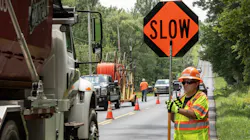
The pace of utility infrastructure work is accelerating, creating new challenges for crews working in and near the right-of-way. Grid modernization, storm hardening, broadband expansion, electrification and other infrastructure projects are putting more workers in the field — often with tighter timelines and less room for disruption. Whether the job involves poles, lines, substations, underground utilities or roadside assets, the work depends on one thing before almost anything else can happen: safe, reliable access.
When that access breaks down, the project starts to break down with it.
For a long time, traffic control has been viewed mainly as a compliance requirement: get the plan approved; put the devices in place; staff the job; keep traffic moving. Those steps are only part of the story, however. What we see more often now is that utilities are struggling because execution varies once that plan reaches the field.
That’s to say, the same spec can produce very different outcomes depending on the crew, the contractor and the conditions that day. A project can have the right equipment, an approved plan and a capable crew ready to work. But if the traffic control team lacks experience, if expectations are not clear, or if performance varies from one location to the next, the result is usually a combination of lost time, added risk and more frustration for everyone involved.
And that is where traffic control becomes a hidden bottleneck.
The Risk of 'Same Plan, Different Day'
Utility work does not happen in a single controlled environment, and that is one of the things that makes it so difficult to support consistently.
One week, a crew may be replacing poles along a rural road with long sight lines and lighter traffic. The next, they may be supporting underground work in a dense commercial corridor where every lane closure affects traffic. Then a storm hits, and suddenly crews are working under changing priorities and a much higher level of urgency.
In each case, the work zone is different as traffic volume, sight distances and local requirements change—just as crew sizes, work durations, lane configurations and public interactions all change with them.
In many cases, the plan may be approved, the equipment available and the scope understood. But once the work gets to the field, execution can look very different from one job to the next.
One team may set up the work zone cleanly, communicate clearly with the utility crew and adjust safely as conditions change. Another crew may be working from the same plan but still struggle with timing or setup.
Inconsistent traffic control can create confusion for motorists, leave workers exposed, complicate inspections, strain contractor relationships and negatively affect how the surrounding community experiences the project.
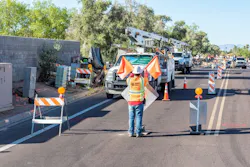
Training Must Produce Repeatable Field Behavior
Training is where consistency starts, but training is sometimes defined too narrowly.
Yes, certification and classroom instruction matter. They establish the baseline every traffic control professional needs. But a certificate alone does not tell you how someone will perform at 6 a.m. on the shoulder of a busy road, with a utility crew waiting, traffic building and site conditions changing from what everyone expected.
Safe setup is only the starting point. Traffic teams also need the judgment to communicate with utility crews, preserve access, recognize shifting traffic patterns and adapt when field conditions change. They need to know when to escalate an issue before it becomes a hazard or delay.
That is why we see training as more than an event. It has to function like an operating system.
The strongest traffic control programs do not stop once someone completes a course. They build consistency through onboarding, field coaching, supervisor reinforcement, documented expectations and ongoing verification.
The purpose is to reduce guesswork in the field and for utility leaders, it should guide their evaluation of a traffic control partner.
The question should not only be, “Are your people trained?” Most providers can answer yes to that. The more useful question is, “How do you know your teams execute the same way across locations, supervisors and demand cycles?”
That answer tells you a lot. It shows whether the provider has a real operating model or a collection of local habits. It shows whether supervisors are prepared to coach performance in the field or only respond after something goes awry. It shows whether expectations are documented and reinforced, or whether they depend too heavily on who happens to be leading the crew that day.
Because consistency is built long before the first cones go down.
Retention is Not Just an HR Issue
Turnover tends to be another narrow discussion, and it often gets framed as a staffing problem: “Do we have enough people to cover the work?” That matters of course, but turnover is also an execution problem.
Experienced field personnel carry knowledge that is hard to replace quickly. They understand how utility projects actually move and how to coordinate with line workers, underground crews, inspectors and contractors. Critically, they know the difference between completing a setup and actively managing a work zone.
Losing that accumulated judgment runs the risk of spending more time rebuilding the basics and stabilizing new crews, which creates more variability in the field.
Retention also impacts how easy it is to scale without losing control of standards. Storm response, outage work, accelerated capital schedules and construction season peaks can all increase demand quickly. When that happens, a provider needs leaders, supervisors and managers who already understand the expectations.
That is why career pathways in traffic control and work zone management are important. When frontline employees see a future in safety supervision, they are more likely to stay and move into leadership roles. Over time, that creates bench depth—people who can coach newer hires, reinforce standards and maintain consistency.
Technology Should Support Consistency
Technology is also becoming a bigger part of work zone safety, but it is important to be clear about what technology can and cannot do.
Digital tools do not replace trained people. They do not replace field judgment or supervisor coaching. What they can do is help teams see issues sooner and execute with more consistency across a distributed operation.
That starts with mobile-first tools. Crews are constantly moving between jobs, service territories and customer requirements, so assignments, updates, traffic control plans and documentation need to travel with them. Mobile job briefings, setup photos, inspection forms and real-time status updates can reduce confusion and provide better visibility into what is happening in the field.
Smart work zone technology can also strengthen execution. Portable message boards, radar speed trailers, queue warning systems, connected arrow boards, intrusion alarms and automated flagger assistance devices, or AFADs, can help improve awareness, reduce worker exposure and support safer traffic flow around the work zone.
The point is to connect technology to the operating model as a consistency tool.

What Utilities Should Ask of Traffic Control Partners
As traffic control becomes more closely tied to project delivery, utilities may need to broaden how they evaluate partners. Price, coverage and compliance remain important, but they do not fully answer the question.
A more useful evaluation should focus on three areas:
- First, how does the provider train?
Utilities should look for a structured approach to onboarding, field expectations, supervisor coaching and ongoing reinforcement. - Second, how does the provider measure field performance?
Utilities should understand how work zones are inspected, how deficiencies are documented, how corrective actions are managed and how performance trends are communicated. - Third, how does the provider build leadership depth?
Utilities should ask how providers develop frontline employees, reduce turnover and prepare leaders for surge demand.
These questions help to determine whether a provider can support the size and complexity of modern utility work.
Because traffic control will always have a compliance foundation—plans, devices, permits, training and jurisdictional knowledge are essential—but utility leaders should not stop there. The larger question is whether traffic control is helping the work happen safely and consistently.
As utility infrastructure continues to expand, the next bottleneck may be less about materials and equipment and more about whether every work zone is backed by trained people, dependable processes and experienced field leadership.
About the Author
Ryan Dobbins
Ryan Dobbins is AWP Safety’s Vice President of Environmental, Health and Safety (EHS), focused on advancing injury prevention through proactive, data-informed safety leadership and stronger alignment between operational execution and worker protection.