Italy-Tunisia HVDC Link Reaches Milestone With Converter Station Contract
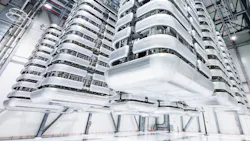
Terna, Italy's national electricity transmission system operator, and Tunisia's electricity and gas utility STEG have commissioned Hitachi Energy to build the converter stations for the Elmed interconnection project, the first electricity transmission link between Italy and Tunisia.
The contract award completes the procurement process for the high-voltage direct current (HVDC) converter stations that will support the first submarine HVDC connection between Europe and North Africa.
The Elmed project will connect Partanna, in Italy's Trapani province, with Mlaabi, in Tunisia's Menel Temime region. The 600-MW interconnection will extend approximately 220 km, primarily via submarine cable beneath the Strait of Sicily, reaching depths of up to 800 m.
The converter stations will be built in both countries as part of the project, which was jointly tendered by Terna and STEG in 2023 through the Official Journal of the European Union. Elmed is included in Italy's Mattei Plan for Africa, an initiative intended to strengthen economic, energy and geopolitical cooperation between Europe and African nations.
Hitachi Energy will provide the HVDC technology for the project, including converter valves, its MACH digital control platform, power transformers, high-voltage switchgear, and system engineering, installation supervision and commissioning services.
Civil works and electromechanical installations will be carried out by consortium partners, including D'Agostino Costruzioni Generali S.p.A. for the Italian converter station and Orascom Construction SAE for the Tunisian station.
The Elmed interconnection is designed to improve interoperability between the European and North African electricity systems while supporting greater integration of renewable energy resources, expanding cross-border transmission capacity and strengthening regional energy security.
The total investment in the project is €1.42 billion. Of that amount, €307 million has been provided by the European Commission through the Connecting Europe Facility (CEF) program managed by the European Climate, Infrastructure and Environment Executive Agency (CINEA). According to the project announcement, this marks the first time the European Union has funded an energy infrastructure project involving a non-member country.
Additional financial support for the Tunisian portion of the project is being provided by the World Bank, the European Investment Bank, the European Bank for Reconstruction and Development, and KfW.