Lessons From Winter Storm Fern: Open ROWs Lead to Faster Restoration
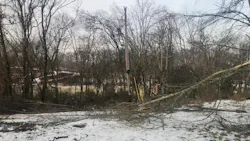
When Winter Storm Fern swept through Middle Tennessee, we saw utilities across the region facing widespread outages, dangerous road conditions and significant restoration challenges. Ice accumulation, fallen trees and difficult terrain slowed response efforts as crews worked to restore power safely and efficiently across affected communities in and around Nashville, Tennessee.
For the Cumberland Electric Membership Cooperative (CEMC), the storm reinforced the value of preparation that we started years before severe weather arrived.
Open ROWs Lead to Faster Restoration
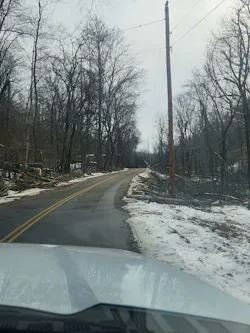
While we experienced a record number of outages, one of the biggest pieces of feedback we received from crews during restoration was how open and clean our rights-of-way (ROWs) were and how easy they were to access.
Creating that accessibility did not happen overnight. Seven years ago, CEMC began transitioning portions of its vegetation management program away from relying primarily on mechanical control methods and toward a rotational herbicide application approach in partnership with ChemPro and supported by products from Envu.
Our goal was not to simply reduce vegetation growth. It was to create more sustainable, manageable corridors that could improve long-term system reliability and support crews during storm restoration events.
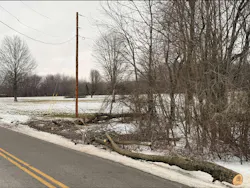
Winter Storm Fern became a realistic test of that approach. Adam Morgan, vice president of sales and marketing at ChemPro, explained, “Winter Storm Fern was a real test of system preparedness here in Middle Tennessee, especially from a vegetation management standpoint. While much of the damage was tied to terrain, pole failures and road access issues, one thing stood out clearly: Where ROW floors were open, utilities had the space they needed to work safely and efficiently.”
His observations reflect a broader reality that utilities often face during storm recovery. While restoration efforts are frequently measured by outage numbers and restoration times, the condition of the ROW can directly influence how quickly crews are able to begin repairs.
Overgrown corridors can limit visibility, complicate hazard assessments and restrict access for crews and equipment operating in already dangerous conditions. Maintaining low brush pressure within the corridor can help improve multiple aspects of storm response simultaneously.
One of the biggest advantages of an open ROW floor is visibility. Clearer corridors allow crews to work more efficiently, help coordinators deploy the right resources faster and make it easier to build custom response packages and tailored work groups based on actual need instead of uncertainty.
Those efficiencies became increasingly apparent during Winter Storm Fern response efforts, when crews were tasked with conducting damage assessments and clearing dangerous trees and storm debris from the ROW floor. Years of maintaining accessible corridors helped support those efforts and reinforced the long-term operational value of keeping ROW floors clear.
Taking a New Approach to UVM
Like many utilities and cooperatives, CEMC historically relied heavily on mechanical trimming cycles to maintain vegetation along transmission and distribution corridors. While those methods can provide immediate clearance, recurring regrowth often creates ongoing maintenance challenges over time for crews.
Recognizing the need for a more sustainable, long-term approach, we began exploring a rotational vegetation management strategy to improve overall corridor conditions and reduce brush pressure across the system.
Today, CEMC follows an every-other-year application cycle designed to maintain accessible, manageable ROW conditions across its service territory, with consistency playing a critical role in the program’s long-term success.
This consistent approach continues to help keep brush pressure low, improving visibility for line crews while supporting safer execution and more efficient restoration efforts during both routine maintenance and storm response.
Recognizing Benefits
Over time, our strategy has improved not only corridor conditions, but also operational flexibility during both routine maintenance and emergency response. Our bid process for cycle cuts has been easier to negotiate now due to the condition and accessibility of our ROWs.
For utilities, storm readiness increasingly depends on preparation that happens long before severe weather arrives, and vegetation management plays an important role in that preparation. Events like this reinforce the value of having the ROW ready before the system is tested.
Preparation is especially important at CEMC, since we serve a geographically diverse territory across Middle Tennessee, where steep terrain and rural access points can complicate restoration logistics during major weather events. Maintaining accessible corridors allows crews to move more efficiently through affected areas and focus resources where they are needed most.
Those corridor conditions can also influence how efficiently post-storm cleanup operations unfold. When dense brush and incompatible vegetation have already been minimized, debris removal and danger tree mitigation become more manageable after severe weather passes through.
I found Winter Storm Fern reinforced the importance of viewing vegetation management as part of a larger resiliency strategy rather than a standalone maintenance function. Following the storm, the CEMC crew continues refining its approach through new technologies and system-level planning tools.
Leveraging Technology
This year, the cooperative plans to conduct Light Detection and Ranging (LiDAR) flights across our entire system to support more targeted vegetation management planning and circuit-level maintenance decisions.
EMPACT Engineering is providing us with a 3D model of our entire system. From this, we will develop an annual ROW trim cycle per circuit based on the data we receive. Therefore, we will no longer trim by rotating the entire substation. We expect the data to further validate the progress already made through our long-term ROW strategy. I know these images will reflect a clean, open ROW floor because of our partnership with ChemPro.
As utility groups continue preparing for increasingly severe weather events, Winter Storm Fern reinforced an important operational lesson for CEMC: vegetation management is not only about controlling growth along the corridor. It is about creating safer, more accessible systems that allow restoration crews to respond effectively when conditions are at their worst.
Editor's Note: Thank you to Michael Blackwell, manager of district operations for CEMC, for sharing this article with us.
If you have a story you'd like to share about your company's response to a storm, innovative best practice, major construction process or use of a technology in the office and/or the field, please email Amy Fischbach, Head of Content for T&D World. We'd love to help you to share your story with our T&D World readers and subscribers.