Risk-Based Vegetation Prioritization: A Strategic Approach for Utilities
Key Highlights
- Cycle-based trimming ensures regulatory compliance but does not fully mitigate outage risks caused by high-risk vegetation.
- The risk-based framework uses field data, outage records, and cost estimates to prioritize trees that pose the greatest reliability threat.
- Implementation led to a 10-15% annual reduction in vegetation-related customer interruptions without increasing budgets.
- Emerging technologies like drones and satellite imagery can further enhance vegetation risk assessments and work planning.
- Combining traditional and data-driven methods transforms vegetation management into a strategic reliability investment, especially vital amid increasing weather volatility.
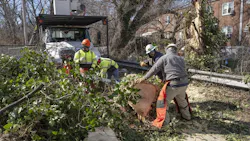
Vegetation-related outages remain one of the most persistent reliability challenges in overhead transmission and distribution systems. During severe wind and storm events, tree failures often account for a disproportionate share of customer interruptions. While most utilities operate well-established cycle-based trimming programs to maintain regulatory compliance and minimum clearance standards, outage analysis frequently reveals that compliance alone does not eliminate risk.
This reality prompted Baltimore Gas & Electric, an Exelon company, Maryland's largest electric and natural gas utility, to develop a risk-based vegetation prioritization framework to supplement existing cycle-trimming programs. The objective was straightforward: improve reliability performance without increasing vegetation management budgets by targeting the trees most likely to cause outages.
Identifying the Gap Between Compliance and Performance
Cycle-based trimming is foundational to vegetation management. Feeders are cleared on a fixed schedule, typically every three to five years, ensuring system-wide coverage and regulatory alignment. This structure provides predictability and maintains minimum safety clearances.
However, post-storm reviews and vegetation outage investigations indicated that vegetation-related interruptions were not evenly distributed across the system. Certain circuits repeatedly failed during high-wind events despite being within trimming-cycle compliance. In some areas, structurally compromised or high-risk species continued to drive outages even though clearance distances met standards.
Outage data showed patterns tied to species type, geographic exposure, soil conditions and localized wind corridors. This raised a critical operational question for BGE: If vegetation budgets are fixed, how can removal efforts be directed toward trees that provide the greatest reliability return?
Designing a Risk-Based Framework
The prioritization model was built around three core inputs:
1. Field-collected vegetation attributes
2. Historical vegetation-related outage records
3. Estimated removal cost
Field Data as the Foundation
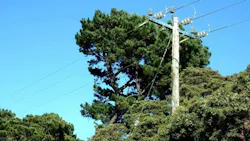
Vegetation crews periodically collect valuable information, including tree species, health condition, structural integrity, height, lean and proximity to energized conductors. Historically, this information primarily supported compliance and work scheduling.
Under the new framework, these attributes were standardized and incorporated into a structured dataset to support risk modeling. Species characteristics were evaluated for known failure tendencies. Proximity to lines was assessed relative to fall distance potential.
Integrating Outage History
Vegetation-related outage records were analyzed to identify patterns across circuits and weather events. Metrics reviewed included:
-
Frequency of vegetation-related interruptions
-
Customer interruptions per vegetation event
-
Performance during high-wind conditions
-
Geographic clustering of failures
This analysis allowed correlation between vegetation attributes and historical outage performance.
Incorporating Cost Considerations
Removal cost was incorporated to ensure practical applicability. Cost estimates considered accessibility, equipment requirements, labor effort, traffic control needs and terrain constraints.
The result was a composite prioritization index representing expected reliability benefit per dollar spent. Trees with high outage likelihood and moderate removal cost ranked highest in priority.
Measured Reliability Improvements
When applied across a broader set of circuits, the risk-based prioritization strategy produced measurable results.
Vegetation-related customer interruptions decreased by about 10 to 15 percent annually. System average interruption duration index performance improved by about 7 to 10 percent.
Importantly, these gains were achieved within existing vegetation management budgets. No increase in overall program funding was required.
Operational benefits extended beyond interruption metrics. Secondary improvements included:
-
Reduced emergency restoration dispatches
-
Lower storm-related infrastructure damage
-
Improved allocation of contract crews
-
Better coordination between the vegetation and operations departments
Even incremental percentage improvements translated into substantial avoided customer minutes interrupted across the service territory.
Enhancing the Framework With Technology
Emerging technologies offer opportunities to further strengthen vegetation risk prioritization capabilities as these approaches continue to evolve.
Unmanned Aerial Systems
High-resolution drone imagery could enhance the identification of canopy overhang, weak limbs and structural defects that may not be easily visible during ground patrols. Incorporating aerial inspection data into vegetation assessments may improve confidence in removal decisions while supporting more efficient work planning.
Satellite Monitoring and Machine Learning
Satellite imagery may provide broader visibility into vegetation density and encroachment patterns across service territories. When combined with machine learning techniques, these data sources could help refine risk scoring by identifying associations between tree species, structural conditions and storm performance.
As additional storm and outage data become available, predictive models could continue to improve their accuracy and adapt to evolving system conditions.
Despite these technological opportunities, field inspection will remain essential. Data-driven prioritization can enhance decision-making, but it is intended to support, not replace, the expertise of vegetation professionals and arborists.
Key Lessons Learned
Several best practices emerged during implementation:
1. Start with available data. Perfect datasets are not required to begin. Even basic information such as species type, tree condition and historical outage records can provide meaningful signals for prioritization. Waiting for complete data can delay progress; starting with what is available often reveals immediate opportunities for improvement.
2. Clarify the roles of cycle trimming and risk-based removal. At BGE, cycle-based trimming remains essential for regulatory compliance and maintaining baseline clearance. Risk-based removal, however, serves a different purpose by targeting trees that present the greatest reliability threat. When applied together, the two approaches complement one another, balancing compliance requirements with reliability improvement.
3. Engage field personnel early. Model credibility depends heavily on arborist expertise and operational input. Early engagement with field personnel helps validate assumptions, refine scoring logic and ensure the results reflect real-world conditions. This collaboration also strengthens adoption across vegetation management teams.
4. Track quantifiable outcomes. Measuring vegetation-related interruption metrics before and after implementation is critical for demonstrating value. Tracking these changes helps confirm that targeted removal strategies are improving reliability and provides the evidence needed to support continued investment in data-driven decision-making.
Broader Operational Impacts
Beyond reliability metrics, the framework improved organizational alignment.
Vegetation management shifted from a compliance-driven activity to a strategic reliability lever. Collaboration between data analytics and vegetation operations increased visibility into how vegetation investment directly influenced performance.
The model also provided defensible justification for targeted removals in sensitive or high-cost areas. When removal decisions were supported by quantified risk and historical outage performance, planning discussions became more objective.
Preparing for Increasing Weather Volatility
As weather patterns become more severe and unpredictable, vegetation risk exposure increases. Wind loading thresholds that historically produced minimal damage are now associated with higher outage frequency in certain regions.
In this environment, budget growth alone is not a sustainable solution. Precision in spending becomes critical.
Risk-based prioritization provides a method to improve resilience through smarter allocation of existing resources. Rather than expanding trimming coverage, utilities can increase impact per dollar by targeting high-risk trees with documented failure history.
A Strategic Evolution in Vegetation Management
Vegetation management has long been viewed as a compliance necessity. The integration of structured field data, outage analytics and cost modeling transforms it into a strategic reliability investment.
Cycle trimming maintains baseline clearance standards and regulatory compliance. Targeted risk-based removal improves outage performance and resilience. Together, these approaches create a balanced vegetation management strategy that aligns operational execution with measurable reliability outcomes.
Not all trees are equal in their contribution to outage risk. Identifying and addressing the ones that matter most strengthens system performance without increasing financial burden.
As utilities continue facing rising reliability expectations and budget constraints, data-informed vegetation prioritization offers a practical, scalable method to enhance resilience and operational efficiency.
Editor's Note: This article is ©2026 Baltimore Gas & Electric.
About the Author
Neha Dave
Neha Dave is a senior data scientist at Exelon’s Baltimore Gas and Electric.
Clay Tutaj
Clay Tutaj is a manager, data science, at Exelon’s Baltimore Gas and Electric.