ADIPEC: Grid Delays Rank Among Barriers to Energy Growth
Energy industry leaders remain confident in the sector’s investment prospects despite ongoing uncertainty, but grid infrastructure constraints could challenge the industry’s ability to meet rising demand, according to the inaugural ADIPEC Global Energy Report 2026: Power Shift.
The report found that 85% of energy insiders consider the sector more attractive to invest in than five years ago, while 77% remain optimistic about the decade ahead. Nearly two-thirds of senior industry leaders (64%) said the global energy system proved more resilient than expected through recent disruptions.
Based on surveys of more than 1,800 senior business and energy leaders, the report examines changes in global energy demand, investment priorities, regional influence and the growing impact of artificial intelligence (AI) on electricity consumption and industry operations.
Grid Investment Emerges as Priority
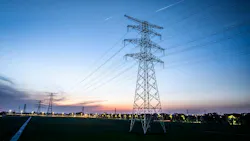
Despite strong investment confidence, infrastructure constraints remain a concern. Delays in building and connecting grids ranked among the biggest barriers to meeting future energy demand, behind geopolitics. The report identifies greater grid investment as a priority.
The findings also point to a need for a diversified energy supply. A total of 93% of respondents said meeting future energy demand will require growth across multiple energy sources rather than reliance on a single dominant source.
The Middle East is expected to play a growing role in energy infrastructure development, with 74% of respondents anticipating that the region will take on greater significance in this area over the coming decade.
Energy Security and Regional Shifts
Respondents attributed the global energy system’s resilience primarily to its ability to adapt quickly to disruptions, followed by continued energy supply flows and diversification of energy sources and routes.
These experiences are also shaping views on energy security. Respondents ranked investment in diversified energy sources, renewables and critical infrastructure protection ahead of domestic self-reliance among nine energy security priorities.
The report also identified a shift in the global energy industry’s center of gravity toward the Middle East and Asia. The Middle East was identified as the region offering the greatest opportunities over the next decade, with 72% of respondents expecting it to become more important to global energy.
About half of oil and gas producers identified Asia-Pacific and the Middle East among their most important customer regions over the next five years.
AI Expected to Increase Electricity Demand
Artificial intelligence is expected to create new pressures and opportunities for the energy industry. More than four in five respondents anticipate that AI-driven electricity demand will exceed current forecasts, including 32% who expect demand to be much higher.
Meanwhile, 71% view AI as more of an opportunity than a risk. Asked which groups are likely to gain the most influence over global energy during the coming decade, 43% identified technology and AI companies, ahead of governments and regulators, financial institutions and traditional energy companies.
Report Findings to Inform ADIPEC 2026
The report’s findings will inform discussions at ADIPEC 2026, scheduled for Nov. 2-5 at the ADNEC Centre Abu Dhabi. The event is expected to bring together more than 239,000 attendees, 2,250 exhibiting companies and 1,800 conference speakers from the energy, technology, finance, government and industrial sectors.
Christopher Hudson, president of dmg events, which organizes ADIPEC, said the findings highlight the need to translate industry confidence into investment, infrastructure development and new partnerships.
The research was conducted by Kekst CNC between August and October 2026. It included a global survey of 1,528 senior decision-makers across the energy, technology and AI, finance and investment, and manufacturing sectors; a separate survey of 304 senior oil and gas industry leaders across 10 markets; and in-depth interviews with executives across the global energy industry.