How Energy Investors Leverage Non-Financial Risks to Unlock Growth
Key Highlights
- Infrastructure is increasingly seen as a resilient sector offering significant opportunities amid geopolitical and regulatory uncertainties.
- Effective risk management now involves scenario mapping, sustainability integration, and cyber-physical infrastructure strengthening to protect investments.
- Proactive organizational culture and alignment across management and ESG priorities can reduce time-to-value and internal friction during rapid change.
- Adopting infrastructure-style risk discipline helps companies anticipate disruptions and capitalize on emerging opportunities in a volatile environment.
- Long-term strategic resilience, deep risk visibility, and scenario-based planning are essential tools for thriving in today’s complex global landscape.
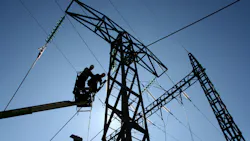
Infrastructure is emerging as one of the most resilient and opportunity-rich sectors amid rising geopolitical volatility, regulatory uncertainty, and evolving stances on ESG. Significant government spending, the centrality of infrastructure to the energy transition and digitalization, and investors’ long-term perspective make the sector a critical barometer for global investment conditions.
Energy infrastructure investors may face increased risks, with more than half of global energy deals disrupted by political or regulatory shifts, and sustainability, sanctions, and cybersecurity becoming leading causes of deal failure in the past three years. Yet they have shown they can unlock growth despite these challenges by moving beyond reactive risk management and embedding non-financial risk into every stage of the investment cycle. This includes scenario mapping to anticipate geopolitical and regulatory futures, integrating sustainability metrics into valuations, strengthening third-party and cultural resilience, and updating physical infrastructure in tandem with cyber security measures. Organizations that adopt this discipline exemplified by infrastructure investors, balancing long-term insight with operational agility, will be best positioned to protect value, accelerate deal execution, and capitalize on emerging opportunities.
Narrative: Thriving in an Era Where Investment Risks and Opportunities Converge
Today’s world is in a state of constant change, with geopolitical dislocation, security issues, climate change, evolving societal needs and expectations, and rapid technological change creating the need to build or adapt infrastructure assets. Energy-focused investors have long lived with the weight of geopolitics, regulation, climate volatility, and community concerns. Now, as the pace of global change accelerates, these challenges are becoming more pronounced – and creating more opportunities to improve returns on investment.
More than half of global deals have been derailed by regulatory or geopolitical uncertainty in the last three years, and only 17% of infrastructure investors currently use tools such as scenario mapping to anticipate such shocks. Yet this same environment, driven by the energy transition, digitalization, and massive government commitments, has transformed infrastructure into one of the most attractive investment opportunities globally.
For companies seeking to stay ahead, the lesson is clear: non-financial risks are no longer peripheral; they are the determinants of value. Sustainability, geopolitical change, regulatory stability, third-party dependencies, and cybersecurity are now central inputs into deal viability, with sustainability risks highlighted as the primary non-financial cause of deal collapse in the energy space in the last three years. And the costs are real: investors estimate an average of $1.65 million to address each the top five non-financial risks facing the energy sector – in addition to the drag of cultural issues that can take months to resolve.
Organizations that succeed in this market will not simply react. They will build risk management directly into their growth strategies.
To get ahead of the curve, companies can:
- Treat non-financial risk as a value-creation lever, not a compliance hurdle.
By integrating sustainability, geopolitical risk analysis, and cyber resilience into early-stage investment decisions, deal teams can unlock upsides that competitors overlook, and can avoid walking away late in the process. Beyond simply identifying these risks, proactively mitigating and transferring them throughout the holding period – and crucially as part of their 100-day plan – allows investors to secure larger multiples when they are ready to sell.
- Use scenario mapping and horizon scanning as standard practice.
Given the state of flux across the energy sector, companies that model regulatory and geopolitical futures will gain a critical advantage in pricing risk and positioning for growth. In addition, Credit & Political Risk Insurance has been central to investors and operators’ ability to weather these peaks and troughs.
- Continuously strengthen physical and digital infrastructure in parallel.
Utilities are unique in their double exposure to both physical and digital infrastructure. Vulnerabilities in one system can compromise the other. To preserve the value of their investments, operators are building due diligence frameworks that continuously assess their cyber security posture and environmental impact, regularly review the integrity of their regulatory licenses, and repeatedly confirm that they retain the social license to operate.
- Strengthen organizational culture to accelerate integration and resilience.
With cultural challenges taking, on average, nearly seven months to resolve, firms that invest early in alignment across management, operations, and ESG priorities can shorten time-to-value and reduce internal friction during periods of rapid change. As industry best practice evolves continuously, internal consensus allows operators to be agile in implementing new processes and technologies.
- Rethink valuation through the lens of an evolving risk landscape.
Infrastructure’s long-time horizon has always forced investors to grapple with political shifts, climate events, and regulatory unpredictability. Now, as these risks intensify across sectors, companies that adopt infrastructure-style risk discipline will be in a strong position to anticipate disruption and capitalize on emerging opportunities.
In a world where time feels like it is accelerating, infrastructure may be the sector best equipped to teach investors how to thrive. By adopting the tools and mindsets that infrastructure investors have honed – including deep risk visibility, scenario-based planning, and long-view strategic resilience – companies can not only safeguard value but shape it even amidst unprecedented global volatility.
About the Author
Ian Massey and Penelope Jenkins
Ian Massey is Head of Corporate Intelligence, EMEA and Penelope Jenkins is a Senior Associate, Corporate Intelligence at S-RM, a global corporate intelligence and cyber security consultancy. They can be reached respectively at [email protected] and [email protected]