Aging Grids Need More Than New Power: A Layered Path Forward
Key Highlights
- Data center growth is projected to triple by 2030, significantly increasing power demand and stressing current grid infrastructure.
- Aging transmission systems and lengthy build timelines create a mismatch between demand and capacity, necessitating innovative solutions.
- Grid Enhancing Technologies like high-temperature conductors and dynamic line ratings can rapidly increase transmission capacity with minimal structural upgrades.
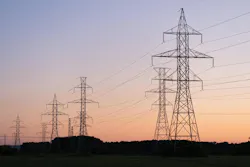
It’s no secret that data center growth is booming at an all-time high, with projections of three times the growth by 2030. With massive increases in power demand driven by AI workloads, cloud expansion, and digital infrastructure demand, data centers require significant, continuous power loads. The problem? Demand is outpacing supply, with power generation and transmission capacity in limited supply and more critical than ever.
While investor-owned utilities, independent power producers, and other market participants are actively working to bring additional resources online, new generation alone does not fully solve the problem. The power from the new generation needs to pass through an aging transmission system with limited capacity. In many cases, it must travel across systems that are more than aging and undersized. This infrastructure was also not designed for the scale, location, or timing of today’s emerging loads.
Reliability and Infrastructure Timelines Are Under Pressure
This reality is creating new reliability concerns. The existing grid already faces stress from aging infrastructure, extreme weather, changing resource mixes, and shifting load demands. Adding large data center loads without corresponding upgrades can increase the risk of congestion, instability, brownouts, or outages. Regulators, utilities, developers, and technology providers all recognize that reliability must remain the priority. The question is how to quickly create capacity while maintaining system integrity.
Currently, traditional transmission build timelines are taking anywhere between seven and 10 years to plan, permit, construct, and energize. From permitting to land acquisition, there are many factors that add complexity and potential delays when it comes to building a new transmission. In comparison, data centers can move quickly from breaking ground to CPU/GPU energization in less than a year, creating a huge disconnect between the demand and infrastructure timelines.
This puts utility providers in a particularly difficult position, balancing reliability, demand growth, and infrastructure limitations. The biggest constraints often come down to two practical realities: space and time. There may not be enough physical room for new corridors and certainly not enough time to build entirely new transmission lines before demand arrives.
Existing Infrastructure Must Work Harder and Smarter
One way to overcome this issue is for utilities to shift their approach and maximize their existing infrastructure. Existing rights-of-way and structures are valuable assets that can help bridge the gap between immediate demand and long-term expansion needs. However, this requires early collaboration between utilities, developers, regulators, and solution providers so that constraints are identified sooner and addressed with the right mix of Grid Enhancing Technologies (GETs).
New technologies play a critical role in updating the grid. GETs help improve the capacity, reliability, and efficiency of existing systems and are supported by regulatory momentum, including FERC 881 and FERC 2023. Examples include Advanced Transmission Technologies (ATT), Dynamic Line Ratings (DLR), Advanced Power Flow Controllers (APRC), and Transmission Topology Optimization.
ATTs play a critical role in timely transmission system upgrades through reconductor enablement. Replacing existing transmission lines with high-temperature, low-sag conductor options can enable faster deployment of capacity (1.75 to 3 X) while requiring minimal or no structural upgrades. Technologies such as ACSS, ACCS/C7, ZTACCR/C7, and MaxStorm cables represent the type of innovation needed to move more power through constrained corridors faster than conventional rebuilds alone would allow.
But capacity is only part of the challenge. Power quality and system stability are becoming increasingly important as the grid incorporates more inverter-based resources, on-site generation, and variable large loads. AI-driven data centers do not follow the same load patterns as traditional facilities. Their demand profiles can introduce new operational challenges that require careful planning and supporting technologies. Battery energy storage systems, supercapacitors, and other stabilization tools can help manage variability, support reliability, and improve resilience.
Defining the Path Forward with a Layered Approach
The path forward is not a single solution. Traditional infrastructure expansion will remain necessary but cannot meet the moment by itself. The industry needs a layered approach that combines GETs alongside new power generation to better synchronize the pace of digital infrastructure development and the realities of grid expansion.
Data center growth is not slowing down. The question is whether the grid can evolve quickly enough to support it. By focusing on solutions that expand capacity faster, make better use of existing assets, and strengthen reliability, the industry can ensure that digital growth and electric infrastructure advance together. The future will belong to organizations that can deliver practical, scalable solutions where they are needed most: inside the constraints of the real grid.
About the Author
Charles Holcombe
Charles Holcombe is director of Solutions Engineering at Southwire.