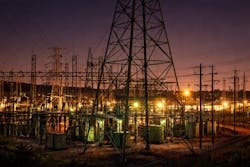
As power systems continue to evolve, utilities are navigating a landscape shaped by long asset lifecycles, increasing operational constraints, and rising expectations around resilience and continuity of service. Large power transformers and associated infrastructure remain central to network stability, yet they operate in environments where technical, regulatory, and operational pressures are continuously changing.
In this context, continuity should not be understood as static performance, but as the ability of power systems to adapt, absorb disruptions, and continue delivering essential services over time. Achieving this requires long-term engineering consistency rather than short-term technical fixes.
Continuity as a long-term system objective
Continuity of service is often discussed in terms of response to individual incidents. In practice, it is a broader, system-level objective that encompasses preparation, design choices, and the ability to manage complex interactions between assets, sites, and networks.
Electrical networks are composed of interconnected elements with varying ages, configurations, and operating conditions. When incidents occur, their effects can propagate beyond the initial point of failure, influencing safety, environmental exposure, and operational flexibility. From a system perspective, continuity depends on the capacity to limit these cascading effects and preserve the integrity of the broader network.
Engineering plays a central role in this process by supporting informed decisions on how assets are protected, how risks are mitigated, and how installations are designed to align with long-term operational realities.
Consistency, experience, and engineering discipline
Supporting continuity over the lifecycle of critical power infrastructure requires consistency in engineering principles and a deep understanding of how systems behave under stress. This understanding is built progressively, through analytical studies, controlled testing environments, and accumulated experience in real-world installations.
Such an approach allows engineering teams to identify recurring patterns, understand failure mechanisms, and assess potential consequences without relying on assumptions or isolated technical claims. It also enables protection strategies to evolve alongside the network, rather than becoming outdated as operating conditions change.
Importantly, this discipline supports decision-making that is compatible with regulatory expectations, safety considerations, and the practical constraints faced by utilities in day-to-day operations.
SERGI’s long-term engineering vision
Within this evolving landscape, SERGI’s approach is defined by continuity in engineering philosophy rather than by short-term innovation cycles.
SERGI is an engineering partner focused on the protection of critical power infrastructure and the resilience of electrical networks, supporting continuity of service.
This vision reflects a commitment to long-term collaboration with infrastructure owners and operators. By grounding protection strategies in engineering analysis and system-level understanding, SERGI supports utilities in addressing present challenges while remaining prepared for future ones.
Rather than viewing protection as a one-time intervention, this approach considers how solutions interact with the broader installation and network over time, and how they contribute to resilience objectives across the asset lifecycle.
Supporting continuity without overpromising
In discussions around continuity, it is essential to distinguish between system resilience and the performance of individual components. Continuity of service does not imply the uninterrupted operation of every asset, nor does it eliminate the possibility of incidents.
From an engineering perspective, supporting continuity means helping utilities limit the impact of incidents, protect adjacent equipment, and preserve the conditions necessary for effective network reconfiguration and recovery. These efforts complement operational planning, redundancy strategies, and organizational preparedness, rather than replacing them.
By focusing on consequence mitigation and system interactions, engineering-led protection approaches contribute to continuity objectives while respecting the inherent complexity of power systems.
A stable engineering foundation for evolving networks
As utilities plan for the future, the protection of critical power infrastructure will remain closely linked to broader questions of resilience, safety, and service continuity. Addressing these challenges requires stable engineering foundations that can adapt to changing technologies, regulatory frameworks, and operating environments.
SERGI’s long-term vision is rooted in this stability. By maintaining a consistent engineering approach and focusing on system-level protection, SERGI supports utilities in navigating the evolving demands placed on electrical networks, while contributing to continuity of service as a shared, long-term objective.
Learn more about SERGI’s engineering approach to critical power infrastructure protection.
This content is sponsored by: