Uncrewed Helicopters for Safer, Sustainable Power Line Inspections
Key Highlights
- SwissDrones' uncrewed helicopters reduce risks and emissions in power line inspections by up to 95%.
- The SDO 50 enables long-range, BVLOS aerial inspections with heavy payload capacity.
- AI analysis of identical flight paths allows early detection of erosion and system issues.
- Autodesk Fusion streamlines SwissDrones’ global design, manufacturing, and lifecycle management workflow.
- Integrated digital tools accelerate prototype releases while maintaining aviation-level quality and precision.
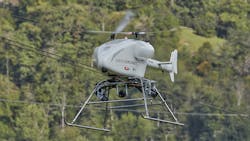

Every year, pilots and linemen climb into helicopters to do the essential work of overhead distribution and transmission line inspection and maintenance. It’s a dangerous job that can end in tragedy from wire strikes and other unsafe conditions.
Increasingly, UAVs are becoming an alternative for safer aerial inspections. Uncrewed flight operations can fly both at a moment’s notice and with regularity. The ability to fly repeatedly on the same exact route and continually collect new data creates new opportunities to catch changes and issues early on.
In the United States, drone implementation has proven to be difficult. Small quadcopters are covered by the FAA’s existing Part 107 regulation, but they don’t really replace crewed operations.
“There are case studies where some utilities tried, in California for instance, deploying people in ground-based teams on trucks to go and fly smaller drones patch by patch, and travel along the infrastructure,” says Ulrich Amberg, CEO, SwissDrones. “The problem is, it’s just never-ending, [and] so inefficient.”
Lifting off in the United States
SwissDrones’ SDO 50 is a state-of-the-art, uncrewed helicopter and one of the first uncrewed aerial vehicles (UAVs) in the category beyond 55 lbs to be approved in over 30 countries to fly long-range, beyond visual line of sight (BVLOS) missions. Its vertical take-off and landing (VTOL) capability along with heavy payload capacity offers a highly cost-effective alternative to a manned aircraft. It’s also a more sustainable solution, reducing CO₂ emissions by up to 95%.
Southern Company will deploy a fleet of SwissDrones SDO 50 to modernize maintenance protocol, enable efficient infrastructure monitoring, and conduct swift storm damage assessment.
“Partnering with SwissDrones empowers us to bring innovation to aerial inspection and infrastructure maintenance,” said Dean Barefield, UAS program manager, Southern Company. “As our first deployment of a large uncrewed aerial system (UAS), the SDO 50 will expand our operational reach, allowing us to cover greater distances across our power lines in the Southeast and across our natural gas infrastructure throughout our broader service territory. This technology enhances our ability to gather high-quality data for both electric and gas operations, ultimately helping us better serve all of our customers.”
Using AI to identify issues
The increased volume, quality, and timeliness of collected data will enable Southern Company to respond to issues earlier, optimize maintenance schedules, and improve system reliability. Using guided missions with SwissDrones SDO 50 allows operators to fly the exact same path each time, generating identical datasets that can be analyzed with an AI algorithm. These consistent datasets make it possible to automate the detection of changes, including ground movements as small as an inch in vertical deviation.
“That means, if erosion starts, even if it’s only a few inches in one spot, the AI algorithm would identify that spot, which you can never see with the bare eye,” Amberg says. “That, in turn, allows those companies to see the early signs of real risks and threats to their infrastructure, which so far haven’t even been possible to spot.”
“Over time, as analytics and AI become more integrated with [uncrewed aircraft system] data streams, customers will benefit from a more intelligent and responsive energy infrastructure that anticipates problems before they arise,” Barefield adds.
Undertaking an innovative design
The design of SwissDrone’s long-range uncrewed helicopter systems is no small feat. From the very beginning, the team sought a single source of truth to connect collaborators across the globe. Autodesk Fusion provided the team with a cloud-based design and manufacturing platform to manage everything from engineering and design to production maintenance and configuration control. This streamlined approach makes it possible to release prototypes more quickly while maintaining high quality and meeting aviation standards.
Take a behind the scenes look at SwissDrones’ design process here.
With Fusion and Fusion Contributor, everyone can work from the most current version of a model—or revert to a previous one when needed—ensuring consistency across all phases. Technicians and mechanics have immediate access with real-time data sharing, reducing the risk of error or wrong assembly.
During manufacturing, integrated tools in Fusion bring even greater efficiency. “We use CAM in Fusion to manufacture our carbon parts with our CNC machine,” says Pol-Victor Gisquet, Team Leader Mechanical Systems Integration and Aerospace Engineer, SwissDrones. “This allows us to maximize the amount of pieces we can get per plate, giving us better control over time and cost to meet the strict requirements in the aviation industry.
Combined with Fusion Manage, which provides product lifecycle management (PLM) capabilities, this fully connected workflow also supports the creation of a complete digital twin of the aircraft.
With Fusion, SwissDrones can work at the speed of a young entrepreneurial company with the ability to compete with the major players and leaders in the aerospace industry. At the same time, they are also keeping a much bigger vision in mind.
“We are really trying to make the world a better place, and cutting CO2 emissions is one of the key challenges of our time,” Gisquet says. “This motivates me, and I can have an impact to really try to improve our world.”