Inside Avista’s AI-Driven Customer Revolution
Key Highlights
- Avista Utilities uses AI to analyze appliance-level energy consumption, helping reduce high bill inquiries and improve customer satisfaction.
- The company provides customers with detailed online tools for energy usage insights, enabling self-service and smarter energy decisions.
- AI-driven analysis identified inefficient home insulation, leading to targeted upgrades that significantly lowered energy costs for underserved communities.
- Targeted customer segmentation and outreach programs, powered by AI, improve load management and energy efficiency initiatives.
- GenAI tools act as copilots for customer service representatives, streamlining workflows and reducing call resolution times, with potential for broader organizational efficiencies.

For most people, flipping a power switch is an unconscious act, yet it takes calculated effort by utilities to provide reliable power for millions of diverse energy habits and needs. This balance is only growing more complicated, and utilities are faced with making thousands of critical decisions across multiple teams and systems every day.
To achieve faster, more precise decision-making, utilities are increasingly relying on data to better understand each customer as an individual contributor to the grid.
For most utilities today, data sources include a combination of smart and non-smart meters, supervisory control and data acquisition (SCADA) systems, historical and real-time weather records, and even distributed energy resources. But what does using data really look like? In its raw and unprocessed form, much of this data is a vast, uncontextualized stream of numerical entries.
For Avista Utilities, an electric and natural gas provider with 30,000 sq miles (77,700 sq km) of service territory across three states, this question ignited a multiyear exploration into what is possible when layering AI onto smart meter data. Embracing a mindset where innovation begets innovation, Avista explored the potential power of granular customer insights hidden within millions of data points and how those learnings could be applied across three core business pillars: customers, workforce and the grid.
High Bill Inquiries
Oftentimes, customer engagement and workforce enablement go hand in hand. Thanks largely to nonintrusive load monitoring (a sophisticated combination of advanced algorithms and machine learning to dissect a home’s total energy usage), AI analytics give utility employees and customers new appliance-level consumption insight into individual homes.
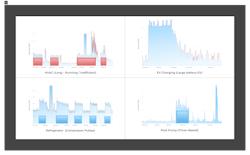
Traditional data analytics is applied to aggregate energy consumption. AI, however, identifies the unique fingerprints of individual appliances to recognize subtle on/off changes and accurately determine what is in use, how much energy it is consuming and when. This information enables utilities to build detailed usage profiles for everything from refrigerators to washing machines, revealing not just energy consumption and cost but also typical usage patterns and even anomalies that could signal a faulty appliance.
For Avista, this new intelligence unlocked an opportunity to address a critical priority: reducing the volume of high bill inquiries to its call centers.
While some high bill questions start and end with a customer service representative (CSR) conversation, Avista — like other utilities — often dispatches a crew for costly, resource-intensive on-site meter tests to investigate further. Typically, the meter functions properly, revealing customers’ limited awareness of their energy consumption. It is not that customers fail to grasp the link between usage and cost; the problem is that a monthly total kilowatt-hour (kWh) reading offers no relatable insight.
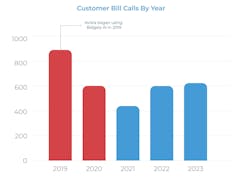
By equipping CSRs with one-click access to appliance-level consumption insights for every home, Avista’s service teams achieved faster call resolution times and significantly improved satisfaction among customers. High bill investigation truck rolls decreased by nearly 27% in 2020 alone.
For example, the CSR can look at a breakdown of the customer’s consumption and see if a specific appliance was acting up or if weather conditions were a factor. If the spike was due to increased cooling usage during a recent heat wave, the CSR can recommend specific thermostat adjustments or an insulation upgrade program.
Direct To Customers
This success gave Avista the confidence to extend these capabilities directly to its customers, with the overarching goal now to reduce high bill situations altogether. The utility made the following resources available to customers on its web portal:
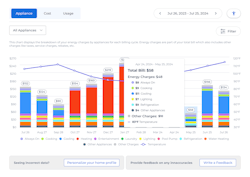
- Bill itemization reports, detailing energy consumption each month by appliance (cooling, heating, laundry, dishwashing, lighting and even electric vehicle charging, if applicable).
- Month-after-month and year-over-year usage comparisons, overlaid with localized temperature history.
- Bill comparison tool, analyzing customers’ top five highest-use appliances in any given month with detailed financial and usage breakdowns for each.
These accessible, easy-to-digest communications empowered customers to self-serve their energy data for a deeper understanding of their consumption and the ability to make smarter energy decisions independently.
By tracking typical usage patterns and detecting anomalies, Avista has been able to resolve issues related to appliance inefficiencies. For example, one customer noticed a dramatic spike in energy costs, jumping from US$77 to $287 between consecutive months with an alarming $600 projected bill for the upcoming cycle. Leveraging AI energy insights to investigate the appliance usage, Avista detected a faulty heat pump where a fused relay caused both the heat pump and air conditioner to run concurrently. These immediate, data-driven insights enabled Avista to pinpoint the problem quickly and save the customer from an exorbitant and ongoing financial burden.
Underserved Communities
But this is not where enhanced customer support ends. In fact, it opens doors to better serve all customers, including traditionally underserved or harder-to-reach customer communities.
As part of its partnership with SNAP, a local nonprofit aiding vulnerable neighbors, Avista was made aware of a customer with unusually high energy usage (over 38,000 kWh in 12 months) for a 1700-sq ft (158-sq m) house.
While previous meter inspections had not identified any issues, this time Avista used its AI-powered energy insights to identify inefficient heater usage and an unknown “envelope” issue. A subsequent home inspection confirmed the attic had insufficient insulation, below building codes. After installing additional insulation in the attic and to the water heater, the home’s overall energy bill was cut nearly in half, reducing heating costs from $424 to $163. In the three months following the bill reduction, energy consumption decreased by 6500 kWh, saving approximately $700 compared to the previous year.
Segmentation and Targeting
By fostering greater energy literacy and empowering both CSRs and customers to make informed, data-driven decisions, Avista learned that addressing an immediate challenge — like high bill inquiries — could be the path to preventing them in the future.
Beyond reactive customer support, AI is empowering Avista to explore proactive grid strategies that improve load management and energy efficiency through more precise customer segmentation and targeting.
By gaining deeper insight into individual customers’ usage patterns, Avista optimized its outreach through new program initiatives, including a home energy audit offer aimed at households with above-average consumption (11,500 kWh annually). Filtering by key characteristics such as home age and square footage, the utility successfully narrowed a pool of 210,000 customers to 75,000 with the greatest potential to benefit. These customers then received more targeted, personalized messaging.
The audits also identified 22,000 homes served by a constrained feeder. The utility sends personalized energy-efficiency tips and recommendations to these customers in the hopes of reducing significant strain.
Avista was even able to detect differences in average winter home energy usage, discerning between homes with efficient shells (good insulation, windows, roof, etc.) and those with poor thermal performance or equipment degradation.
Avista also launched a bill assistance program offering discounts of up to 90% to eligible households to support its most vulnerable customers. While Avista always knew these customers existed, AI analytics now allows it to more accurately pinpoint and connect with those who need help the most.
This targeted approach proved highly effective. By identifying the right recipients, Avista achieved a 4.8% click-through rate on program emails (significantly higher than the 1.8% industry average) — proving that meaningful data can yield tangible, positive outcomes.

The Potential of GenAI
When it comes to empowering a utility’s workforce to deliver superior service and operate with stronger decision-making, AI has already proven exceptionally capable. Now, generative AI (GenAI) is emerging to further enhance these capabilities with a new dimension of operational efficiency and insight.
Shifting from traditional analytics to a more conversational interface, GenAI empowers employees to easily access complex information and generate actionable recommendations by asking their own questions to the data — without needing to be a data analyst. This capability promises to streamline workflows, lighten staff’s cognitive burden and cultivate a more agile, responsive workforce prepared for the increasingly complex demands of modern energy management.
Building on its existing AI-powered CSR tools, Avista is now piloting GenAI implementation to further reduce call times and ultimately prevent repeat calls from the same customers.
Through what the utility is calling a GenAI energy assistant proof of concept (POC), Avista’s CSRs have a GenAI copilot during customer interactions. This assistant instantly compiles all relevant information into a single high-bill-analyzer report, eliminating the need for CSRs to jump between multiple platforms for meter reads, billing history and appliance-level data. It also prompts the CSR with relevant questions and handles the heavy data lifting (that is, breaking down usage by previous month or year and clarifying what percentage or dollar amount is due to consumption vs. factors like taxes or kilowatt-hour rate changes) rather than requiring the CSR’s manual computation.
These days, Avista’s CSRs using the GenAI assistance gladly welcome high bill calls because they are now some of the easier calls to manage.
Future of Data-Driven Utilities
As the grid continues to grow more complex in the years ahead, the ability to make critical decisions with data-driven confidence will be invaluable. By exploring the possibilities of AI, Avista is paving a path to potentially save time and build efficiencies organization-wide.
Learning to work within AI parameters and observing the iterative evolution of these tools will be integral parts of an ongoing journey, but one worth taking to create a more intelligent, customer-centric energy ecosystem.
About the Author
Andrew Barrington
Andrew Barrington ([email protected]) is the products and services manager for Avista. He uses advanced analytics and creative tools, creates and maintains models and onboards new ideas. His competency areas include leadership, product management and change management, and include 10 years of experience in customer success.
Gautam Aggarwal
Guatam Aggarwal is Bidgely's Chief Revenue Officer.