How Agentic Can Connect the Grid to the Customer
Key Highlights
- Communication quality significantly impacts customer satisfaction during outages, accounting for over half of the experience.
- Agentic AI can autonomously monitor operational data, generate personalized outage messages, and update customers across preferred channels.
- Traditional digital tools like chatbots and apps have not improved satisfaction; real-time data integration is key to better communication.
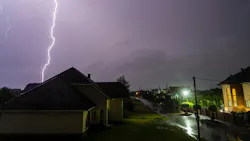
The power goes down on a residential block, and two neighbors have two very different days. One gets a text within minutes: a downed line on their feeder, crews dispatched, restoration expected by 6pm, with a follow-up when that estimate is adjusted. The other hears nothing, or gets a message that says only “we’re aware of an outage in your area.” The lights come back on for both at the same moment. One customer spends the day mildly inconvenienced. The other calls three times, increasingly frustrated with each touchpoint.
Same outage. Same restoration time. What separates these two experiences is communication. That points to a surprising finding: the customer experience is decided as much by what you tell customers as by what you deliver. McKinsey’s analysis found that communication drives 54 percent of outage-related satisfaction. The information that makes the difference lives on the operations side of the house, in systems the T&D organization owns. Agentic AI offers utilities a new way to carry operational data to the customer at scale, linking what operations know to what the customer hears.
Utilities have sought to serve their customers better with the latest interface tools—to little effect. For the past decade, utilities have layered on interactive voice response, mobile apps, and chatbots. But satisfaction has taken a dive. McKinsey’s 2025 survey of more than 10,000 utility customers found the share reporting they are “very satisfied” fell 11 points since 2018, while the share reporting dissatisfaction climbed from 18 to 29 percent.
These tools may make it easier for customers to contact the utility. But even a state-of-the-art call center cannot produce a useful outage message on its own. A representative fielding the call has no independent way to know a line is down on a specific feeder or which homes are dark. These facts typically exist in operations, not at the customer-facing level: the OMS generates the restoration estimate, the smart meters confirm which premises actually lost service. Absent a live feed from those systems, the call center falls back on “we’re aware of an outage in your area”—that empty, frustrating message.
Agentic AI can bridge this gap. Putting operations data in front of the right customer at the right moment has always required manual effort that is difficult for a team to sustain during a storm. Someone has to notice the outage, work out who is affected, decide when to send an update, write it, and push it across the right channels—for thousands of customers at once, while the operations team is busy restoring power. An AI agent can run that loop independently, with human oversight where needed. Depending on how it is designed and governed, an agent can monitor OMS feed, detect the affected meters, pull the restoration estimate, generate a specific message, send it on the customer’s preferred channel, and follow up when the estimate changes or service returns. It does this for every affected customer simultaneously. This is a significant step up from a chatbot, which waits for the customer to call, and from rule-based alerts, which break the moment the situation grows complicated. The agent monitors, decides, acts, and follows up as conditions shift.
AI has proved its usefulness well beyond outages. In collections, they can flag at-risk customers early and connect them to payment plans; utilities have cut arrears between 15 and 20 percent this way, even as total industry arrears climbed from around $8 billion in 2019 to over $20 billion in 2025. In field and meter service, agent coordination has delivered 20 to 25 percent gains in frontline productivity. E.ON Next, one of the UK’s largest residential energy suppliers, deployed an AI voice assistant for billing calls and cut inbound volume by roughly half while raising satisfaction six points.
Of course, an agent is only as good as the data feeding it. Poor restoration estimates mean the agent sends bad information faster and to more people. But that is not a reason to hold back; it is the reason the grid side is central to whether any of this works.
Grid engineers have spent their careers driving down the hard reliability numbers: SAIDI (how long outages last) and SAIFI (how often they happen). That work still matters and always will. But the information those systems generate can now reach customers directly—delivered via an agent while the lights are still out.
About the Author
Scott Perl
Scott Perl is a senior partner in McKinsey’s Washington, DC office.
Stephanie Trottier
Stephanie Trottier is a partner in the Montréal office.