Reframing Large Load Growth: From Grid Strain to Grid Security Asset
Key Highlights
- Large load customers can serve as assets by integrating dispatchable generation, improving grid flexibility, and reducing transmission expansion needs.
- Dispatchable natural gas plants near load centers offer economic and operational advantages over traditional backup solutions like diesel, enabling value stacking and cost savings.
- Distributed, load-center-based resources enhance grid security by diversifying supply, reducing single points of failure, and supporting critical facilities during disturbances.
- Infrastructure development must evolve from linear expansion to smarter, phased investments that incorporate flexibility to meet exponential demand growth.
- Recognizing load centers as strategic assets rather than burdens allows utilities to optimize system reliability, affordability, and security in a rapidly changing energy landscape.
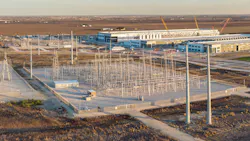
Across the U.S., electric systems are being asked to absorb a new class of demand defined by scale, speed, and operational rigidity. AI-driven data centers, advanced manufacturing, and electrification are introducing load growth that does not align with how infrastructure is planned, permitted, or financed. What was once a predictable, linear system is now being reshaped by exponential demand signals colliding with multi-year development timelines.
Large load customers are often positioned as the source of this strain. But that narrative doesn’t tell the whole story. In reality, these customers are exposing a deeper structural issue. The challenge is not simply how much load is coming online, but how effectively the system can integrate that load while maintaining reliability, affordability, and grid security. And for utilities, the question becomes less about accommodating growth and more about adapting the system to manage it.
Rising costs plus static load equals a growing affordability challenge
Utilities across private, municipal, federal, and cooperative models are navigating a convergence of cost and regulatory pressures. Aging infrastructure requires sustained reinvestment to maintain reliability. Renewable integration introduces variability that must be balanced with firm, dispatchable capacity. Public safety power shutoffs and resource adequacy requirements are expanding planning obligations, while regulatory policies are pushing transitions toward higher-cost resource portfolios. At the same time, labor shortages and supply chain constraints are stressing capital and operating costs beyond historical inflation trends.
Without corresponding growth in delivered kilowatt-hour volumes or new mechanisms to offset these costs, the result is sustained upward pressure on rates. In regions across the U.S., rising electricity costs are already influencing business location decisions and impacting economies. And while load migration to lower-cost states can reduce the existing rate base, it creates a feedback loop in which remaining customers bear a greater share of system costs, further exacerbating affordability challenges.
In this environment, large load customers are typically viewed as incremental demand, requiring extensive transmission expansion, interconnection upgrades, and long-lead infrastructure investment. However, when strategically integrated, these customers can function as load-center-based grid assets that enhance system flexibility, improve infrastructure utilization, and strengthen grid security.
Load-centered generation as a transmission relief strategy
Transmission development is one of the most immediate constraints to supporting new large loads. New projects often require a decade or more to move from planning to operation, limited by permitting, siting, and cost allocation challenges. At the same time, existing transmission capacity is increasingly committed to renewable resource interconnection, reducing availability for new firm load.
Dispatchable generation located at or near large load centers can mitigate these constraints. By serving a portion of demand locally, these resources reduce reliance on firm transmission, defer or eliminate certain upgrades, and free up existing capacity for broader system use. They can also provide peaking capacity and essential grid services, including frequency response and voltage support, thereby improving system stability as a whole.
From a cost perspective, dispatchable natural gas generation paired with large loads offers a fundamentally different profile compared to traditional backup solutions such as diesel. Diesel generation is a pure reliability expense with limited runtime and no opportunity for economic dispatch. In contrast, natural gas assets can operate dynamically, participating in energy and capacity markets where applicable, while supporting demand response and peak management programs.
This enables value stacking that reduces the total cost of service. Through energy arbitrage, capacity revenues, and avoided transmission investment, these resources can offset costs that would otherwise be borne by ratepayers. The result is a lower net present cost for both utilities and large load customers, while improving overall system efficiency.
Grid security through distributed, dispatchable resources
Flexibility is the defining characteristic of this approach, and it can operate across multiple dimensions. Systems that incorporate dispatchable, load-center-based resources are better equipped to respond to rapid demand shifts, renewable intermittency, and unexpected disruptions. Operationally, it allows for rapid ramping during peak conditions or renewable shortfalls. From a planning standpoint, it provides utilities with optionality, enabling phased infrastructure investment rather than large, immediate capital commitments. Economically, it allows both utilities and customers to optimize participation based on real-time system needs.
Recent developments in the ERCOT market highlight this dynamic. Rapid load growth driven by data centers and industrial expansion has coincided with increasing renewable penetration, creating tighter reserve margins and greater exposure to extreme weather events. Flexible, dispatchable resources located near load have demonstrated the ability to reduce peak stress, support reliability, and avoid immediate transmission upgrades.
Similarly, in PJM, interconnection queue backlogs and transmission constraints have extended project timelines and introduced uncertainty for both utilities and developers. Large load customers paired with flexible onsite or near-site dispatchable generation can move forward despite these constraints, while also contributing capacity and ancillary services to the broader system.
Beyond reliability and cost, these approaches directly enhance grid security. Highly centralized infrastructure can introduce single points of failure and increase vulnerability to both physical and cyber threats. Distributed, load-center-based generation diversifies supply and reduces dependence on critical transmission corridors. During grid disturbances, these resources can maintain operations for critical facilities while limiting cascading impacts across the system.
This model does not replace the grid. It complements it. Utilities remain central to system planning, coordination, and operation, but the opportunity lies in expanding the set of tools available to meet evolving system demands more efficiently and securely.
Building flexibility into the future grid
Looking ahead, the trajectory of demand growth is clear: AI-driven data center development continues to accelerate; electrification is expanding across transportation and industrial sectors; and renewable deployment will continue to grow as policy and market forces align. These trends represent a structural shift in energy consumption, not a temporary surge.
To navigate this transition, utilities and stakeholders must move beyond viewing large load customers solely as system burdens. Instead, they should be recognized as potential contributors to a more flexible, resilient, and secure grid.
The next phase of grid evolution will be defined by how effectively the industry integrates flexibility into both planning and operations. Dispatchable, load-center-located generation is a critical component of that solution. When deployed strategically, it can reduce transmission constraints, lower system costs, enhance reliability, and strengthen grid security. The path forward is not simply to build more infrastructure, but to build smarter systems that align flexibility, economics, and reliability with the realities of modern load growth.
About the Author
Joel L. Molander
Joel L. Molander is Vice President of Utilities for the Western U.S., Enchanted Rock.