The Life-and-Death Value of Safety Oversight
Key Highlights
- Powerline repair is among America's most dangerous jobs, with fatalities rising to 40 in 2023 and thousands of injuries annually.
- Safety oversight involves active, on-site monitoring by trained professionals to reinforce safe practices and prevent accidents before they happen.
- Experienced safety inspectors build trust with crews by sharing personal stories and offering praise, fostering a safety culture rooted in collaboration.
- Workforce shortages lead to less experienced crews, increasing the risk of injuries; thus, safety programs are essential for new and seasoned workers alike.
- Investing in safety oversight reduces costs associated with accidents, project delays, legal penalties, and reputational damage, making it a smart business decision.
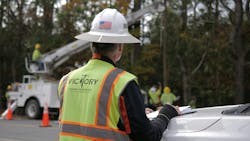
The line trade is considered one of America’s top 10 most dangerous occupations, according to the U.S. Bureau of Labor Statistics (BLS). Case in point: between 20 and 30 electric powerline repairers and installers were killed on the job between 2011 to 2023, and in 2023, this number escalated to 40 lineworkers. In 2022, more than 2,300 lineworkers were injured severely enough to require days away from their normal work, and those in their first five years of service accounted for nearly 40 percent of injuries. Contributing factors could be lack of safety oversight, training gaps and lineworkers with limited experience.
Despite how vital safety is for any utility, the priority put on oversight can be pushed down by competing interests and complacency. Utilities, like every business, balance the costs of providing a service. Despite continued efforts to enhance training and engagement, recent statistics show that significant injuries and fatalities are occurring at a consistent rate. An employer’s reliance on safety oversight varies based on past experiences, the availability of resources and reliance on contractors. But regardless of the factors, a case is to be made for increased reliance on qualified safety professionals.
A Culture Under Strain
Factors like worker shortages are compounding an existing challenge: The industry must fill out its ranks while tackling an increasingly large workload. A shortage of skilled workers has accelerated promotions among utility and contract crews. It is not uncommon to find foremen with only five years of experience; per the BLS statistics, this is the higher end of the experience range with the most injuries.
Many lineworkers sign on for storm work because it offers lucrative short-term pay. Meanwhile utilities, driven by blue-sky workload and deadlines, must ramp up crews who often have less experience. The result: a less experienced workforce than in years past exposed to heightened risk.
What is Safety Oversight?
Safety oversight programs apply experience to mitigate risk. Unlike simple compliance checklists, oversight is active and on the job site. Trained observers go into the field, comparing real-time practices against a utility’s safety manuals and OSHA standards and offer crews feedback on the spot.
Done well, safety oversight reinforces fundamentals like “insulate and isolate.” For example, inspectors reinforce safe practices with crews like avoiding putting oneself between two differences of potential and ensuring protective cover-up is applied correctly. Although slowly booming into position and properly applying rubber hoses to dead end shoes, bells, and conductors takes more time, a crew working in this manner prevents injuries and fatalities. Oversight stops unsafe shortcuts before they become tragedies.
These programs give utility executives insight that only a critical eye in the field can provide — something management doesn’t always have the time or staff for. This is not theoretical. In fact, good oversight programs reduce the total case incident rate (TCIR). A few years ago, an East Coast utility built an internal oversight unit for its distribution system. The initiative drove down serious injuries and fatalities. When the program was scaled back, accidents tripled. The lesson: oversight is a shield to ever-present risks.
Spending to Reduce Costs
While there is no agreed upon or mandated ratio of safety professionals to lineworkers, the National Association of Safety Professionals does offer a formula utilities can use. The NASP formula accounts for factors like the nature of the workplace and degree of hazard present. For utilities, investing in safety oversight and serious injury and fatality, SIF, prevention reduces costs and achieves the goal of getting lineworkers home the same way they arrive at work.
The alternative is far more costly. A single fatality can halt projects for weeks, ripple across states and trigger stand-downs that delay projects or restoration for thousands of customers. A fatality forever changes the life of a family left behind. And for the utility or contractor that employed the lost worker, there are financial penalties and reputational damage.
Regulators and investors also notice that a poor safety record impacts an investor-owned utility’s shareholders or a contractor’s ability to bid on future projects. Insurance costs climb. Public trust erodes. Safety oversight is the right thing to do by workers but also good business.
Changing Minds
The challenge, in part, lies in changing behavior on the job site. Lineworkers are independent, resourceful and not always eager to hear from management or third-party observers about how they should carry out their job. Oversight works when observers collaborate with crews rather than lob critiques at them. Connecting with a crew by sharing stories about what an inspector experienced as a journeyman or foreman helps deliver the safety message. For instance, reinforcing the importance of PPE for the eyes might resonate if an inspector shares a personal story of how a snapped guy wire blinded a lineworker who wasn’t wearing eye protection.
Observers build trust by working alongside crews. The best safety professionals offer praise along with correction. They demonstrate that oversight is not about bureaucracy but protecting life and limb. Lineworkers are like firefighters. Both vocations draw people who are proudly committed to what they do. Successful safety oversight programs ideally pull inspectors from the trade. With that experience, the inspectors show they are on the job to help.
A Growing Need
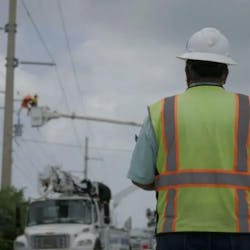
Employment for electrical lineworkers is projected to grow 7 percent from 2024 to 2034, according to the BLS, faster than the average for all occupations. Each year, roughly 10,700 new openings will emerge, driven largely by retirements and turnover. That means thousands of new workers will need to master the hazards of line work. Without safety oversight, new groundmen and apprentices will face more risks.
For utilities and contractors, safety oversight is not an optional cost but an operational necessity. Utilities should stand up independent programs, whether internal or third-party, as part of daily practice. Inspectors for these programs must collect data, provide trend analysis and report on what they find, so there is accountability and improvement. Our industry can choose to run equipment to failure, but we can never think that way about the people who maintain the grid.
Safe work practices and safety oversight stand as effective tools to prevent fatalities and injuries. Safety oversight typically produces critical coaching moments in 20 to 50 percent of observations. Oversight is not about slowing down the job. It is about ensuring that the men and women who climb poles, string lines and restore power return home safely every day.
About the Author
Kirk Coffey
Kirk Coffey ([email protected]) is director of Client Solutions at ATK Energy Group, the parent company of Victory Powerline Services. Over the past 26 years, he has gained a reputation for his commitment to improving organizational safety and efficiency in the electrical utility industry. A CUSP and former contract manager for an investor-owned utility, Coffey has more than a decade of experience in operations, workforce leadership and storm restoration.