Ramboll Engineers Develop New STATCOM-Based Technology to Address Grid Oscillations
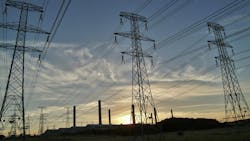
Engineers at Ramboll have developed a new grid-stabilization technology intended to address a growing source of power system instability: the increasing number and diversity of generation resources connected to aging transmission infrastructure. The technology, called the Universal Damping STATCOM (patent pending), is designed to mitigate voltage oscillations that can arise as renewable energy, storage and other power electronics-based resources are added to the grid.
Grid oscillations—low-frequency and sub-synchronous fluctuations that can propagate across transmission systems—have become more difficult to predict as generation portfolios diversify. These dynamics have been cited by industry experts as contributing factors in several large-scale disturbances, including the national-level outage affecting Portugal and Spain in April 2025.
Limitations of Current Damping Approaches
Today, system planners and operators typically attempt to maintain stability by modeling anticipated grid conditions, identifying potential oscillation modes, and tuning damping controllers for known devices and operating scenarios. While effective under expected conditions, these approaches can be challenged by unanticipated technology deployments, new interconnections, or shifts in load and generation patterns.
The Universal Damping STATCOM is intended to provide a more adaptive alternative. Installed at critical nodes in the transmission system, the device continuously detects observable voltage oscillations and counteracts them by absorbing oscillatory energy and converting it into usable power. When paired with energy storage, the technology is designed to respond dynamically without requiring pre-identification of specific oscillation modes.
Implications for Renewable Integration and Reliability
By addressing oscillations directly at their source, the technology is intended to reduce the operational risk associated with integrating solar, wind and battery storage resources, particularly on constrained or aging grids. Ramboll engineers describe the device as a grid-wide stabilizing mechanism rather than a solution tuned to individual assets.
“One of the biggest challenges in adopting renewable energy is the cost of maintaining grid reliability. It is difficult handing the ever-changing power generation and load patterns, especially when the grid is outdated. Upgrading the grid with our new technology is a relatively inexpensive step that unlocks enormous potential,” says Mojtaba Mohaddes, senior technical manager at Ramboll and the inventor of this innovation.
Related
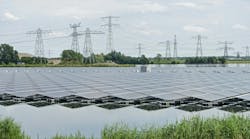

Power outages linked to instability events can result in significant economic losses for utilities, customers and regional economies. By preventing oscillations before they escalate into system-wide disturbances, the Universal Damping STATCOM is intended to reduce outage frequency and duration. Ramboll estimates that implementation costs would represent a modest increase over traditional STATCOM installations, with unit costs declining as deployment scales.
Industry observers see broader implications for global decarbonization efforts, particularly in regions where grid stability has constrained renewable adoption.
“This invention is a game-changer for power systems and opens up incredible opportunities for more renewables in our power mix around the world. Not only can developing countries now decarbonize their power grid, they can also have more reliable power for their people,”Joanne Hu, CIGRE Chair of Study Committee B4Next Steps Toward Deployment
Ramboll reports it is in discussions with original equipment manufacturers, utilities and investors to commercialize and deploy the Universal Damping STATCOM across different power systems. The company has more than five decades of experience supporting energy infrastructure projects, spanning system planning, engineering design, operations and lifecycle extension.