Design the Grid for the Day After the Storm
Key Highlights
- Most outages occur in the distribution system, often caused by weather, wildlife, or tree limbs, and are typically temporary.
- Automated devices like intelligent reclosers and underground restoration systems enable quick, often automatic, fault detection and service restoration, reducing outage duration.
- Localized intelligence allows grid segments to autonomously isolate faults and restore power, especially during storms when centralized control may be overwhelmed.
- Investing in resilient design principles and grid-edge technologies can break the cycle of storm, outage, repair, and repeat, saving costs and improving reliability.
- Proactive upgrades, including automation and monitoring, are essential for building a distribution system that can recover rapidly and withstand severe weather events.
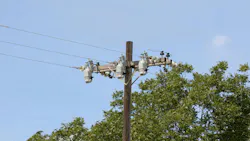
Most grid failures don’t happen where the news headlines focus. They occur much closer to home.
About 90% of outages happen in the distribution system, and 80% of these are temporary and caused by tree limbs, wildlife, or weather. Without automation, utilities dispatch crews into severe conditions to manually repair faults, resulting in longer outages and higher costs. With intelligent devices that automate and ‘self-heal’ the grid, these disruptions can be resolved within seconds—often before customers notice.
Why is this important? Because reacting to temporary events is expensive and inefficient. Every storm initiates a cycle of reacting, repairing, and rebuilding. But when we rebuild in the same way, without strategic investment in technologies proven to improve grid resilience, we lose the opportunity to disrupt the cycle, lower restoration costs, and ensure reliable electricity for businesses and communities alike.
But with strategic investment, we have the opportunity to build in resilience that provides proactive outage management and rapid restoration after the storm has passed.
Reactive Storm Recovery Is Costly
Power outages are more than just inconveniences. In the United States alone, power outages cost the economy an estimated $67 billion annually, with major outages pushing that figure even higher in recent years. Weather remains the leading cause, responsible for roughly 80% of major outages reported between 2000 and 2023. These figures alone make the business case for proactive grid investment.
Utilities have made progress in hardening infrastructure and improving storm response. Crews are staged earlier, vegetation management programs are expanding, and utilities increasingly deploy grid monitoring technologies to improve situational awareness.
Yet one question deserves equal attention as utilities prepare for the next storm season:
How quickly can the grid recover once the storm passes?
Resilience as a Design Principle
That answer increasingly depends on how the distribution system is designed and what upgrade investments have already been made or planned to strengthen the grid.
Our primary focus needs to shift from responding to outage events to designing distribution systems that recover quickly. Aging infrastructure, more frequent severe weather, and rising customer expectations all demand this new approach.
The distribution grid represents the final link between bulk power systems and customers. It is also where most outages originate. The considerable number of lateral lines in distribution systems increases the likelihood of faults at the grid edge.
Many of these assets were installed decades ago. Across the United States, a sizable portion of distribution infrastructure is 50 to 60 years old, designed for a grid with quite different load patterns, environmental conditions, and reliability expectations.
These trends are pushing utilities to rethink how resilience is built into the distribution network and what upgrade investments need to be made. Rather than viewing resilience solely as storm preparation, many utilities are beginning to treat it as a design principle, integrating technologies that help prevent outages and accelerate restoration when disturbances occur.
Grid‑Edge Technologies as Key Enablers
Fortunately, we have a number of existing and new technologies that directly improve outage restoration speed and overall resilience:
Automated Lateral Protection (Overhead Systems)
Overhead lateral circuits are among the most exposed parts of the distribution system. Vegetation, wildlife, lightning, and wind-blown debris frequently create faults on these lines. Most of these faults are temporary.
Yet traditional protection schemes typically treat them as permanent events. Conventional fuse protection cannot distinguish between a momentary disturbance and a persistent fault. A brief contact, such as a tree branch brushing a conductor or an animal crossing the line, can blow a fuse, leaving customers without power until a crew arrives to replace it.
Across hundreds or thousands of laterals, these events accumulate quickly and contribute significantly to sustained outages.
Automated lateral protection devices offer a different approach. By replacing conventional fuse protection with intelligent reclosers, utilities can allow the system to restore service when temporary faults clear automatically.
These cutout-mounted reclosers, designed for lateral protection, automatically restore power during temporary faults. They protect against widespread outages by isolating permanent faults, reducing customer interruptions, and unnecessary crew dispatches.
Adding grid sensors alongside these devices further improves visibility. Utilities can track fault activity, identify circuits experiencing repeated disturbances, and prioritize targeted maintenance to address underlying issues.
Together, these technologies help utilities strengthen the portion of the grid where outages most often occur.
Automated Underground Restoration
In response to severe weather risks, many utilities are expanding their underground distribution infrastructure. According to Lawrence Berkeley National Laboratory, the percentage of U.S. distribution lines installed underground increased from 18% in 2009 to about 20% in 2023.
Undergrounding reduces exposure to storms, vegetation, and wildlife. However, when outages occur on underground circuits, restoration can be more complex.
Fault location often requires manual switching and testing. Crews must manually isolate cable segments to determine where damage has occurred, and repairs may involve excavation or access to equipment in confined spaces. Without monitoring technologies, identifying the fault location can take critical time.
Automated underground restoration systems are helping utilities address this challenge within underground neighborhood loops. These systems can automatically detect a fault, isolate the affected cable segment, and reroute power from an alternate source. In many cases, service can be restored in less than a minute, preventing customers from experiencing a sustained outage.
When combined with monitoring and analytics platforms, these systems provide visibility into transformer conditions and system performance, helping utilities anticipate equipment issues before failures occur.
Localized Intelligence
During major storms, centralized control systems can be overwhelmed by the volume of alarms and data. Operators must sort through this information to determine which events require immediate action.
Layering the grid with devices with local decision-making capability can autonomously isolate faults and restore healthy sections—even if communications are disrupted.
This distributed approach accelerates restoration and reduces dependency on centralized intervention. Devices on the distribution network can analyze system conditions and coordinate with neighboring equipment. Faulted sections can be isolated, and healthy sections can be restored automatically, often without requiring central commands.
These localized decision-making capabilities are particularly valuable during storms:
- Customers outside the faulted area can regain service quickly
- Restoration does not depend solely on central control systems
- Devices can continue operating even if communications networks are temporarily unavailable
Distributed intelligence allows portions of the grid to respond autonomously during disturbances, improving overall restoration performance.
Why Investing in These Technologies Matters
Automation at the grid edge improves storm response by:
- Allowing crews to focus on confirmed, permanent damage
- Reducing unnecessary dispatches
- Shortening overall system restoration times
- Improving overall safety
- Improving customer experience and trust
When automated protection devices resolve temporary faults, utilities avoid dispatching crews to investigate disturbances that clear on their own. The remaining outages are more likely to involve permanent infrastructure damage requiring physical repair.
For large-scale outages affecting thousands of customers, these efficiencies can significantly shorten the total restoration time across the system.
Design for Resilience
Extreme weather will continue to test the electric grid. Preparing for these events requires more than strengthening infrastructure; it requires designing distribution systems that can recover quickly from disruptions.
Targeted investments at the grid edge—combining automated protection, distributed intelligence, and monitoring technologies—offer one of the most effective strategies for improving restoration performance. These capabilities help utilities move beyond the familiar cycle of storm, outage, repair, and repeat.
The choice is not between affordability and reliability. The real choice is between reacting after the storm or investing before it. Every minute the power stays on is a win for communities. Every dollar strategically spent today saves time, money, and lives tomorrow and helps us avoid the endless, expensive cycle of react-and-repair.
Resilience is not simply the ability to withstand the next storm. Increasingly, it is becoming a matter of design—engineering the distribution system so it can respond, adapt, and recover quickly when disruptions occur.
In that sense, the work of improving grid resilience and shortening outage recovery time begins long before the storm arrives.
About the Author
Kumar Chandran
Kumar Chandran is Senior Director – Market Strategy and Business Development at S&C Electric Company.