Five Questions Utilities Should Be Asking Before the 2026 Severe Weather Season
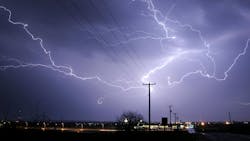
Adverse weather defined much of 2025. From widespread fires to flooding and record-breaking December heat across the United States, utilities faced a steady cadence of weather-driven operational challenges.
Utilities enter each season with established response plans and procedures, yet preparation does not eliminate pressure. When a storm is approaching, or actively impacting service territory, decision-makers must act quickly, often with significant operational and financial implications. In those moments, access to accurate, real-time weather data becomes critical for managing risk, protecting infrastructure, and safeguarding communities.
As utilities look ahead to the 2026 severe weather season, evaluating the strength of their weather data strategy is an important part of readiness. The following five questions can help assess whether current tools, workflows, and data sources are aligned with the demands of increasingly complex weather conditions.
1. Data Readiness: Are You Missing Local Networks or Important Variables?
When it comes to making decisions about managing risk and protecting lives and property, having data from multiple locations — including hyperlocal areas and complex terrain — is a huge asset. Additionally, incorporating variables, such as fuel moisture into fire weather monitoring programs, is another way utilities can stay ahead of changing conditions. High-resolution, local data and specific variables that matter to utilities capture nuances that are important for situational awareness.
Having access to the data from a single source is also crucial. Spending time viewing datasets in different locations slows down the decision process, and that’s precious time when lives and financial risk are on the line. Real-time data, without processing delays, provide crucial, time-sensitive information utilities need for power shut-off decisions, monitoring winds and relative humidity for fire weather risks, rising gauge heights indicating flooding, as well as more localized decisions for crew safety. During extreme weather conditions, accurate weather data and ground-truth should not be overlooked.
2. Wind Risk: Is Your Wind Data Up to Par?
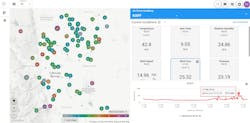
Monitoring winds and wind gusts as a storm approaches adds significant value to your situational awareness during severe storms, but how do you know if the data are accurate? Quality control, including identifying outliers for wind gusts, is not as simple as it sounds. Your source for weather data should include quality control procedures to flag erroneous values.
Furthermore, using statistics and percentile information allows you to put real-time data in historical context to better understand the impacts of a high-wind event. As an example, according to data from Synoptic Data’s Weather API, more than 1,000 stations in the mountain west between December 17 and 18, 2025, reported wind gusts above the 99.5th percentile of their historical daily maximum distributions, indicating highly anomalous conditions relative to long-term records. These types of insights allow utilities to better understand the impacts of storms and plan accordingly.
3. Precipitation & Flooding: Are You Seeing What Radar Misses?
Forecasts and radar data prepare utilities for what’s coming, giving ample time to plan for outages and assessing where the biggest impacts to customers will occur. But what happens when the storm is occurring? That’s where real-time precipitation data, stream flow, and gauge height information can indicate rapidly rising waters, the amount of precipitation over the past hour, and even monitor if weather stations go offline. Flooding is a common weather phenomenon that every utility company has to manage — and it can have devastating consequences in an instant. That’s why staying on top of precipitation as it’s happening is critical and having those additional datasets improves response times.

4. Decision Support: Who Gets the Alert — and When?
During severe weather, utilities make high-stakes decisions in compressed timeframes. Decision-making for power shutoffs, for example, is high-stakes and high-stress, involving multiple dashboards, rapidly changing conditions, and financial liability. When information is fragmented or manually monitored, delays and inconsistencies can impact response time and increase operational risk.
Decision-support dashboards and notifications help reduce friction by consolidating real-time observations into focused views. With the right tools, utilities can monitor rising wind speeds from approaching storms, shifts in wind direction that may alter wildfire behavior, or prolonged extreme heat stressing infrastructure, as well as station health of their own networks and data quality metrics. Automated notifications further support operations, alerting staff when conditions intensify or approach critical limits. In high-liability scenarios, clarity about when defined thresholds are met can significantly influence response time and communication.
5. Post-Event Analysis: Are You Evaluating Every Storm to Improve the Next Response?
Severe weather response should not end when conditions stabilize. Post-event analysis is where operational improvements take shape. Historical observations provide the context needed to evaluate how close conditions came to critical thresholds, how infrastructure performed under the extreme weather conditions, and whether response timelines aligned with environmental triggers.
For example, flood events can be reconstructed using historical data to understand how quickly conditions escalated and where impacts were concentrated. Further, comparing observations from the storm against historical percentiles helps determine whether an event was truly anomalous or part of an emerging pattern.
These insights inform future planning — refining shutoff criteria, adjusting crew staging strategies, strengthening vegetation management programs, or updating hydraulic and load models. When utilities treat historical weather data as an operational asset rather than an archive, each event becomes a source of measurable improvement.
Preparing for 2026 and Beyond
Severe weather is complex, and utilities cannot afford to approach each season with the same assumptions as the last. From real-time situational awareness to post-event analysis, the strength of a weather program directly influences response time, risk management, and long-term resilience. By asking the right questions now — about data coverage, wind monitoring, flood visibility, decision workflows, and historical intelligence — utilities can enter the 2026 severe weather season with greater clarity and confidence. In an environment where minutes matter and conditions change rapidly, informed decisions begin with complete, timely, and actionable data.
About the Author
Melanie Scott
Melanie Scott is the Director of Marketing and Communications and brings a unique background to Synoptic Data with experience in both meteorology and marketing. Melanie’s previous experience includes working in the private weather sector where she played an instrumental role in thought leadership for the business, brand recognition, and sharing the importance of instruments and detection networks in the industry. Melanie has also led global teams of marketing professionals to help companies grow their brands, develop successful lead-generation programs, and drive customer engagement.
Melanie began her career as an operational meteorologist for road weather clients before pivoting to marketing solution-based weather systems to the roads, aviation, maritime, and energy industries. In these businesses, she highlighted important data networks, such as a global lightning detection network, Road/Runway Weather Information Systems (RWIS), and road and runway pavement forecasts. Melanie obtained her Bachelor of Science degree in Aeronautics from St. Louis University, majoring in Meteorology.
Melanie Scott Linkedin: https://www.linkedin.com/in/melanie-scott/
For more info visit: https://synopticdata.com/