What the State of Grid Resilience Research Tells Us About Storm Planning
Key Highlights
- Utilities are making strategic investments in distribution automation, system hardening, and operational visibility to improve storm resilience.
- Severe weather events serve as real-world tests to evaluate the effectiveness of resilience investments and inform future planning.
- Balancing resilience investments with affordability remains a key challenge, requiring innovative evaluation methods that capture broader economic and customer benefits.
- Advanced technologies like AI and data centers are driving future electricity demand, influencing infrastructure modernization priorities.
- Long-term resilience benefits include faster restoration, reduced outages, and minimized economic disruptions across communities.
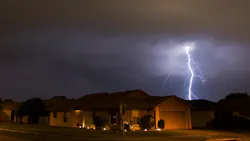
Storm planning begins long before severe weather appears in the forecast.
The decisions that determine how a utility performs during a major storm are often made years earlier—through investments in the distribution system, automation, system hardening, operational visibility, and the planning that supports them.
That perspective is becoming more important as utilities plan for a rapidly changing operating environment. The State of Grid Resilience 2026, independent research from Zpryme, found that three out of four utility and industry respondents believe operational risk has increased over the past five years. More than 80% identified artificial intelligence and data centers as significant drivers of future electricity demand, while more than half expect substantial growth on the distribution system over the next decade.
Utilities are preparing for stronger storms while accommodating new load growth, modernizing aging infrastructure, expanding capacity, strengthening cybersecurity, and maintaining affordability. These priorities are no longer independent planning exercises. They increasingly influence one another.
The research also found that nearly eight in ten respondents expect resilience investment to increase over the next five years, yet 61% identified affordability and customer rate pressure as the greatest barrier to accelerating those investments.
This is a conversation many utilities are already having.
The question is rarely whether resilience matters. The challenge is determining where investments will deliver the greatest long-term value and how to demonstrate that value alongside other priorities competing for capital.
Storms are the True Test
Storms are among the few opportunities to assess the effectiveness of resilience investments under real-world operating conditions.
One of the clearest findings from the research is where utilities believe those investments can have the greatest impact. More than half of respondents identified the distribution grid as the greatest opportunity to improve customer outage outcomes, and distribution automation, FLISR, and system hardening ranked among the top priorities for future investment.
Those priorities reflect practical experience.
When severe weather occurs, the greatest customer benefit often comes from limiting an outage's size and duration before restoration begins. Automation can isolate faults before crews arrive. System hardening can reduce infrastructure damage. Greater visibility across the distribution system helps operators respond more effectively as conditions change.
Every storm offers an opportunity to evaluate those decisions. Which investments reduced customer interruptions? Which improved restoration? Which delivered the greatest operational benefit? Those lessons help inform the next generation of investment decisions.
Demonstrating Long-Term Value
The research also points to another important challenge.
Utilities generally agree on where resilience investments can improve customer outcomes. Affordability is making it more important to demonstrate the value those investments create over time.
That may be the next opportunity to close the resilience gap.
The industry has made significant progress in identifying where resilience investments can strengthen the distribution system. The next step is to continue improving how those investments are evaluated—not only through traditional reliability metrics, but also through customer outcomes, operational flexibility, and the broader economic value they create.
Traditional reliability metrics remain essential and will continue to play a central role in measuring system performance. However, they were not designed to capture every benefit that resilience investments provide.
That doesn’t mean those benefits aren’t visible. In many cases, utilities have already demonstrated the value of long-term resilience investments by their performance during major weather events. The challenge is translating those outcomes into a broader framework to support future investment decisions.
For example, after years of sustained investment in distribution hardening, automation, and grid intelligence, one large southeastern utility restored power significantly faster during multiple hurricanes in 2024 and avoided hundreds of thousands of customer outages through smart grid technologies. Those results reflected years of planning, investment, and regulatory support—not decisions made as storms approached.
Experiences like these also prompt new questions. If resilience investments can significantly improve customer outcomes, how should that value be measured before the next storm?
Lawrence Berkeley National Laboratory's work with Commonwealth Edison on the Power Outage Economics Tool (POET) estimates not only the direct impacts of widespread, long-duration outages but also the broader economic value generated when those impacts are mitigated.
That broader perspective matters because prolonged outages affect far more than electric infrastructure. They disrupt businesses, healthcare systems, schools, communications networks, supply chains, and local economies.
This summer's prolonged outages in northwest Indiana provided another reminder. Restoring electric service required rebuilding damaged infrastructure, but recovery extended well beyond the grid. Communities faced business interruptions, delayed school openings, and disruptions to everyday life. Examining those broader impacts offers another way to understand the long-term value that resilience investments can create.
Planning Beyond the Next Storm
The State of Grid Resilience research indicates that utilities share a common understanding of many industry challenges. Operational risk is rising. Electricity demand continues to grow. Distribution automation and system hardening remain high priorities. At the same time, affordability continues to shape investment decisions.
Those findings reinforce an important point.
Storm planning is no longer defined solely by operational readiness before severe weather arrives. It is also shaped by the investment decisions that determine how the grid performs years later.
Each major storm offers another test to learn which investments delivered the greatest value for customers and communities. Those lessons strengthen future planning, improve investment decisions, and help utilities continue building a grid better prepared for whatever comes next.
About the Author
Kumar Chandran
Kumar Chandran is Senior Director – Market Strategy and Business Development at S&C Electric Company.