Lessons from the Front Lines in the New Era of Storm Response
Key Highlights
- Early, year-round planning is crucial for acquiring resources and establishing communication protocols to handle broader and more unpredictable storm impacts.
- Standardizing safety training and procedures across all crews minimizes risks and enhances efficiency during storm response efforts.
- Focusing on quality repairs reduces re-work, saving costs and time, while also increasing the durability of power infrastructure against future storms.
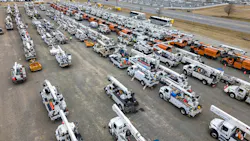
Storm season isn’t what it used to be. For decades, mentioning storm preparedness to U.S. utilities professionals meant one of two things: hurricane season on the Gulf Coast and southern Atlantic Coast, or winter storms in the upper Midwest and Northeast. Those were simpler times. Today, storm season means something very different.
Storm season no longer fits neatly into a specific geography or timeframe. A perfect example of that was earlier this year when so many of us were gathering at the DTECH conference in San Diego. Travel plans for thousands of attendees were impacted by a winter storm whose unprecedented impact area encompassed a huge swath of the Southeast. The storm’s impact on power infrastructure in Nashville and other locations was devastating. Likewise, in 2024, Hurricane Helene baffled meteorologists by taking a bizarre path that caused loss of life and lasting damage to power infrastructure in Western North Carolina that had no precedent. Other recent examples of increasing unpredictability include the 2025 flash floods in the Guadalupe River Valley and the 2021 ice storm in Texas, which led to tragic deaths and widespread damage to the power grid.
Natural disasters are also growing in intensity and scale. Hurricane Maria in 2017 and Hurricane Fiona in 2022 caused catastrophic damage to Puerto Rico’s power grid, requiring a recovery process that continues today. An intense storm in March 2025 in famously hardy northern Michigan caused massive damage to power infrastructure that is causing the region to rethink its storm preparedness strategy. And it wasn’t that long ago that Hurricane Beryl knocked out power for more than two million people in the Houston region—a stunning number for a region that invests heavily in hurricane preparedness.
All of this means that utilities must adapt their storm preparedness and storm response strategies for an era when these threats have far more unpredictability, broader geographic impact, higher intensity and increased frequency. With all-the-time, everywhere storm threats, what steps should utilities be taking to be prepared?
I’m in a unique position to discuss this because at TRC I lead a team of hundreds of storm response professionals and T&D pros who deploy across the country to help utilities with these disasters. In fact, we have sent teams to nearly all of the storms I discussed above, including lengthy assignments to support long-term recovery in locations like Puerto Rico, western North Carolina and the Gulf Coast of Florida. Through these deployments, TRC supports dozens of utilities and power co-ops each year across a vast geographic area. In deploying teams to the hardest storm-hit areas to assess damage and restore power quickly, we have learned firsthand that the following actions are essential for response and recovery success.
Lay the Groundwork for Success Long Before the First Storm
Given the rising frequency and unpredictability of major storms, storm preparedness planning has become a year-round responsibility for utilities and co-ops. Early planning is more essential than ever, particularly for acquiring and organizing the resources that are needed for the scale of these events. Building up a surplus of equipment like poles, wires and transformers is a priority during this phase. Another priority for advanced planning is organizing the external resources that will act as an extension of your crews—including teams from vendors and mutual aid support from other utilities. But there is an often-overlooked aspect of this early planning that will pay major dividends later on: creating a foundation for effective reporting, communication and coordination.
Workflow apps and communications protocols vary widely between organizations, and that can create chaos during storm response efforts. For things to work smoothly, all internal and external crews should be trained to use your apps, workflows and communications protocols in a way that builds consistency. Just as importantly, there should be clear expectations and training about how all teams should conduct data collection and reporting—a step that will solve one of the most common sources of confusion and inefficiency during recovery efforts. This is a cornerstone of the work TRC teams do for utilities. We have an academy program that trains staff on the specific platforms and systems that each utility or co-op uses—enabling teams to operate seamlessly. This should be a prerequisite for any external crews that are brought in to help with storm response.
Set Clear Expectations and Standards for Safety
Storm response is inherently dangerous work. T&D crews are often first on the scene and face a range of safety threats as they perform their assessments and remediation. But safety risks are even higher when safety protocols are not consistent across teams. That is exactly what plays out when a heterogenous mix of crews arrive on the scene for a large storm response effort. Safety training and protocols can vary widely, particularly among smaller contractors that do not have the resources or experience for extensive training or to provide adequate experience on every crew. This creates safety risks for workers and the public as well as serious liability issues for your organization.
To mitigate those risks, utilities and co-ops should establish clear expectations and procedures that create consistent safety practices across crews during this dangerous work. One of the best practices that TRC follows is a safety-first model for building crews that also enhances productivity. Each of our crews has a highly experienced senior assessor who takes the lead on site assessment and remediation work. An assessor is teamed with a driver who is highly trained to support the assessor’s work, ensure their safety and expedite key responsibilities like data collection and reporting. These crews receive extensive safety training and drilling to prepare for the deployments, and that team structure and training also enables them to cover more ground and perform more tasks in a single day. These are best practices that prove that safety and productivity are not mutually exclusive goals.
Reduce the Need for Re-Work and Incentivize Quality
The most urgent goal of storm response work is to restore service, but how that work is done can have positive or negative consequences long after the storm is over. Too often, the Band-Aid fixes that are made during storm response require costly, time-consuming re-work to get them up to spec. This is particularly common when storm response efforts involve teams from a variety of organizations, who may have very different approaches and standards for repair work. The need for re-work is also driven by incentives for storm response teams that emphasize speed and quantity rather than quality. Utilities and co-ops can address this widespread challenge by establishing clear standards for how crews should perform fixes in the field, and contracts and reporting should be structured to incentivize quality that minimizes the need for costly re-work. TRC also advises utilities and co-ops to take that a step further by requiring storm response crews to perform pole assessments as they are in the field, identifying and mitigating emerging issues that may lead to outages in future storms. This turns storm response teams into a resiliency task force that is taking steps that increase resiliency in the future.
Leverage Storm Response Teams for Data Collection and Cost Recovery
As I discussed above, restoring power is the top objective of storm response teams. But utilities and co-ops have a unique opportunity to do far more than that while they have so many T&D professionals assembled to support them. In the same way that storm response crews can be asked to identify opportunities to increase resiliency for future storms (discussed above), utilities and co-ops can ask storm response teams to multi-task in other ways.
During normal operations, it is very difficult for organizations to perform much-needed pole audits and unauthorized joint use audits. During these periods when there are dozens or hundreds of additional crews, a massive amount of critical data could be collected about pole health, attachments, undergrounding opportunities, etc. This can provide valuable information to make the case for undergrounding investments as well as provide data that can support cost recovery efforts with attachers. TRC recommends this as a best practice as utilities and co-ops create their storm response strategies, allowing them to cross off multiple boxes at once—all in a streamlined way that does not impact crews’ ability to carry out their primary mission of restoring outages to impacted neighborhoods. As the frequency, intensity and unpredictability of storms increases, adopting these best practices will help utilities and co-ops be better prepared to minimize outages and increase resiliency. And these best practices will also help utilities minimize costly re-work, capture critical data and lay the groundwork for cost recovery. These steps will transform storm response from an urgent necessity into an opportunity to deliver enormous value to your operations and ratepayers.
About the Author
Chris Duncan
Chris Duncan is the Director of Distribution Operations at TRC, a global professional services firm that provides a range of services to the utility industry including storm response support. Duncan has 18 years of experience in the utilities industry. In his current role at TRC, Duncan manages a large team of storm preparedness and storm response professionals that operate as an extension of utilities across the U.S. For a decade, Duncan delivered power distribution services to utilities in his roles at IJUS LLC, a leading power/utility engineering firm that was acquired by TRC in 2018.