Virginia Governor Signs Bipartisan Energy Bill to Strengthen Grid, Address Utility Costs
April 28, 2026
2 min read
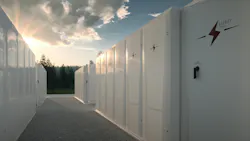
Virginia legislators joined behind a bipartisan measure signed into law by Governor Abigail Spanberger to reduce energy costs for consumers while still prioritizing grid reliability.
Signed into law in April, the Energy Storage Bill, which incorporates Virginia House Bill 895 and Senate Bill 448, provides the framework for how Virginia plans to deploy state-level energy grid solutions and energy storage policies geared towards the ongoing transition to American-made renewable energy. State lawmakers reportedly prioritized this at the beginning of Virginia’s 2026 legislative session amid national energy prices that have surged as companies deploy energy storage designed to offset and lower peak prices for ratepayers.
The American Clean Power Association (ACP), which represents utility companies in the renewable energy sector, highlighted that the average Virginian could spend an additional $5,200 over the next 10 years if no new clean power is built. ACP members say that more energy storage development can help alleviate issues when the actual electricity supply, compared to heightened demand, does not always align.
“Energy storage is one of the most effective tools Virginia can deploy to keep electricity affordable and reliable today and into the future,” said ACP chief advocacy officer Frank Macchiarola in a statement.
The bill outlines the increased targets for energy storage capacity that Appalachian Power and Dominion Energy Virginia are required to petition the State Corporation Commission for approval to construct, acquire, or procure. It also highlights the extended time frames within which such capacity must be met.
Appalachian Power, which services customers across Virginia, West Virginia, and Tennessee, is required to ask state officials for permission to own, buy, or build at least 780 MW (megawatts) of short-duration energy storage capacity by 2040 and 520 MW of long-duration energy storage capacity by 2045. Dominion Energy Virginia must seek permission for at least 16,000 MW of short-duration energy storage capacity by 2045 and 4,000 megawatts of long-duration energy storage capacity by 2045.
Virginia lawmakers also included a provision in the bill to authorize the commission to evaluate energy storage project proposals filed during annual petitions for new renewable generation capacity development.
Although battery energy storage systems effectively stabilize the energy grid and mitigate short-term price spikes, the simultaneous surge in electricity demand for data centers and aging infrastructure keeps this progress in a steady limbo. The ACP states Virginia ranks among the top five states for projects in the pipeline.
About the Author

Eric Moody
Staff Writer
Eric is a staff writer for the Endeavor Business Media Energy group, which includes EnergyTech, T&D World, and Microgrid Knowledge media brands. He is a Philadelphia native with over nine years of experience in multimedia and print journalism throughout the news industry. He graduated with a B.S. in Communication Studies from Mansfield University of Pennsylvania.
Sign up for our eNewsletters
Get the latest news and updates