Revitalizing U.S. Nuclear Power: Challenges, Opportunities, and Future Prospects
Key Highlights
- The U.S. has seen a slow revival of nuclear power, with recent projects like Plant Vogtle and the restart of Three Mile Island's Unit 1 signaling cautious progress.
- Federal support through the DOE's Loan Guarantee Office and policy initiatives aims to accelerate the deployment of advanced reactors and SMRs across the country.
- Private companies and tech giants are investing in nuclear projects, including fusion research and SMR development, to diversify and modernize the energy mix.
- Cost management, supply chain development, and workforce training are critical factors for scaling up nuclear construction and reducing expenses.
- Policy restrictions in some states and regulatory hurdles remain challenges, but federal efforts and technological innovations are paving the way for a nuclear-powered future.
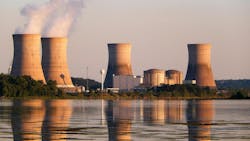
There was a time when the U.S. was the leader in the peaceful uses of nuclear power, and since then, France, Russia, Japan and China have, at various points, taken leadership roles in the worldwide nuclear industry. However, for longer than I have been writing about energy, there have been those wishing to see the U.S. take a leading role in fission yet again.
Back in 2008, when I first started out writing in this industry, my mentor editors explained how things had slowed to a crawl after Three Mile Island, but the then-incoming President Barack Obama and the 2009 American Recovery and Reinvestment Act (ARRA) and its loan guarantee programs for big capital projects for the power grid seemed to hold some promise for a long-awaited “Nuclear Renaissance.”
Over time, I heard that term less and less as new nuclear was slow to get started and smaller nuclear projects with newer technologies failed to materialize. In the meantime, the Fukushima accident and the accompanying German Energiewende served to further tarnish the nuclear power brand. Southern Co. and Plant Vogtle Units 3 and 4 were the lone examples of success nuclear advocates could point to. The reactors were built — the first new reactors in the U.S. for seven years, and with the new Westinghouse AP1000 reactors to boot — but it was a mixed success. Cost overruns, company bankruptcies and construction delays dogged the project. Certainly not a Nuclear Renaissance, at least not yet.
New Nuclear News
If you haven’t been following nuclear news lately, there is a lot to catch up on. In November 2025, something approaching unthinkable to the late 20th century mind occurred when a deal was struck to restart a retired nuclear reactor at Three Mile Island — that is, Unit 1, not Unit 2, the one that partially melted down in the 1970s.
In this deal, the DOE offered a $1 billion loan to Constellation Energy Generation to restart the renamed Crane Clean Energy Center. The unit was shut down a few years ago, but tech giant Microsoft breathed new life into the project by signing a 20-year power purchase agreement in a deal worth an estimated $27 billion. That is a big bet by anyone’s counting in today’s economic picture.
Constellation also signed a deal with Meta, Facebook’s parent company, to buy nuclear power from the nuclear Clinton Power Station in Illinois, in a deal that ensured the relicensing and continued operation of the 1092 MW plant for another two decades.
Google signed deals with NextEra Energy to help restart the 615-MW nuclear powered Duane Arnold Energy Center near Cedar Rapids, Iowa. As with the other deals between tech companies and power producers, Google wants this power for its cloud-based and AI infrastructure.
Likewise, the Palisades Nuclear Plant, which shut down in May 2022, may also be restarted after receiving a $400 million investment from the state of Michigan, $1.52 billion in DOE loan guarantees and more than $1.3 billion from the Department of Agriculture. This project would also see two advanced SMRs built as part of the plant.
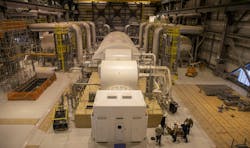
It is worth remembering that before these predicted spikes in energy demand, the economic picture was not looking so good for nuclear power plants, which were until recently viewed by some utilities as too expensive to keep running.
No SMR plants have yet been built in the US, but federal agencies agreed to look into proposed projects by NuScale Power, X-Energy Reactor Corp. and others.
The X-Energy project, planned with support from Dow Chemical and Amazon, began building its advanced nuclear fuel fabrication facility with Oak Ridge National Laboratory in Tennessee. The Rockville, Maryland-based reactor design company develops several reactor concepts, but wants to use the Xe-100 modular, pebble-bed reactor in planned SMR projects on the Texas Gulf Coast and in Washington State.
The Tennessee Valley Authority together with nuclear power company Holtec International won the nod from the DOE support separate deployments of advanced light-water BWRX-300 SMRs in Tennessee and Michigan. The project partners will get up to $800 million in federal cost-sharing funds on planned advanced light-water SMRs.
TVA also agreed to buy power from Kairos Power’s Hermes 2, an advanced nuclear reactor planned for Oak Ridge, Tenn. The Kairos design is a fluoride salt-cooled high-temperature reactor that uses a pebble-bed fuel arrangement of tristructural-isotropic (TRISO) fuel. Finally, TVA agreed with ENTRA1 Energy, which uses NuScale’s SMR design, to explore the development of up to 6 GW of new nuclear power generation.
In March 2025, DOE released a $900 million solicitation to assist in deploying Gen III+ SMRs with the remaining $100 million to be awarded to support additional deployments and address key barriers in design, licensing, supply chain and site readiness by the end of 2025.
There have even been some new developments in the world of nuclear fusion in North America, with Google investing in Commonwealth Fusion Systems to buy 200 MW of fusion power from a plant that does not yet exist, but which is planned for Chesterfield County, Virginia.
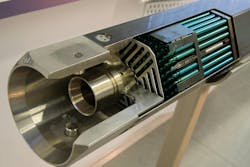
Canadian Nuclear Laboratories won $33 million in in-kind research support from the Atomic Energy of Canada’s Federal Nuclear Science and Technology Work Plan. Ontario Power Generation, a province-owned electricity generator, is investing $19.5 million into fusion energy research and development, with private fusion power company Stellarex adding another $39 million. The province of Ontario has access to tritium to serve as fuel for fusion reactors derived from the utility’s CANDU reactors, which are an original reactor design developed in Canada.
Meanwhile, Amazon Web Services along with the Compute for Climate Fellowship supported the work of New Jersey-based nuclear fusion firm Thea Energy, which hope to commercialize a fusion reactor within 10 years.
Energy Policy
Because it is a capital intensive way to make power as well as being regulated so strictly, nuclear power is even more concerned with energy policy than some other forms of generation. Just as one example, 11 states have restrictions in place on building new nuclear power plants, ranging from outright moratoriums, such as Minnesota, to more stringent conditions on construction, to requiring high level waste disposal or reprocessing, as California, Oregon and others do.
The past three US presidents have talked about increasing nuclear capacity, with Democrats hailing a net-zero emissions strategy and Republicans calling for a more energy independent country. President Donald Trump entered his second term specifically calling for the much-delayed Nuclear Renaissance, and his White House has issued a flurry of executive orders aimed at bolstering the nuclear sector. Broadly, his administration has favored relicensing existing reactors, streamlining reactor testing, revisiting nuclear regulations, exploring nuclear fuel recycling, boosting domestic fuel production and restoring the manufacturing base for nuclear power plants.
One of the main ways the federal government can directly support new nuclear construction is through the DOE’s Loan Guarantee Office (LPO). Applicants to the LPO have proposed projects including advanced nuclear reactors, micro reactors, nuclear fuel cycle, nuclear supply chain, nuclear uprates and upgrades, and SMRs.
Building the Next Generation
Greg Beard, Senior Advisor to the LPO, said the office was created with nuclear power specifically in mind, adding that reinvigorating nuclear power in the US is the office’s top priority.
“[The LPO] is a powerful tool for deploying new nuclear and is open for business for reactors of all sizes. Following the passage of the One Big Beautiful Bill, LPO’s Title 17 has about $260 billion in loan authority and about $1 billion in credit subsidy; nuclear is eligible for those funds. As directed by the executive order ‘Reinvigorating the Nuclear Industrial Base,’ LPO is prioritizing getting 10 large reactors under construction by 2030,” Beard said.
Besides this executive order, there were others directing the Nuclear Regulatory Commission (NRC) to speed approvals of newly DOE-tested reactor designs, revising the DOE’s review process for reactor projects it oversees, deploying reactors at military bases, processing surplus plutonium for use in advanced nuclear fuel fabrication, participating in nuclear-related education programs and assessing the spent nuclear fuel management cycle.
The long-term goal is to add 300 GW of new nuclear capacity by 2050.
Its most recent success story is Plant Vogtle, which Beard said has saved Georgia ratepayers more than $3 billion in interest costs, as well as making the nuclear plant the largest generator of electricity in the US. However, this is just the beginning.
“LPO is currently providing an up to $1.52 billion loan to Palisades, the first restart of a nuclear reactor that had entered decommissioning status. Once complete, the plant will generate 800 MW of affordable and reliable baseload power, helping to increase grid reliability in Michigan. As of September 16, $491,056,853 of loan funds have been disbursed,” he said.
Private investors have been loath to back nuclear power so far, but the LPO is able to fund up to 80% of eligible project costs. Beard said his office is the only lender with sufficient capital availability, expertise, patience and a mandate to reinvigorate the US nuclear industrial base.
Beard said Energy Secretary Chris Wright, whose pre-DOE work including serving on the board of California-based SMR designer Oklo, Inc., is a strong supporter of nuclear expansion.
Wright’s initial secretarial order carried nine action points for DOE to bolster commercial nuclear power.
“The long-awaited American Nuclear Renaissance must launch during President Trump’s administration. As global energy demand continues to grow, America must lead the commercialization of affordable and abundant nuclear energy. As such, the Department will work diligently and creatively to enable the rapid deployment and export of next-generation nuclear technology, according to Wright’s order.
The Question of Cost
When asked about the barriers that exist today for nuclear power, Beard said cost and cost overruns are a common reservation for stakeholders.
“Cost overrun is not a monolith: costs are divisible for sharing among stakeholders who are able to manage project risks and who stand to benefit from project completion. Consortium arrangements and partnerships can reduce the financial exposure of any individual participant. If customers buy plants separately, then there is a disadvantage in being the first customer, so most potential customers express that they would ‘prefer to be fifth’ and take advantage of the lower cost,” Beard said. “However, no one can be fifth if no one leans in to be first, second, third and fourth. Consortium approaches allow customers to all be ‘one fifth’ of the orderbook versus ‘waiting to be fifth.’”
Related Podcast
 new_episode
Nuclear energy can compete with other generation technologies on a cost-per-megawatt basis. This is evident, he said, from the wave of subsequent license renewals to keep reactors operating for 80 years, along with announced power uprates and restarts of reactors that had ceased operations.
“Nuclear provides a unique value proposition that is increasingly valued in a market that is pricing in an increasing need for 24/7 power amidst unprecedented demand growth,” he said, adding that large reactors provide economies of scale that drive a cheaper per-MW cost.
Repeating construction of the same or similar reactor designs will push costs down further, he said, adding that from Plant Vogtle Unit 3 to Unit 4, project partners saw around 20% in cost reductions.
“By coordinating across 10 large reactors of the same design, the United States has the opportunity to scale-up domestic manufacturing that would not be possible for one-off builds,” he said.
U.S. publicly owned utility companies own and operate, or at least draw power from, many plants in the existing nuclear fleet. Scott Corwin, president and CEO of the American Public Power Association (APPA), said the recent talk about a Nuclear Renaissance would be beneficial to utilities.
“There has been a lot of talk about new nuclear lately, and then support from the federal government as well. Public power is involved in several of the projects, so there is a lot of momentum in that respect for the potential for nuclear into the future and specifically among public power entities,” Corwin said.
He added that SMRs could play a role in helping keep the power grid balanced by providing predictable, baseload power.
“The designs are focused in part with that specifically in mind. The ability to ramp up and down with a little more flexibility and application. It is a bit more in the future still, but as you see some of these models start to become the standardized version and become replicated, the idea is you will be able to use them in a lot of applications, and also the cost will come down,” Corwin said.
To get started building the next generation of the US nuclear fleet, it will be crucial to build on what momentum already exists, Beard said. Reactor designs like the AP1000 now have fully completed designs and experienced supply chains (and a trained workforce).
“If we wait too long to move forward on our next project, this supply chain infrastructure may diminish,” Beard said. “The best way to build the workforce is to build projects. As with the supply chain, it is key to sign contracts for projects now so that the experienced workers from Vogtle (and Palisades) do not disperse back into other industries.”
About the Author
Jeff Postelwait
Managing Editor
Jeff Postelwait is a writer and editor with a background in newspapers and online editing who has been writing about the electric utility industry since 2008. Jeff is senior editor for T&D World magazine and sits on the advisory board of the T&D World Conference and Exhibition. Utility Products, Power Engineering, Powergrid International and Electric Light & Power are some of the other publications in which Jeff's work has been featured. Jeff received his degree in journalism news editing from Oklahoma State University and currently operates out of Oregon.