A Bright Future for Overhead Power Line Structures
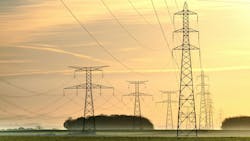
Fresh off the ASCE/SEI Electrical Transmission and Substation Structures (ETS) Conference in Dallas this September, I was energized by what has become the premier gathering in our industry. With over 2,200 professionals in attendance, this triennial event is a true Who’s Who of overhead power line and substation experts. The Conference Steering Committee, under the leadership of Conference Chair Ronald Carrington and the dedicated American Society of Civil Engineers (ASCE) staff, delivered a record-breaking experience. The ASCE staff confirmed the 2025 conference was the most attended ASCE/SEI conference of all time across all its sectors.
Mr. Carrington’s Opening Plenary remarks, which you can read about in the closing column of this article, set the stage for what I heard all week: we are all busy. For those of you who remember my column last year, I described the Perfect Storm that we find ourselves in. Only this year, the storm is even bigger. We are facing unprecedented load growth with demand projected to increase 2% annually through 2050. Our grid’s average age is almost another year older. Although the transition to renewable energy has slowed, it remains ongoing. Despite repeated political promises, permitting remains a major hurdle to building the new transmission lines needed to meet reliability and climate goals. Even approved projects face labor and material shortages, further delaying progress.
The much-anticipated Edison Electric Institute was just released this past October. The report noted that U.S. electric EEI member companies are projected to invest more than $1.1 trillion between 2025 and 2029. The funding will support the growing electricity demand driven by artificial intelligence and data center expansion, industrialization, the reshoring of manufacturing activity, and the electrification of the broader economy.
ASCE released its quadrennial Report Card on America’s Infrastructure last March. Primarily due to this Perfect Storm, our Energy infrastructure dropped to a D+ from the C- it received in 2021. Amongst the findings was that an increase in electric vehicles and a rise in data centers will demand 35 gigawatts (GW) of electricity by 2030 alone. For us from the 80’s generation, that is equivalent to almost 29 DeLoreans from Back to the Future. Great Scott!
It’s not all doom and gloom. ASCE’s Structural Engineering Institute (SEI) continues to publish essential Manuals of Practice (MOPs) and Standards that support the reliability of both upgraded and newly built grid infrastructure. These resources ensure rigorous design and analysis across every structural component of overhead power systems:
- Lattice steel towers – Standard 10
- Tubular steel poles – Standard 48
- Wood pole structures – MOP 141
- Concrete pole structures – MOP 123
- Fiber-reinforced polymer (FRP) poles – MOP 104
- Substation structures – MOP 113
Supporting these structures, MOP 160 Design of Overhead Line and Substation Foundations is nearing completion.
ASCE is modernizing structural loading standards for overhead power lines to reflect today’s climate and reliability demands. MOP 74, Guidelines for Electrical Transmission Line Structural Loading, guides how wind, ice, temperature, and construction loads are applied, and has undergone a major five-year revision. The result: ASCE/SEI Standard 84, Minimum Design Loads for Structures Supporting Overhead Power Lines, will be published in 2026. This new standard expands beyond transmission lines to cover all overhead power structures, marking a significant step toward more resilient and universally applicable design practices across the entire electric grid.
Additionally, MOP 123, Prestressed Concrete Transmission Pole Structures: Recommended Practice for Design and Installation, is also being updated to ASCE/SEI Standard 81, Design of Prestressed Concrete Pole Structures Supporting Overhead Power Lines.
All current MOPs, Standards, and related publications can be found in the ASCE Library. Look for updates to other MOPs and Standards in the next few years.
A notable shift in the titles of these latest updates is the move from “transmission” to “overhead power line” — a more inclusive term that reflects structural consistency across voltages. While many existing MOPs and Standards still reference “transmission” in their titles, they apply to all overhead power lines, even those less than 60’ tall. ASCE is embracing this broader scope, with ETS now transitioning to OPS: Overhead Power Line Structures. The 2028 OPS Conference will be held October 1-5 at the Gaylord Opryland in Nashville, TN. It’s not too early to start planning your paper submissions.
One last thing, this Structures supplement features highlights from several of the 49 peer-reviewed papers presented at the conference. If you missed it, the peer-reviewed papers are in Proceedings of the Electrical Transmission and Substation Structures Conference 2025.
There’s no doubt - we have serious work ahead. But we also have the tools, the talent, and the shared commitment to meet the moment. Or as another classic ’80s anthem reminds us: the future’s so bright, I gotta wear shades.
About the Author
Otto J. Lynch
Otto J. Lynch is president and CEO, Power Line Systems. He is a member of American Society of Civil Engineers, IEEE, and National Electrical Safety Code. He is a registered professional engineer.