How Alabama Built a Statewide Utility Fiber Network at Scale
Key Highlights
- Point-to-point, GPON-capable distribution fiber and new route designs expanded deployment options beyond traditional ring architectures.
- Integrating more than 5,000 miles of existing fiber reduced construction needs and accelerated statewide coverage.
- Dashboards, design reviews and coordinated partnerships improved visibility, quality and delivery performance.
- The network supports more than 60 distribution feeders, 30 substations, 100 communications towers and 600 community anchor institutions.
- The program reached all 67 Alabama counties, met grant deadlines, and finished ahead of schedule and under budget.

Electric utilities and network operators are increasingly leveraging fiber infrastructure to support both operational communications and community connectivity objectives. As grid modernization initiatives accelerate, utilities are finding opportunities to maximize the value of fiber investments by creating networks that serve critical operational functions while also supporting broadband expansion, public institutions and regional communications needs.
A recent statewide fiber deployment in Alabama provides an example of how utilities can expand communications infrastructure at scale through a combination of innovative network design, disciplined project governance and strategic use of existing assets.
Over 18 months, the program designed and constructed about 600 route miles of new Fiber-to-Distribution (FTD) and Long-Haul (LH) fiber while integrating more than 5,000 miles of existing internal and external fiber assets into a unified communications network. The resulting infrastructure enhanced utility operations, improved network resiliency and extended connectivity to hundreds of community institutions across the state.
Expanding the Role of Distribution Fiber
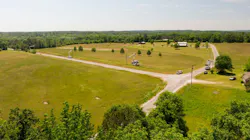
Traditionally, utility fiber deployments have focused on transmission corridors, substations and ring-based backbone architectures. While these approaches provide high reliability, they can also limit expansion speed and flexibility, particularly in rural or underserved areas where traditional backbone infrastructure may not exist.
To address these challenges, the Alabama deployment introduced several non-traditional approaches to Fiber-to-Distribution design. Engineers developed deployment models that enabled point-to-point, GPON-capable fiber systems to operate on distribution infrastructure without relying exclusively on conventional ring architectures.
Rather than treating distribution fiber as a simple extension of the backbone network, the program established distribution-level backbone capabilities that could support both operational communications and future broadband expansion. Redundant connections were created between distribution routes, long-haul facilities and partner networks, allowing the system to maintain resiliency while reducing the amount of infrastructure required for initial deployment.
This approach provided a practical alternative for extending fiber into areas where traditional backbone construction would have required additional time, capital investment or complex routing. The design also created opportunities for future expansion by allowing local GPON networks to be developed around existing community feeders.
Leveraging Multiple Construction Environments
Another notable aspect of the deployment was the use of diverse construction methods and infrastructure types to accelerate network growth.
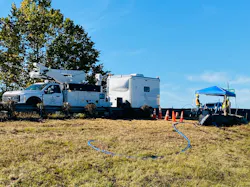
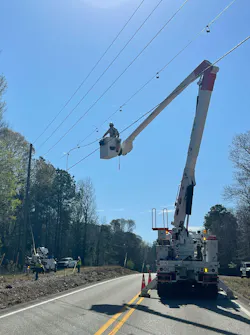
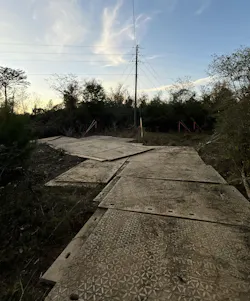
The program included fiber construction along traditional utility distribution routes, but it also expanded into environments less common for distribution-based deployments. These included major underground installations within public rights-of-way (ROWs) beyond typical utility service corridors as well as deployments on transmission structures.
By using both overhead and underground construction methods, the project team increased routing flexibility while minimizing bottlenecks associated with any single construction approach. Transmission structures enabled long-distance transport segments, while distribution infrastructure provided efficient access to local communities and operational facilities.
This combination of deployment methods demonstrated how utilities can use existing infrastructure assets to create cost-effective network expansion strategies. Rather than building entirely separate communications corridors, the program maximized the use of available utility infrastructure to support both operational and broadband objectives.
Connecting Alabama Through Statewide Fiber: Best Practices for Rapid Deployment
Alabama Power Connectivity implemented a statewide fiber initiative that rapidly expanded infrastructure while supporting grid modernization and public connectivity. Here are seven keys to the project's success.
1. Innovate engineering and network design. To move quickly and at scale, the team implemented first-of-their-kind FTD deployment applications that expanded where and how distribution fiber can be built and backhauled. The program successfully deployed point-to-point, GPON-capable fiber on distribution lines without relying on traditional ring architecture, while creating redundant connections to long-haul routes and partner networks.
It also completed major underground fiber construction in public rights-of-way (ROW) beyond typical distribution utility service areas and constructed FTD fiber on transmission overhead structures. Together, these approaches created new “distribution‑level backbone” options that allow fast expansion of local GPON rings on community feeders, support additional grid improvements, and lower future costs for utility customers. In short, the team didn’t just add miles of fiber — it redefined the deployment model to be more scalable, resilient, and flexible statewide.
2. Modernize processes and real-time governance. Along with the technical buildout, the team updated its processes to move faster without sacrificing quality. Design and communication workflows were improved to better coordinate engineering, construction, operations and contractual partners. A real-time dashboard tracked engineering progress, permitting status, construction activity and cost performance, allowing the team to make rapid, informed decisions tied to grant deadlines and budget management. The team also introduced post-design and pre-construction reviews to proactively address geographic constraints, reduce rework and prevent future maintenance issues before field execution. Regular coordination meetings created a structured mechanism to surface best practices, resolve barriers quickly and continuously improve program governance as conditions changed. Together, these changes turned a complex, multi-party effort into a well-coordinated delivery system with clear accountability and predictable progress.
3. Form strategic partnerships that scale delivery. Achieving statewide reach required close coordination between Alabama Power Connectivity organization, Southern Company Services’ infrastructure services organization, engineering design teams, construction contractors, field operations, permitting authorities and external network partners. These partnerships were deliberately structured to streamline handoffs, align technical requirements across route owners and maintain network integrity while minimizing schedule and cost risk. The result was a unified statewide program able to run design, permitting, construction, cutovers, and service activation in parallel under a single, performance-driven framework.
4. Review measured achievements and outcomes. The program delivered measurable, well-documented, and lasting results. Engineering and permitting efficiency improved through streamlined design processes, including expanded review windows and the introduction of post‑design and pre‑construction reviews that were formalized as a program standard. Even with additional review steps, engineering output increased by 700+% and 400+% for make-ready and fiber design accordingly compared to prior years, while improving overall quality. The team also developed standardized guidelines for three additional Fiber-to-Distribution route types, improving scalability and strengthening resiliency for future deployments.
5. Consider utility grid enhancement and operational resiliency. The expanded and enhanced fiber network delivered new communications capability to more than 60 distribution feeders and more than 30 substations, strengthening the operational backbone needed for modern grid applications. The build also supported the replacement of more than 2,200 poles, improving the distribution system's reliability and maintainability. The project extended primary optical connectivity and redundancy services to more than 100 communications towers used for utility operations and by external partners, including emergency first responders. These upgrades improved network continuity and redundancy across the statewide communications footprint, directly supporting resilient operations and future grid modernization requirements.
6. Focus on community impact and digital equity. Beyond supporting utility operations, the initiative also expanded broadband access statewide. It enabled high‑speed connectivity for more than 600 Community Anchor Institutions, including rural hospitals and clinics, schools, local governments, and public safety agencies. By October 2025, the program had connected all 67 Alabama counties — closing key gaps in access and reaching this milestone about four months ahead of grant deadlines. By taking an integrated approach, the program ensured that grant‑funded builds met community broadband needs while also strengthening the utility’s core network.
7. Use a repeatable model for financial and schedule performance. Despite aggressive timelines and extensive scope, the program met all grant deadlines and was completed under budget and ahead of schedule. Through technical innovation, process discipline, and strong partnerships, the team delivered reliable, high-quality fiber while also generating non-kWh revenue that helps reduce pressure on customer rates.
Just as important, the work established scalable design standards, new deployment approaches, and lasting partnerships. This foundation will continue to support utility grid modernization, statewide resiliency and future broadband expansion.
This initiative demonstrates innovation not only in what was built, but in how it was engineered, governed and delivered. The team expanded how FTD could be used through point-to-point GPON-capable designs, non-traditional ROW builds, and transmission-structure deployments.
At the same time, the team modernized fiber deployment with real-time performance management and disciplined quality reviews. Results included statewide county coverage, hundreds of miles of new fiber, integration of thousands of miles of existing assets, large-scale connectivity for Community Anchor Institutions, and major gains in engineering productivity. Together, these efforts created lasting infrastructure and a scalable delivery model that will strengthen Alabama’s communities and utility grid for years to come.

Integrating Existing Fiber Assets
One of the most significant factors contributing to the program's success was integrating existing fiber resources. Instead of relying solely on new construction, the initiative incorporated more than 5,000 miles of internal and external fiber assets into the overall network architecture. Asset integration significantly reduced the need for new construction while accelerating deployment schedules.
For network operators, this highlights an important lesson: existing fiber assets often represent substantial unrealized value. Utility-owned fiber, leased facilities, partner networks and previously underutilized communications infrastructure can frequently be incorporated into larger network strategies with far less cost and schedule impact than greenfield construction.
By combining newly constructed fiber with pre-existing infrastructure, the program created a larger statewide footprint while maintaining efficient capital utilization. The resulting network provided connectivity across all 67 Alabama counties and established a foundation for future growth without requiring every mile of infrastructure to be newly built.
Project Governance as a Technical Enabler
Large-scale fiber deployments are frequently viewed primarily through the lens of engineering and construction. However, operational processes often influence execution success as much as network design decisions.
Recognizing this reality, the project team implemented several governance and workflow improvements designed to improve visibility, accountability and decision-making throughout the deployment lifecycle.
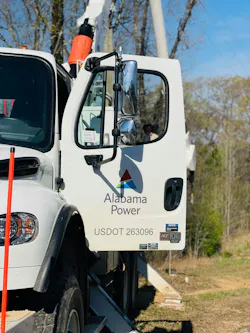
A real-time performance dashboard provided continuous visibility into engineering progress, permitting status, construction activity and budget performance. This allowed project leaders to quickly identify schedule risks, permitting issues and construction constraints before they developed into larger problems.
The team also introduced post-design and pre-construction reviews as standard project milestones. These reviews evaluated route feasibility, geographic constraints, maintenance considerations and constructability concerns before crews entered the field.
Although additional review steps are sometimes viewed as schedule risks, the opposite proved true in this case. Early identification of design challenges reduced rework, improved field productivity and helped maintain consistent construction quality across a rapidly expanding statewide program.
Regular coordination meetings among engineering groups, construction contractors, operations personnel, permitting stakeholders and network partners further strengthened execution. This structure enabled rapid issue resolution and facilitated the sharing of best practices as new deployment scenarios emerged.
Operational Benefits for Utility Communications
While broadband enablement represented a significant outcome of the project, the network was ultimately designed to strengthen utility communications capabilities as well.
The expanded fiber footprint delivered new communications connectivity to more than 60 distribution feeders and more than 30 substations. These connections support a variety of modern utility applications, including advanced monitoring, automation, operational communications and future grid modernization initiatives.
In addition, the team extended optical connectivity and redundant communications services to more than 100 communications towers used by utility operations and external partners. The resulting network redundancy improved operational continuity and increased resiliency across the statewide communications infrastructure.
As utilities continue deploying advanced distribution management systems, intelligent devices and automated grid technologies, access to scalable, low-latency fiber communications becomes increasingly important. This project illustrates how strategic fiber investments can create long-term operational value well beyond traditional telecommunications applications.
Supporting Community Anchor Institutions
The statewide network also enabled broadband connectivity for more than 600 Community Anchor Institutions (CAIs), including schools, hospitals, clinics, government facilities, public safety organizations and communications sites.
For network operators, CAI connectivity presents unique opportunities because these facilities often serve as critical communications hubs within their communities. Reliable access to high-capacity fiber can improve educational resources, healthcare delivery, emergency communications and governmental services.
The deployment demonstrated the advantages of aligning utility communications objectives with community connectivity initiatives. By designing infrastructure that could support both purposes simultaneously, the program created efficiencies that benefited network expansion while increasing the overall value of the investment.
This integrated approach also helped eliminate connectivity gaps across the state, ultimately reaching all 67 counties and establishing a more comprehensive communications footprint than either objective could likely have achieved independently.
Establishing a Scalable Deployment Model
Perhaps the most important takeaway for fiber operators is that the initiative's lasting value extends beyond the physical network itself.
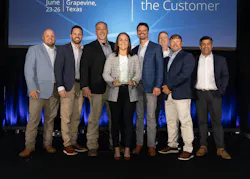
The project established standardized engineering practices, expanded deployment methodologies and repeatable governance processes that can be applied to future fiber programs. The team developed new standards for multiple Fiber-to-Distribution route types, creating additional options for network expansion and resiliency planning.
Engineering productivity increased substantially through improved workflows, standardized reviews and better coordination among stakeholders. At the same time, the team maintained construction quality and network reliability requirements.
The combination of innovative network architecture, asset integration, operational discipline and collaborative partnerships enabled the program to meet aggressive deployment objectives ahead of schedule and under budget. More importantly, it created a framework utilities can replicate as they continue to expand fiber infrastructure to support both operational and community needs.
As electric utilities modernize their communications networks, fiber deployments are evolving from isolated backbone projects into integrated statewide infrastructure strategies. The Alabama program illustrates how utilities can accelerate deployment through creative distribution-fiber architectures, strategic use of existing assets, diversified construction approaches and rigorous project governance.
Rather than focusing solely on miles constructed, the initiative demonstrates the value of building a flexible, resilient communications ecosystem. By combining operational reliability, community connectivity and scalable design standards, the project established a distribution-level fiber model that offers useful lessons for utilities and network operators pursuing large-scale fiber expansion programs.
About the Author
Holly Joiner
Holly Joiner is Supervisor of Construction, Contracts and Inspection for Grid Investment at Alabama Power, where she leads fiber construction and contract management initiatives supporting grid modernization and communications infrastructure expansion. With more than 16 years of experience in electric distribution engineering, capital project management and infrastructure deployment, she has led large-scale utility and fiber programs across Alabama. Joiner holds a Bachelor of Science in Civil Engineering from the University of South Alabama and has received multiple company innovation and leadership awards for advancing distribution and connectivity initiatives.