Identify Bird Faults in Distribution Systems
Key Highlights
- Wildlife faults often produce electrical signatures similar to direct conductor contact, making diagnosis challenging without detailed analysis.
- Oscillography and fault modeling help field personnel identify the cause of faults, especially in remote or lengthy circuits where visual inspection is difficult.
- Bird-related faults are responsible for a significant percentage of outages, with strategies like insulator coverings and bird diverters proving effective in prevention.
- Reclosing operations can dislodge birds from conductors, reducing the likelihood of repeated faults and system downtime.
- Understanding fault asymmetry and system impedance is crucial for accurate fault location and designing targeted mitigation measures.
Most lineworkers, substation crews and troublemen can distinguish a wildlife fault (caused by a squirrel, for example) from a vegetation strike without pulling oscillography or running fault analysis. However, proving which came first, the squirrel or the tree, is trickier.
In the field, fault causes often blur together. A squirrel might trigger the initial arc, only for a tree to drop the line minutes later. Oscillography offers clues, but interpreting those clues requires context — and a bit of detective work. Bridging what is observed in the field with what appears in oscillography may reveal consistent patterns. It is hypothesized different fault causes produce distinct electrical characteristics, which could help to identify more mysterious fault causes.
Outlined are real events on actual electric systems, complete with field-confirmed causes, fault analytics and a mix of dry data. The goal is to give field personnel a leg up when the cause of a fault is not obvious. It may also serve to help system protection designers to account for real-world fault behavior.
SAIDI Up, Bird Down
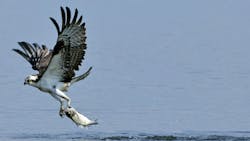
When wildlife meets energized equipment, the animal is often harmed or killed, even though the equipment may continue functioning. Cleanup and restoration are typically quick, but the exact cause is not always obvious. Wildlife faults vary widely, from birds bridging phases and rodents gnawing through cables to fish dropped onto conductors by osprey.
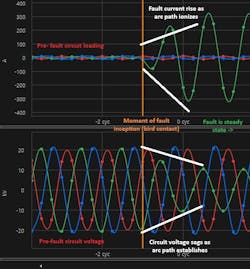
Each fault event may present distinct characteristics, shaped by fault asymmetry, path ionization and the limitations of recording instrumentation. Event analyses may include specific causes, system responses and evaluations of whether the equipment performed as intended — or whether successful operation was even feasible under the circumstances.
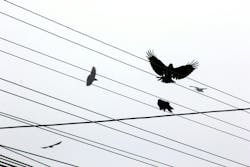
Electrical outages are frequently caused by birds. In one coastal rural utility in the Pacific Northwest, birds making direct contact with conductors accounted for approximately 75% of the 330 wildlife-related outages since 2016. An additional 5% stemmed from birds dropping prey onto conductors or building nests on power structures.
In other regions, birds also have been identified as a source of wildfire ignition. They have been observed getting shocked, catching fire and igniting the vegetation beneath when falling from a conductor.
By improving industry awareness of local bird populations, the likely cause and location of a fault can be predicted quickly and applied during the initial assessment. This insight is especially valuable during lengthy inspections of 50-mile (80-km) circuits in terrain considered more accessible by helicopter than by vehicle.
This case study explores the nature of bird-induced faults based on three confirmed incidents on 14.4-kV line-to-ground overhead distribution systems. In summary, the findings found that birds of all sizes usually can produce fault current magnitudes akin to a bolted fault. Additionally, reclosing is highly successful at shaking these birds off the conductor.
Study Methodology
For this study, oscillographs were retrieved from upstream recloser controls for faults definitively caused by a bird. These controls are often many miles from the fault and seldom actually produce a reclose operation themselves, but they have visibility and recordings of the downstream faults. Many rural recloser controls farther out on the distribution circuits do not possess the ability to record these events at all.
The bird location was confirmed by field personnel, and modeled fault parameters were procured from a distribution system electrical model for each example. This provides the impedance inherent to the system up to that point, which allows for normalizing the faults to each other in terms of expected fault current magnitude. In this manner, observers are looking at apples-to-apples in terms of fault signatures.
A classic method of estimating fault locations from fault magnitude is by assuming the cause of the fault is either wire-to-wire contact (has only the system impedance) or through an object with additional impedance (assumed 40 Ω, a topic of frequent debate).
Case Examples
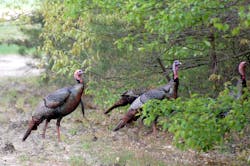
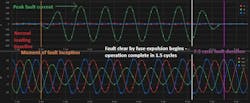
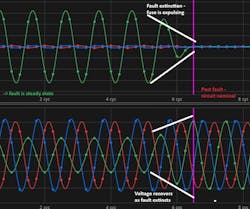
Case #1 involved a turkey-caused fault that managed to get between a phase and ground conductor. It is shockingly common, as turkeys like to gaggle up in the right-of-way under the power line. When the turkeys take flight, they are occasionally just the right size to manage brushing the wires of two different conductors.
The recloser observed and recorded the fault but did not achieve the timing to cause it to attempt reclosing. This fault was cleared by a downstream expulsion fuse. The initial current climb and voltage sag were examined more closely as well as the trailing fault extinction and voltage recovery.
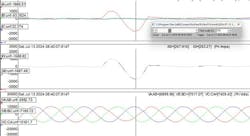
Case #2 also involved a turkey making contact between phase and neutral conductors. On one particularly memorable Christmas day, three turkeys flew into the same 1000 ft (305 m) of overhead circuits, each incident spaced a few hours apart.
This fault was cleared significantly faster than in Case #1 (the fuse protecting the fault was smaller) and demonstrated control reporting limitations.
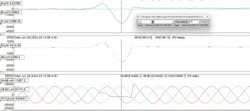
Case #3 consisted of a blue jay perched on lid of a case-grounded pole-mounted transformer, pecking at the high-voltage connection above the insulator. This type of contact has been repeatedly observed with Steller’s jays, whose height makes them especially vulnerable.
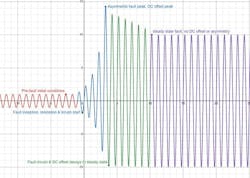
The fault was cleared sub-cycle by downstream fusing, exhibited recloser reporting limitations and demonstrated obvious fault asymmetry.
Mitigation Takeaways
Bird-induced outages often replicate conditions similar to bolted faults, including direct conductor-to-conductor contact. While there may be a slight delay in forming the ionization path, the maximum available fault current is almost always achieved.
Preventing bird contact can be challenging. However, for locations identified as a frequent site of avian interference, targeted mitigation strategies like installing protective coverings for insulators and bushings, increasing conductor spacing or hanging bird diverters can prove quite effective at prevention. Furthermore, reclosing functions are highly effective at dislodging the avian impedance from the electric distribution system.
About the Author
Kendrick Schaben
Kendrick Schaben, P.E., is the staff engineer at Coos-Curry Electric Cooperative in Oregon, focusing on distribution protection, wildfire risk mitigation, and rural system reliability. His work spans fault analysis, contingency modeling, and system optimization. He is a licensed Professional Engineer and a U.S. Air Force veteran.